
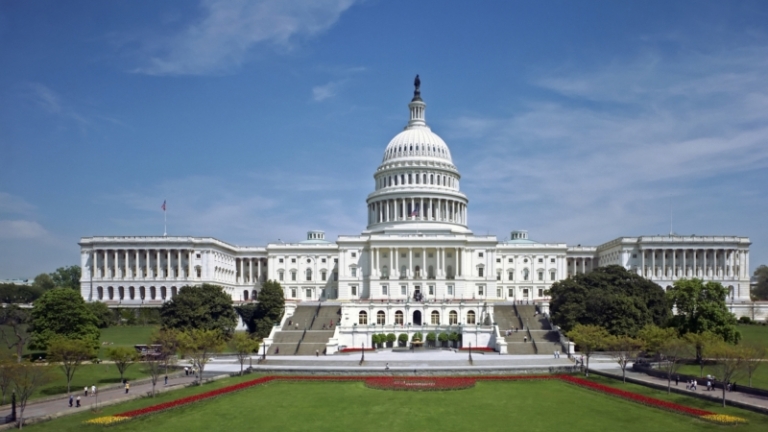
I. Legislative Branch
1) Legislation
Senate Bill Would Require Strategy on Iranian Influence in Latin America. On June 2, Sen. John Curtis (R-UT) introduced S.4665, which would require the Secretary of State to submit to Congress a strategy for countering Iranian and Hezbollah influence operations in Latin America.
House Resolution Proposes Shifting US-Israel Ties Beyond Traditional Aid. On June 3, Rep. Marlin Stutzman (R-IN) introduced H.Res.1339, which backs “[Israeli] Prime Minister Benjamin Netanyahu’s initiative” to transition the US-Israel relationship “away from one of traditional foreign assistance towards a new era of mutual cooperation, joint investment, and shared development.” Israel currently receives $3.8 billion annually in US military aid under a 10-year memorandum of understanding (MoU), which is set to expire at the end of Fiscal Year (FY) 2028.
Following a November 2025 Axios report that Israel was seeking a new 20-year memorandum of understanding but shifting the funds from direct aid toward joint weapons production, the Times of Israel reported that formal talks on a new security cooperation framework to replace the MoU began the week of June 1, 2026. While those talks were underway, Netanyahu sent a letter to Stutzman praising “our plan” to shift from financial subsidies to integrating the two countries’ defense industries within a decade.
House Passes Iran War Powers Resolution. On June 3, the House approved an Iran War Powers resolution for the first time, advancing a measure that would halt US military operations against Iran without congressional authorization. The resolution, introduced by Rep. Gregory Meeks (D-NY), passed 215-208, with four Republicans—Reps. Thomas Massie (R-KY), Brian Fitzpatrick (R-PA), Tom Barrett (R-MI), and Warren Davidson (R-OH)—joining all Democrats in support.
The vote came after House Republicans canceled a scheduled vote on May 21 because they lacked the votes to defeat it.
On June 4, President Donald Trump called lawmakers “unpatriotic” and criticized them for passing the resolution amid what he said were final negotiations to end the war with Iran.
Senate Bill Would Mandate Coordinated Middle East Defense Strategy with Israel, Abraham Accords Members. On June 4, Sen. Jacky Rosen (D-NV) introduced S.4681, which would require the Department of War to develop a coordinated air and missile defense acquisition strategy with partners and allies in the Middle East, including Israel and Abraham Accords members, aimed at strengthening defenses against Iranian attacks.
House Rejects Tlaib’s Lebanon War Powers Resolution. On June 4, the House rejected H.Con.Res.84, a war powers resolution introduced by Rep. Rashida Tlaib (D-MI) to remove US forces from Lebanon. The measure failed by a vote of 324-92. During debate on the resolution the day before, Rep. Max Miller (R-OH) accused Tlaib of “advocat[ing] for terrorists on a daily basis” and “hang[ing] out with” Hezbollah “butchers.” His remarks were struck from the congressional record.
House Democratic leaders Hakeem Jeffries (D-NY), Katherine Clark (D-MA), and Pete Aguilar (D-CA) said in a joint statement that they support the Lebanese Armed Forces’ efforts to defeat Hezbollah but “do not support any effort by the Trump administration to entangle the United States in a war in Lebanon or other parts of the Middle East.” Noting that no US troops are involved in hostilities in Lebanon, they endorsed H.Con.Res.108, a separate resolution that Tlaib had introduced the day before. That version directs the president to remove US forces from any hostilities in Lebanon within seven days of its adoption, while specifying that it does not limit security cooperation with the Lebanese Armed Forces or the protection of diplomatic facilities, and does not authorize the use of military force.
House Committee Rejects Amendment to Remove US-Israel Defense Cooperation Provision from NDAA. On June 4, the House Armed Services Committee marked up H.R. 8800, the FY2027 National Defense Authorization Act. During the markup, Rep. Ro Khanna (D-CA) offered an amendment to remove Section 224 from the bill, but the amendment failed by voice vote. Section 224 would deeply intertwine US-Israel defense cooperation through joint research and development, weapons co-production, licensing agreements, industrial partnerships, and other collaborative initiatives.
On June 5, AIPAC released a statement praising the House Armed Services Committee for including Section 224 and other pro-Israel provisions in the NDAA.
2) Personnel and Correspondence
House Democrats Demand US Diplomacy to Halt E1 Settlement Construction. On June 5, Reps. Mark Pocan (D-WI) and Jan Schakowsky (D-IL) led 83 other House Democrats in a letter to Secretary of State Marco Rubio, calling on the administration to use all available diplomatic means to halt settlement construction in the E1 area of the occupied West Bank.
3) Hearings and Briefings
Rubio Testifies Before Congress for First Time Since Start of Iran War. On June 2, Secretary of State Marco Rubio testified before the Senate Foreign Relations Committee on the Department of State’s Fiscal Year 2027 budget request. During the hearing, Rubio said that Iran had indicated a willingness to discuss aspects of its nuclear program that it had previously refused to negotiate, though he did not provide details. He added that there was no guarantee the talks would produce an acceptable deal and said “instability” within Iran’s leadership had complicated negotiations.
Rubio also said that any sanctions relief would be contingent on Iranian concessions regarding its nuclear program.
Several Senate Democrats sharply criticized Rubio during the hearing. Sen. Chris Van Hollen (D-MD) condemned US and Israeli strikes on Iran, arguing that President Trump had entered the war on Israel’s behalf.
II. Executive Branch
1) White House
Trump Sends Two MENA Diplomatic Nominations to Senate. On June 1, the Trump administration sent a new round of diplomatic nominations to the Senate, including Donald Blome for assistant secretary of state for Near Eastern Affairs and Nick Oberheiden for US ambassador to Egypt. Blome is a career foreign service officer and Oberheiden is a political appointee.
The nominations come as many diplomatic posts remain vacant. According to a May 14 Wall Street Journal report, more than 100 US ambassadorial positions have yet to be filled, including postings to Iraq, Kuwait, Qatar, Saudi Arabia, and the United Arab Emirates.
Trump Says Israel and Hezbollah Agree to Halt Hostilities. On June 1, President Trump announced on Truth Social, following a call with Israeli Prime Minister Benjamin Netanyahu, that no Israeli troops would enter Beirut and that any forces already on their way had been turned back. Trump also said that, through “highly placed representatives,” Hezbollah had agreed to halt hostilities.
Trump’s statement came as Iranian officials warned that the US-Iran talks could collapse over Israel’s plans to escalate its invasion of Lebanon. Despite the announcement, Israeli airstrikes continued across southern Lebanon.
That same day, Axios reported, citing a US official’s account of the call, that Trump had lashed out at Netanyahu during their call, telling him, “You’d be in prison if it weren’t for me. I’m saving your ass. Everybody hates you now. Everybody hates Israel because of this.”
On June 3, Trump confirmed making the remarks during an interview on the Pod Force One podcast, saying that he had been “a little bit perturbed” by Israel’s continued fighting in Lebanon but that he respected Netanyahu and worked well with him.
Trump Again Says United States Is Close to a Deal with Iran. On June 7, President Trump said in an interview on NBC News’ “Meet the Press” that the United States is nearing a deal with Iran but is seeking language that would definitively prevent Tehran from obtaining a nuclear weapon. Trump also said that he plans to keep US troops in the region until talks are completed, that he was not demanding Lebanon be part of a short-term deal, and that sanctions relief and the unfreezing of Iranian assets would come only after an agreement was reached.
Following reported Iranian attacks on Israel later that day, Trump said that he would urge Prime Minister Netanyahu not to retaliate out of concern that doing so could derail the negotiations with Iran.
2) Department of State
United States Hosts Fourth Round of Israel-Lebanon Talks; Israel and Lebanon Agree to Conditional Ceasefire. On June 2-3, the United States convened the fourth round of talks between Israel and Lebanon. According to a joint statement, Israel and Lebanon agreed to implement a ceasefire contingent on a “complete cessation” of fire by Hezbollah and the withdrawal of all Hezbollah operatives from areas south of the Litani River. They also agreed to advance the creation of “pilot” zones in southern Lebanon where the Lebanese Armed Forces would “take exclusive control of the territory to the exclusion of all non-state actors.” The two sides agreed to reconvene talks the week of June 22.
Rubio Meets with Kuwaiti Foreign Minister. On June 4, Secretary Rubio met with Kuwaiti Foreign Minister Jarrah Jaber Al-Ahmad Al Sabah to discuss Kuwaiti security, Iran’s nuclear program, and freedom of navigation through the Strait of Hormuz. The meeting came in the wake of Iran’s June 3 attack on Kuwait International Airport.
Department Approves Military Sale to Kuwait. On June 5, the Department of State approved a Foreign Military Sale to Kuwait of Counter-Unmanned Aerial Systems platforms and related equipment, with an estimated cost of $1.98 billion.
3) Department of War
CENTCOM Says US Forces Defeated Iranian Missile and Drone Attacks. On June 2, CENTCOM said that US and partner forces had “successfully defeated” multiple Iranian ballistic missiles and drones, including missiles launched toward Bahrain and Kuwait, and conducted “self-defense strikes” on an Iranian military ground control station on Qeshm Island.
Pentagon Raised Threat of Israeli Spying on United States to Highest Level. On June 5, NBC News, citing current and former US officials, reported that the Pentagon’s Defense Intelligence Agency had in recent weeks raised the counterintelligence threat level for Israel to its highest designation, “critical.” The officials said that the designation stems from heightened concerns that Israel is surveilling top US officials to gather information on internal deliberations regarding the war in Iran. Both the White House and the Israeli Embassy in Washington denied the report.
4) Department of the Treasury
Treasury Imposes Sanctions on Iran’s Biggest Crypto Exchange. On June 2, the Department of the Treasury’s Office of Foreign Assets Control sanctioned Nobitex, Iran’s largest digital asset exchange, along with three other Iranian digital asset exchanges, for allegedly facilitating transactions tied to Iran’s Islamic Revolutionary Guard Corps and helping the regime evade sanctions and move wealth abroad.
Treasury Targets Network Accused of Smuggling Iranian LPG. On June 5, OFAC designated a network of individuals, entities, and vessels that it accused of shipping hundreds of millions of dollars’ worth of Iranian-origin liquefied petroleum gas (LPG), disguised as Omani LPG, to markets in South and East Asia. The Treasury alleged that the network used front companies in the UAE and China, foreign bank accounts, and Iran’s shadow fleet to transport millions of barrels of Iranian LPG while concealing its origin to evade US sanctions.
OFAC also sanctioned an Iranian currency exchange house and its operators, alleging that they had moved hundreds of millions of dollars in foreign currency on behalf of sanctioned Iranian banks.