
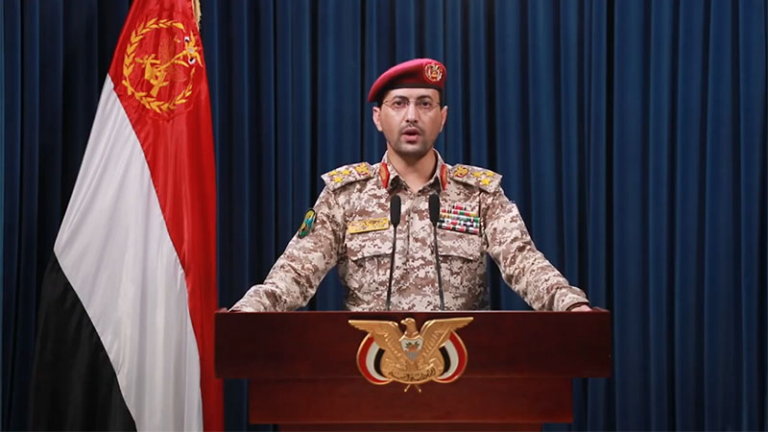
Until this week, the Houthis had been waiting to see whether their military involvement might be needed or called for in the conflict between the United States and Iran, and had largely kept their powder dry apart from a limited number of attacks targeting Israel. But the recent internal flare-up between the Houthis and Yemen’s internationally recognized government, as well the buildup of tensions with Saudi Arabia, point to the likelihood of a Yemeni front being opened in the renewed escalation between Iran and the United States.
Iran’s connection with the Houthis dates to the Zaidi Shia group’s emergence as a movement in the 1990s. The group’s induction into the Iran-led Axis of Resistance came later, however, as Lebanon’s Hezbollah took an active role in forming, equipping, and training Houthi armed forces during their rebellion that began in 2004. After the Houthis seized Sanaa in 2014, Iran’s assistance grew in leaps and bounds, especially during the 2015-22 war against them led by Saudi Arabia and the United Arab Emirates.
The Houthis initially kept a low profile during the war on Iran.
Despite their growing proximity to Iran and their support for Hamas during Israel’s 2023-25 assault on Gaza, the Houthis initially kept a low profile during the war on Iran launched by Israel and the Trump administration in February 2026. With the signing of the June 2026 Memorandum of Understanding (MOU) between the United States and Iran, there was some optimism in the region that the war might be coming to an end and that the Yemen front would not be re-opened.
In early July 2026, however, tensions flared on several fronts in Yemen and in the Red Sea, with fighting erupting in and around Hodeidah, a vital seaport for the Houthis, which is notably within missile range of Bab al-Mandab Strait. On July 13, forces belonging to the internationally recognized government reportedly bombed the runways of Sanaa International Airport, the Houthis’ gateway to the outside world. The bombardment was apparently timed to block the landing of a plane carrying a Houthi delegation returning from the funeral of Ayatollah Ali Khamenei in Tehran. The Houthis blamed Riyadh for the attack and responded by launching missiles at Saudi Arabia.
On July 18, Mohammed al-Bukhaiti, a member of the Houthis’ Political Bureau, said in Tehran that the movement would prefer to focus on combatting external threats such as US domination and Israeli aggression against Palestinians and Lebanese rather than engaging in internal conflicts. Bukhaiti accused Riyadh of taking part in a financial blockade intended to suffocate the Houthis, while contributing trillions of dollars to US and Israeli aggression against Iran, Lebanon, and Palestine. Bukhaiti argued that the Arab Gulf governments had essentially funded Washington’s war on Iran, reducing the economic burden on the American people and keeping domestic opposition to the war at a minimum. Bukhaiti said that the Houthis had given Saudi Arabia 48 hours to cease their aggression or risk devastating attacks. Two days after his remarks, given in an interview with a Beirut-based media outlet, the Houthis declared a blockade of Saudi shipping in the strait. On July 22, the Houthis then attacked two Saudi oil tankers in the Red Sea.
If the Houthis close Bab al-Mandab, an already dangerous regional conflict could metastasize into a global calamity.
As Yemen becomes more prominent in these conflicts, the region faces the prospect of a dangerous escalation. Yemen’s internationally recognized government and Saudi Arabia might respond to the blockade by attacking and weakening Houthi-held Sanaa, on the assumption that Iran is too involved in self-defense to assist the Houthis. The growing menace to Red Sea shipping—which has already complicated Saudi export options—could again drive oil prices upward. On July 23, President Donald Trump threatened “major military punishment” for Iran and the Houthis, describing the movement as Tehran’s “Proxy.” Given rising oil prices—Brent crude just crossed the $100/barrel mark, its highest since later May—and the upcoming November mid-term elections in the US, escalation by the Trump administration could have serious consequences at home and abroad. If the Houthis take the next step and close Bab al-Mandab in a desperate attempt to help Iran build pressure on the world economy, an already dangerous regional conflict could metastasize into a global calamity.
The views expressed in this publication are the author’s own and do not necessarily reflect the position of Arab Center Washington DC, its staff, or its Board of Directors.