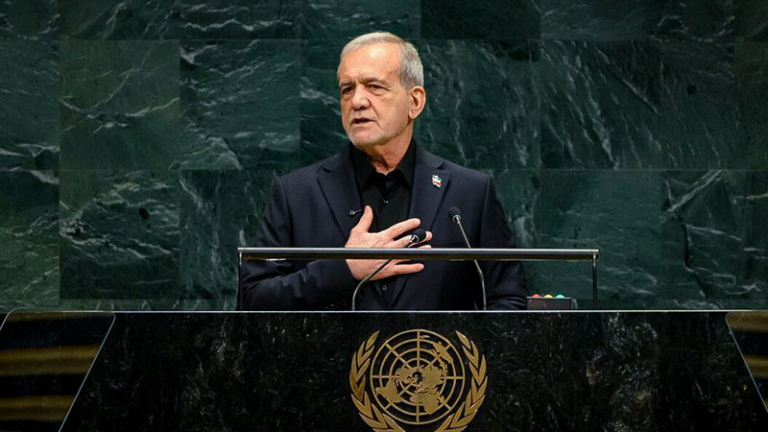
Nearly 130 world leaders attended the general debate of the 81st session of the United Nations General Assembly (UNGA), held in New York from September 22 to 28, 2026. The meeting comes at a moment of crisis for the post-World War II international order.
In Gaza, Iran, Sudan, and Ukraine, the gap between the norms of international law and the realities of state violence has been stretched to a breaking point. Member states invoke the UN Charter while violating it, the Security Council is deadlocked, and the president of the United States, UNGA’s host country, used his podium address to threaten the “annihilation” of Iran, another member state. Dozens of delegates walked out before the speech of Israeli Prime Minister Benjamin Netanyahu, in protest of his policies in Gaza and the wider region, while Washington withheld visas to Palestinian Authority President Mahmoud Abbas. Chinese President Xi Jinping skipped UNGA in favor of a private summit in Washington with President Trump. Is the age of multilateralism over?
In this Collective Analysis, Arab Center Washington DC invited its fellows and contributors to reflect on what UNGA 2026 reveals about diplomacy, politics, and economic development across the Middle East. What role is left for the United Nations in a time of war, genocide, and regional devastation?
UNGA 2026: Stronger Declarations, Weaker Institutions
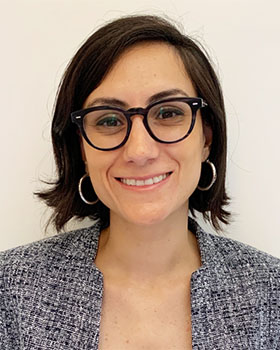
Tamara Kharroub, Executive Director and Senior Fellow
UNGA 2026 has exposed both Israel’s mounting isolation and the widening divergence between the US-Israel axis and the global majority that opposes the Iran war and Israel’s aggression in the Occupied Palestinian Territories and the wider region. Several heads of state, including Arab and Muslim leaders and European representatives, expressed unusually strong criticism of Israeli policies. Many delegations even walked out of Israeli Prime Minister Benjamin Netanyahu’s address.
Such moves might be read as signs of progress. But despite all the strongly worded declarations and political symbolism, world leaders reiterated their support for the two-state solution—now long dead—and again endorsed President Donald Trump’s 20-point plan, both of which have no realistic path to implementation without serious action to stop Israeli aggression. However, one year after Trump’s so-called ceasefire and the New York Declaration, and two years after UNGA endorsed the International Court of Justice’s advisory opinion on the illegality of the occupation and its one-year deadline, little has been done to enforce Israel’s compliance.
Meanwhile, the United States continues to attack both multilateral institutions and the international legal system, abusing its veto and financial power to impose its demands. The United States allowed Netanyahu to address the General Assembly despite facing an International Criminal Court (ICC) arrest warrant for his alleged involvement in war crimes and crimes against humanity, for example, but blocked Palestinian Authority President Mahmoud Abbas from attending in person—an outcome that is symptomatic of the UN’s inability to protect international law. The outgoing UN secretary-general, Antonio Guterres, will leave behind a shameful legacy: the failure to prevent genocide. As the UN faces an unprecedented crisis of legitimacy, finance, and representation, it is high time for reform. Without serious efforts to repair the world’s most important institution, the UN will remain a toothless entity incapable of fulfilling its primary mandate of protecting civilians, upholding human rights, and promoting peace.
For Netanyahu, UNGA is A Campaign Ad
Yousef Munayyer, Head of the Palestine/Israel Program and Senior Fellow
Israeli Prime Minister Benjamin Netanyahu, who is subject to an International Criminal Court warrant on allegations of war crimes and crimes against humanity, addressed a largely empty UNGA after scores of diplomats walked out of the hall as he began speaking.
The scant audience that remained was mostly silent except for members of his own delegation and a large contingent of supporters that the Israeli delegation had brought into the public gallery. Throughout the speech, his supporters repeatedly burst into loud applause and cheers for a leader that most of the world had intentionally ignored. This bizarre ritual—which seems to be becoming an annual occurrence for Netanyahu—offers an appropriate representation of what Netanyahu hopes to get out of this latest charade: an intimate conversation with an Israeli audience.
With a little over a month before the next Knesset elections, Israeli voters are getting the chance to watch Netanyahu’s most prominent campaign ad, with the UN as the backdrop. They are the viewers Netanyahu is most concerned about as contentious elections loom ahead. In his UNGA speech, Netanyahu boasted about his supposed victories, made repeated claims on Palestinian territory, lauded the Israeli military, attacked Britain and France for calling out the occupation, minimized Israeli settler violence, and vowed defiance against global pressure—all while repeating tried and true hasbara lines. His message to Israeli voters is quite simple: the whole world is against Israel and only he can save them. Will Israeli voters fall for Netanyahu’s desperate performance once again or will they walk out on him just as much of the world did before his speech? We will have the answer to this question after the October 2026 elections.
Iran’s Three Messages
Negar Mortazavi, Senior Non-resident Fellow, Center for International Policy
Iranian President Masoud Pezeshkian’s UNGA address delivered three central messages in response to Trump’s address in which he justified the war and threatened to “annihilate” the Islamic Republic.
Pezeshkian framed Iran as the victim of an illegal war of aggression, reminding the world that the US–Israeli war was launched without authorization from Congress or the UN Security Council and despite opposition from several US allies in the region. Displaying photographs of the children killed in US strikes and describing the destruction of civilian infrastructure, Pezeshkian challenged Trump’s presentation of the war as a necessary military success without real human costs. In addition, he connected Iran’s experience to the wars in Gaza and Lebanon, presenting them as part of a regional pattern of Israeli and US aggression.
Pezeshkian also sought to project strength and determination. He responded to Trump’s annihilation threat by asserting that seven months of US military and economic pressure have failed to force Iran into submission. Tehran’s message was that it retains the will and capacity to defend itself, preserve its leverage, and continue fighting for as long as necessary. Iran will not surrender under such pressure.
Finally, the Iranian president insisted that his country neither initiated nor wanted this war and has sought to end it. Pezeshkian’s comments repeatedly left the door open to diplomacy, but he rejected negotiations conducted in the face of threats or demands for surrender. He signaled that Iran is prepared to negotiate a reciprocal settlement, while warning that additional pressure will produce resistance rather than capitulation.
The distinction Pezeshkian made was significant: Tehran is offering talks as a means of ending the conflict, not as a mechanism for formalizing defeat. The Iranian president asserted that diplomacy can only work if Washington abandons coercion and accepts reciprocity.
His message was therefore both defiant and diplomatic: Iran did not choose this war and will not surrender to end it but remains prepared to negotiate a way out.
No Visa for Abbas
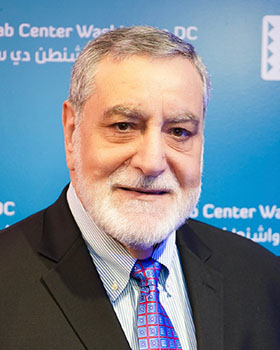
Khalil Jahshan, Chairman of the Board of Directors
For the second year in a row, the Trump administration has barred Palestinian Authority President Mahmoud Abbas from addressing UNGA in New York City. This decision reflects the administration’s bias in the Palestinian–Israeli conflict. It demonstrates President Trump’s irrational and antagonistic stand against the Palestinian people and their globally recognized right to self-determination—a right that is also accepted by various UN agencies.
The problem is not that the United States personally insulted Abbas by denying him and his official delegation the opportunity to address the meeting in person. Historically, UNGA has been a diplomatic event largely void of tangible benefits for Palestine and the Palestinians. The problem is with the administration’s pitiful explanation for denying Abbas’s entry. Washington’s excuse is worse than the crime itself.
On September 16, 2026, the US Department of State announced renewed sanctions against the Palestine Liberation Organization and the Palestinian Authority for their “failure to reform” and for initiating and supporting actions against Israel at international organizations. US officials condemned these moves for “internationalizing” the conflict. In effect, the Trump administration is accusing the Palestinian leadership of undermining a non-existent peace process by engaging in legitimate diplomatic activity advocating for Palestinian rights in international institutions such as the International Criminal Court, the International Court of Justice, and by extension, the UN General Assembly.
The United States amended its visa denial to allow President Abbas to deliver his annual speech by pre-recorded video. But barring the Palestinian president from addressing UNGA in person like the other 130 participating world leaders is capricious, legally questionable, and ultimately unbefitting a superpower that arrogates to itself the sole and rightful authority as peacemaker in the Palestinian–Israeli conflict and that should be a responsible host to the UN. In this situation, which party is really “undermining the prospects for peace” in the Middle East?
The Struggle for Syria’s Sovereignty
Daniel Neep, Director of Publications and Senior Fellow
Ahmed al-Sharaa, the interim president of Syria, was keen to send two messages to the international community at this year’s UNGA. The first is that Syria has now truly begun its “journey of recovery and renewal.” The second is that this recovery is fundamentally linked to Syria’s sovereignty and territorial unity—especially when it comes to Israel. Sharaa said that “not every peace is just” and that the prospects for peace depend on those seeking “a just peace that maintains everyone’s rights.” Insisting that the Golan Heights remain Syrian territory, he also called for Israel to withdraw from new areas occupied since December 2024.
This position was even clearer in Sharaa’s remarks the previous day at a Washington think tank. Recalling President Trump’s 2019 recognition of Israeli sovereignty over the Golan Heights—which made the United States the first country on the planet to do so—Sharaa said that he had joked that Trump should give away New Jersey instead: “You don’t own the Golan Heights to give it to them, but you own New Jersey. And I believe that New Jersey is full of Democrats, and they are not voting for Trump.” Joking aside, Sharaa’s position is supported by longstanding UN resolutions. UN Security Council Resolution (UNSCR) 497, adopted unanimously in 1981, declared Israel’s de facto annexation of the occupied Golan Heights to be null and void.
Nevertheless, there is a gap between Sharaa’s language about territorial unity and his government’s reconstruction policies. Syria has not yet published a reconstruction strategy explaining how destroyed infrastructure will be rebuilt, how investments will be distributed, or how regions that diverged politically and economically during the civil war will be reintegrated. Recovery remains heavily dependent on scattered individual projects, foreign investment, and external financing, with little democratic participation.
Sharaa has articulated clear red lines on Syria’s borders. As Damascus reasserts authority across most of the country, the next question is what will bind those territories together within Syria. As Sharaa himself noted, not every peace is just.
The UN’s Right to Development Amid Devastation?
Nur Arafeh, Head of the Political Economy Program and Senior Fellow
On September 23, 2026, UNGA held a High-level Meeting on the 40th Anniversary of the 1986 Declaration on the Right to Development. The Declaration asserts that development is not simply economic growth, but a political, economic, social, and cultural process aimed at improving people’s general wellbeing. All people have the right to participate in this process and share its benefits fairly.
But what does the UN’s Right to Development mean in a Middle East that has been devastated by war? The political and material preconditions for development have been eroded in the region; its people have been dispossessed, displaced, disempowered, and traumatized. When conflict reduces the horizon to securing shelter, food, and healthcare, what room is there for development?
Take Gaza as an example. Israel’s genocide has erased 77 years of human development progress. More than 90 percent of the population has been displaced, while 82 percent of all its structures have been damaged. And more than two-thirds of the population are projected to face crisis-level food insecurity by the end of 2026.
While these figures are staggering, they tell only part of the story. They cannot convey the loss of a family home that carried memories across generations; the destruction of historic buildings and cultural heritage; the cherished community networks that were severed; the scholars, artists, journalists, teachers and athletes whose lives and contributions were cut short; or the trauma that will be carried by future generations.
Self-determination, sovereignty, an end to war and military occupation, and control over natural and economic resources are necessary preconditions for development. Without them, the UN’s Right to Development will forever be unachievable.
Wishful Thinking for Lebanon
Imad K. Harb, Non-resident Senior Fellow
The UNGA speech by Lebanon’s Prime Minister Nawaf Salam reflected the dilemmas facing the country, as it endures continuing war from Israel and Hezbollah’s ongoing activities outside the control of the Lebanese state. Salam reiterated his government’s demands for an immediate Israeli withdrawal from South Lebanon, the return of the region’s inhabitants to their homes, and the establishment of an alternative peacekeeping force on the Lebanese-Israeli border, among other issues.
But the reality on the ground belies Salam’s assertions and undermines what he hopes to achieve. Israel’s war machine—funded and supported by the United States—seems neither willing nor ready to stop its aggression against the weaker Lebanon or to consider even partly withdrawing from the occupied south. Daily attacks, bombings, and the destruction of vital economic and social infrastructure go unchallenged by both the Lebanese Armed Forces and Hezbollah, which has declared itself the principal protector of the region.
Hezbollah is similarly unwilling to abandon its autonomy within Lebanon’s military and political structures. In fact, when Salam declared in his speech that Lebanon refuses to be a pawn in others’ games, his words fell flat given that Hezbollah does not obey the Lebanese state when it comes to conflict with Israel or relations with the Islamic Republic of Iran. Similarly, Salam’s request that the international community help establish a peacekeeping force to replace the UN Interim Force in Lebanon (UNIFIL)—whose mandate expires at the end of 2026—faces nearly insurmountable obstacles as Israel refuses to accept any checks on its policies of aggression in South Lebanon.
The views expressed in this publication are the author’s own and do not necessarily reflect the position of Arab Center Washington DC, its staff, or its Board of Directors.
Featured image credit: Website of the President of Iran