
For centuries, empires and regional powers have fought over the Strait of Hormuz, occupying its islands, fortifying its ports, taxing its commerce, and policing or disrupting its shipping. However, none of these powers could ever fully control this strategic waterway, located between the Persian Gulf and the Gulf of Oman, through military force alone. Historically, Hormuz derived its value from its connections linking the strait’s two shores to the Indian Ocean. Even those powers that sought to command this waterway nevertheless depended on the relationships forged among its various ports, suppliers, merchants, and coastal communities to sustain its commerce. Political authority across the Strait of Hormuz, in other words, has long rested on this system of interdependence, even when such authority has been coercively or unequally applied.
This history helps us better understand the current crisis in the Strait of Hormuz as the United States and Iran compete over control of the strategic passageway. Keeping the strait open means sustaining a maritime system that extends far beyond the passage. The initiative advanced by Oman in July 2026, with the backing of the other Arab Gulf states, matters because Muscat is not merely acting as a mediator between other powers. Oman is a littoral state and a major node connecting the Gulf with the Indian Ocean. Its role should be situated within the historical relationships that helped sustain Hormuz: Musandam’s provisioning of the island, exchanges across coastal communities, and connections to the Indian Ocean. Seen through this history, Oman’s initiative can be understood as an attempt to translate maritime interdependence into collective action among the states dependent on the waterway, both to resolve the crisis and to sustain passage beyond it.
The Connections That Made Hormuz
The Strait of Hormuz is the name of the waterway. Historically, however, Hormuz also referred to a port on the Iranian mainland (now called Old Hormuz). Since the 14th century, it became the name of an island in the strait, where local rulers established a kingdom and commercial center that joined the Arabian coast, Iranian plateau, Gulf ports, and the western Indian Ocean. Through this commercial exchange, the island-port of Hormuz helped produce a maritime world built on the movement and exchange of people and goods. Those who sought political authority over this world depended on these connections.
Old Hormuz linked maritime commerce from the Iranian cities of Kerman and Sistan. On the Arabian coast, the cities of Qalhat and Jolfar developed as important trading centers within this system, while the island-port of Hormuz depended on supplies brought from surrounding shores. Qalhat’s archaeological record reveals a rich history of trade connecting Arabia, East Africa, India, and beyond. These trade routes and commercial relationships made Hormuz’s strategic location valuable, as inland routes brought goods to ports, coastal settlements supplied the island, and shipping connected the region to distant markets.
Musandam, the peninsula located across the strait from Hormuz Island, provides another concrete example of the waterway’s historical interdependence. Research on its settlements, grain production, and maritime mobility reveals how this region supplied provisions and people to the island of Hormuz, while the island’s economy generated demand for Musandam’s products and labor. Together with Qalhat and other Arabian ports, Musandam helped position Hormuz within a broader network reaching well beyond the island itself.
These relationships shaped how power operated within this geography. Hormuz’s rulers paid tribute to mainland powers to secure commercial traffic to and from the island. Rulers across the system then had to accommodate or coerce merchants, suppliers, and carriers who also had a vested interest in the movement of goods. Military force could alter the terms of such exchanges. However, occupation of the island by force could not substitute for the provisions, routes, and transactions that sustained the system.
Over the centuries, different powers sought to command the island of Hormuz or dominate parts of the maritime system around it, including the local rulers of Hormuz, as well as the Portuguese, Safavids of Iran, Ottomans, the Yaʿrubi and al-Busaʿidi rulers of Oman, Qawasim, Dutch and British trading companies, and ultimately, the British Empire. While some of these powers established long-lasting dominance over the island and surrounding waterway, their power still operated through a system of commercial and political interdependence that reached beyond their immediate territorial rule. Control over specific strategic positions, in short, did not necessarily translate into total control over the wider maritime system.
In the 20th century, the modern state system and international law, which codified territorial sovereignty and navigation rights, altered the governance structure in the Strait of Hormuz. However, these changes did not eliminate the historical regional interdependence or the need to coordinate across the waterway. In 1968, Iran and Oman jointly adopted an agreement to designate shipping lanes through the strait. Similarly, in 1974 they signed an agreement to determine the boundaries of the continental shelf while committing to coordinate on the exploitation of deposits across that boundary. The treaty acknowledged the distinctive maritime rights of the two countries without eliminating their shared interests and obligations. During the 1980s Tanker War—which was waged as part of the Iran-Iraq war—Iran attacked ships trading with the Iraqis even as it remained dependent on oil exported through the same waterway. To protect its tankers, Kuwait sought US naval escorts. In this case, the connections that had long sustained regional commerce in this area became the targets of disruption and also resulted in external military protection to restore open passage.
Any durable framework for the strait must support cooperation among all actors involved.
Interdependence in the Hormuz system, therefore, does not imply an uninterrupted regime of cooperative governance across the waterway. In the past, the same relationships that have enabled power around Hormuz have also constrained such power. Moving forward, any durable framework for the strait must support cooperation among all actors involved.
Interdependence and the Politics of Passage
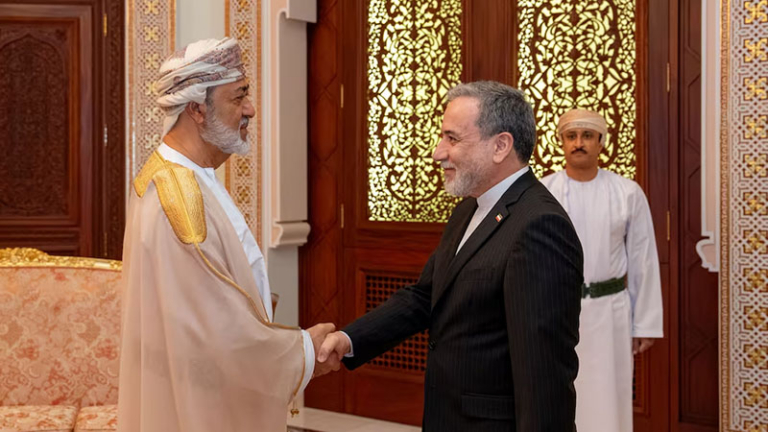
The current dispute over the Strait of Hormuz reflects similar historical concerns over its strategic position and the wider maritime system in which it operates. In July 2026, amid the strait’s disruption following the US-Israeli attacks on Iran, Oman presented Tehran with an Arab Gulf-backed proposal modeled on a cooperation agreement that governs the Strait of Malacca, located between the Malay Peninsula and the Indonesian island of Sumatra. The Omani proposal would bring regional states into an arrangement for managing the waterway. The various states would also offer voluntary contributions to support navigation, environmental protection, and search and rescue operations.
On July 29, 2026, Tehran rejected this proposal for broader regional management of the waterway, arguing that only Iran and Oman should manage the strait, with Iran controlling the inbound route and parts of the outbound route. By early August, negotiations had shifted toward a narrower interim arrangement over shipping routes. During those talks, Iran’s leaders claimed an agreement with Oman was entering its final stages but that a full reopening of the strait depended on the United States meeting other conditions. As of September 2026, no durable settlement has emerged.
The differences between the original proposal and the later counterproposals are significant. The original Omani proposal sought a regional framework for supporting shared maritime services; subsequent proposals focused instead on the allocation of shipping routes and authority under conditions of war. A negotiated routing arrangement might restore some shipping traffic, but it would not by itself establish a framework for governing the maritime system. An arrangement giving Iran discretionary authority over the passage would also risk turning shared dependence on the strait into dependence on Iranian consent.
There is still an important structural continuity that connects the past to the present.
The current negotiations among sovereign states over the strait cannot be treated as a direct continuation of older, historical conflicts. Similarly, geopolitical contestations today cannot be directly mapped onto the imperial, tributary, and commercial hierarchies of the past. However, there is still an important structural continuity that connects the past to the present, which is that this passageway still depends on a network of economic and political relationships that cross jurisdictions and cannot be sustained through the exclusive military command of the channel by a single power.
The US position must also be assessed against this history. In July 2026, US Central Command presented its strikes against Iran as a means of protecting commercial shipping through the strait. Yet military superiority does not confer authority on the United States to unilaterally determine the terms of a regional order rooted in longstanding interdependence. In practice, US forces would be protecting certain shipping routes while leaving regional commerce as a whole dependent on Washington’s strategic decisions. The issue moving forward is whether the United States will support a regional arrangement or instead seeks to substitute it with one that makes continued US enforcement the condition of maritime security.
Iran’s security concerns should be accounted for in any durable arrangement, but neither those concerns nor its littoral position confer primacy. Nor should the Arab Gulf states have to choose between dependence on Iranian consent to use the waterway and indefinite reliance on American enforcement. Their interests and place within that maritime system call for shared regional responsibility, with external support provided within an agreed framework.
Oman as a Maritime Connector
Given these concerns, Oman’s role in resolving this crisis becomes clearer. Musandam sits next to the strait, while Omani ports and maritime relationships connect the Gulf with the Indian Ocean. Oman is a major node in this system, with a direct interest in continued movement through the strait and across the wider network. Its diplomatic relations with Iran and the Arab Gulf states reflect its historical position. Describing Muscat simply as a neutral mediator understates its stake in resolving this latest crisis.
Oman connects two issues that should not be treated as separate: the security of passage through the strait and the regional relationships on which that passage depends. Its distinctive contribution in this moment is therefore to turn the interdependence that has historically governed this maritime system into reciprocal geopolitical commitments.
Malacca as a Structural Parallel
The Strait of Malacca offers useful lessons. As with the Strait of Hormuz, this waterway connected a maritime region of ports, islands, rivers, and hinterlands. Throughout its history, different polities—from the maritime Sumatran empire of Srivijaya to the Melaka Sultanate centuries later—built regional power by organizing commercial and tributary relationships across this maritime system. Their authority depended on merchants, coastal settlements, and maritime communities that continually circulated goods, people, and ideas across the area. As in the Hormuz system, those who gained power over this strategic area did so by fostering connections across the maritime system.
Malacca offers a way to think about shared responsibility over Hormuz that also centers the relationships that have long sustained the waterway system.
The maritime relationships across the Strait of Malacca, however, were disrupted when the 1824 Anglo-Dutch Treaty divided it between competing colonial spheres. After independence, the newly independent states of Indonesia, Malaysia, and Singapore implemented a modern system of coordination that eventually led to the 2007 Cooperative Mechanism. The mechanism preserved the primary responsibility of the three littoral states in managing the strait while also inviting other user states and the shipping industry to join navigational agreements and environmental projects through voluntary contributions. Crucially, the agreement gives institutional form to shared responsibilities over governance of the waterway without making payment a condition of passage. Its relevance to Hormuz goes beyond simply applying a similar funding formula or technical procedure. Instead, it serves as a model by which different states can recognize their shared maritime connections while retaining their distinct territorial responsibilities and interests.
There are, of course, limits to the lessons that can be applied from the Malacca example. Yet Malacca offers a way to think about shared responsibility over Hormuz that also centers the relationships that have long sustained the waterway system and given it strategic value.
Giving Interdependence Political Form
Oman’s initiative to resolve the crisis in Hormuz should therefore be judged by whether it translates interdependence into reciprocal commitments among the various parties. Iran’s inclusion, Arab Gulf participation, and the international shipping community would help make access available and predictable to all vested parties as opposed to only a few.
How the various parties finance the arrangement will further reveal whether it supports shared access and cooperation or creates new conflicting claims over control of the passage. The distinction between voluntary contributions and compulsory fees is also political. Voluntary contributions, such as those proposed by Oman, and used in the case of Malacca, can support common services, whereas compulsory charges would make passage conditional on payment to the power claiming authority over it.
Hormuz’s long history of interdependence explains why no one power has been able to durably control passage through the strait by military means. Its connections have supported the commerce, livelihoods, and political resources of communities on both sides of the strait, even as successive powers have competed to claim authority over it. Oman’s place in this history helps explain its stake in resolving the crisis and shaping the arrangements that can make that resolution last. Its role is to help give interdependence a durable political form shaped by all actors that depend on this shared passage.
The views expressed in this publication are the author’s own and do not necessarily reflect the position of Arab Center Washington DC, its staff, or its Board of Directors.
Featured image credit: Oman News Agency