The US-Israeli war on Iran has severely weakened if not destroyed the Pax Americana, the US-led political, economic, and security structure that, despite numerous detours and failures, has helped to stabilize the Middle East since the 1990s. The war now appears to be in a tense state of suspended animation, primarily focused on the status of the Strait of Hormuz—an issue that was not even a casus belli at the start of the conflict. Ongoing high-stakes negotiations to end the conflict have so far failed to resolve most, if not all, of the most vital points, including the future of Iran’s nuclear program. Today, the United States can claim no decisive victory; Israel has used the conflict as a cover for its territorial expansion; and China has emerged as a potential peer competitor in the region.
The war has caused extensive damage. On top of the continuing effects of maximum-pressure sanctions by the United States, Iran has suffered serious economic damage, its military has been devastated, and thousands of civilians have been killed. Lebanon, a bystander to the conflict, has been repeatedly struck by Israeli ground incursions and airstrikes. Although Lebanon’s Hezbollah, the powerful militia allied with Iran, joined the war of its own accord by attacking northern Israel, the brunt of the conflict has been borne by civilians. Israel has destroyed numerous villages in South Lebanon and carved out a security zone south of the Litani River, in an apparent rerun of its earlier occupation of 1982-2000. Israel’s actions have displaced at least 815,000 Lebanese civilians and prohibited them from returning to their homes. Arab Gulf states, some of which reportedly quietly backed the attack on Iran (albeit with reservations), have suffered severe economic consequences from direct Iranian attacks, as well as from the effective Iranian blockade of Gulf maritime traffic. The broader consequences have been worse for many other countries far afield, and risks to the global economy are growing.
Trump’s standing among the American public has sharply declined since the beginning of the conflict.
Washington is far short of achieving the “total and complete victory” that President Donald Trump claimed on April 7, 2026. Few of the war’s stated objectives have been met and, although US armed forces have performed effectively, the damage to US military facilities in the Gulf is reportedly far more extensive than the US government previously acknowledged. The cost of the war, supposedly $29 billion so far, is likely to run much higher. Economic stress broadly related to the war, including spiking inflation, is alarming the American public and may be leading to a recession. Trump’s standing among the American public has sharply declined since the beginning of the conflict: Even Trump’s base of support, the MAGA movement, is deeply conflicted. Trump did not help his case when he told reporters on May 12, 2026, that “I don’t think about Americans’ financial situation. I don’t think about anybody.” Polls now place the Republican party in precarious territory. If a Democratic-majority Congress is elected in the November 3, 2026, midterm elections, especially if Democrats win the Senate as well as the House of Representatives, Congress is likely to constrain Trump’s foreign policy through vigorous exercise of its oversight and appropriations authorities.
If Trump has not emerged from the war as a winner, Israel’s right-wing government and its supporters have made progress toward their long-term goals. Although conflict has only marginally set back the Iran nuclear program, Israel has used the cover of war—ongoing since 2023—to devastate Gaza and to expand and enforce its hold on the occupied West Bank. There are also credible reports that extremist Israeli religious and settler groups are even eyeing South Lebanon for colonization. Much of this is an expansionist dream come true—occurring with virtually no pushback from Washington.
These gains, such as they are, seem likely to prove short-lived. Progress toward any the Saudi-Israel rapprochement or regional economic integration envisioned under the Abraham Accords seems dead for now, despite Trump’s abrupt and unexpected push in the last few days to expand them. A “state of constant warfare” now appears to be Israel’s official policy. The country seems well on its way to becoming an international pariah, trading temporary territorial control for long-term isolation and armed conflict.
China, however, might be an unexpected beneficiary of the war. Trump’s recent visit to Beijing had an air of humility about it, and Chinese leader Xi Jinping was able to portray his country as a superpower equal to Washington, a long-held ambition. As a result of the war, Beijing is in a position to deepen its economic and diplomatic ties with the Middle East and to expand its global influence. For many in the region, the Chinese government may represent a welcome alternative to American global leadership.
Whether Beijing is well positioned to capitalize on its gains from the Iran war is unclear.
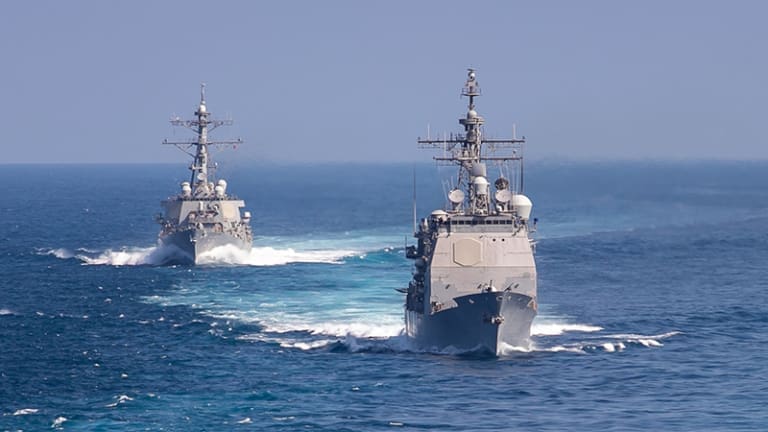
But whether Beijing is well positioned to capitalize on its gains from the Iran war is unclear. China imports about half its crude oil and nearly one-third of its liquefied natural gas from the Middle East and thus faces economic peril in the war’s continuation, which it has proved powerless to stop. For the last three decades, China has been non-interventionist in international affairs: It has largely followed Russia’s lead in the UN Security Council and has exercised its good offices only sparingly in the rough waters of the Gulf. In 2023, China arranged the 2023 diplomatic rapprochement between Saudi Arabia and Iran but has not cut a major figure since. Beijing maintains a military base in Djibouti and has participated in maritime patrols in the Gulf of Aden to counteract piracy and to gain active naval experience, but has yet to show the means or intention to assume the role of regional arbiter, backed by money and maritime power. If the world is looking for a new external hegemon in the Gulf, it will have to find one elsewhere.
What was once the Pax Americana in the Gulf is now a cipher, at best, as Washington flounders in its war with Iran, and Middle Eastern governments cast about for new options to provide some stability. There appears to be little appetite in Washington to resurrect the US-led security framework and political dominance built in the 1990s. Even if there were, rebuilding the old security order will be impossible if allies believe the United States can no longer be counted on or trusted. What will replace Washington’s role as the region’s security guarantor is unclear. The sole certainty is that shifting power balances, temporary alliances, and unpredictable conflicts will make the region still more unstable in the future. Resuming US strikes on Iran, as Trump may soon do, will only compound the uncertainty.
The views expressed in this publication are the author’s own and do not necessarily reflect the position of Arab Center Washington DC, its staff, or its Board of Directors.
Featured image credit: US DoD