When President Donald Trump, in close partnership with Prime Minister Benjamin Netanyahu, attacked Iran on February 28, 2026, he anticipated the total capitulation of the Islamic Republic. Although the opening phase of the campaign inflicted significant damage on Iran’s military and nuclear infrastructure, and eliminated the top echelon of its political leadership, Tehran refused to yield. Instead, it absorbed the aerial bombardment and responded asymmetrically, launching missiles and drones against Gulf Cooperation Council (GCC) states and disrupting shipping through the Strait of Hormuz. By threatening one of the world’s most important energy chokepoints, Iran demonstrated its capacity to impose substantial economic costs on both the region and the international community.
Like many political leaders before him, Trump fell victim to the illusion of quick victory, underestimated Iran’s resolve and capacity to fight back, and ultimately miscalculated Iran’s response. Over the course of Operation Epic Fury—which Iranians have called the Ramadan War—Tehran absorbed severe punishment from the air by two nuclear weapon states but responded by targeting progressively higher-value targets, including US bases in the region, energy facilities, and even the vicinity of Israel’s Dimona nuclear facility. The Qatar- and Pakistan-mediated ceasefire that went into effect on April 8, 2026, remained fragile until June 17, when Iran and the United States signed the Islamabad Memorandum of Understanding (MOU).
The MOU formally terminates hostilities on all fronts, including Lebanon, commits both sides to respect each other’s territorial integrity and sovereignty, and requires them to refrain from interfering in each other’s domestic affairs. These provisions are presented as reciprocal obligations, but they arguably provide greater political and diplomatic value to Tehran since Iran possesses neither the ability nor the geographic proximity to directly threaten US territorial integrity. As a result, these commitments can be seen as greater constraints on Washington’s future conduct than on Tehran’s behavior.
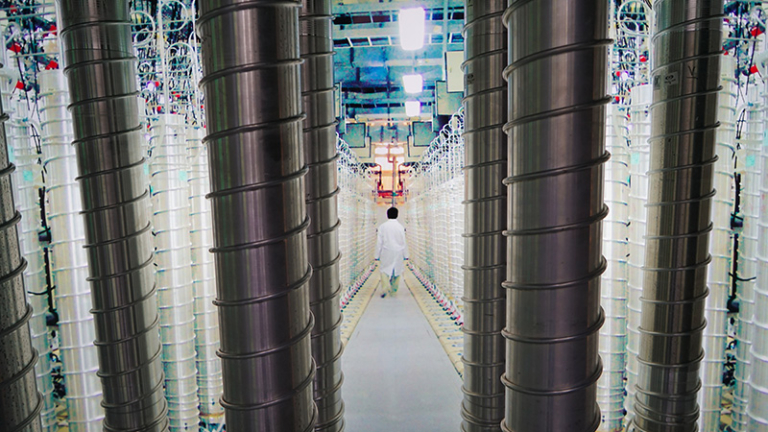
The MOU reaffirms Iran’s longstanding pledge not to pursue nuclear weapons—a commitment previously codified in both the Nuclear Non-Proliferation Treaty (NPT) and the Joint Comprehensive Plan of Action (JCPOA)—while deferring the technical details of a nuclear settlement to negotiations scheduled over the next 60 days. Chief among these issues are the future of uranium enrichment inside Iran and the disposition of more than 400 kilograms of highly enriched uranium (HEU) reportedly buried in Iranian territory.
From the Iranian perspective, enrichment has become a symbol of national sovereignty.
These questions lie at the heart of a dispute that has defined US-Iranian nuclear diplomacy for more than two decades. Since mastering enrichment technology, Tehran has argued that Article IV of the NPT, which guarantees the inalienable right of member states to the peaceful use of nuclear energy, includes the right to enrich uranium. Successive US administrations, however, have rejected this interpretation, making enrichment one of the most enduring obstacles to a lasting nuclear settlement. The JCPOA, subsequently endorsed by UN Security Council Resolution 2231, effectively recognized Iran’s limited enrichment program under a strict monitoring regime. The agreement, however, proved short-lived after the first Trump administration withdrew from it in 2018, reigniting a conflict that had previously been resolved through multilateral diplomacy.
Given that Iran has endured decades of sanctions, sustained international pressure, and now two wars in less than a year over its nuclear program—and more specifically its enrichment activities—it is highly unlikely that Tehran would abandon the principle of domestic uranium enrichment altogether. From the Iranian perspective, enrichment has evolved beyond a technical component of the nuclear fuel cycle and has become a symbol of national sovereignty and scientific achievement. In July 2025, Iranian Foreign Minister Abbas Araghchi captured this sentiment when he said that Iran would not give up enrichment because “it is the achievement of our scientists, and it is very dear to us.”
To alleviate international concerns, Tehran could, in principle, agree to temporarily suspend or limit enrichment as part of a final agreement with Washington. Such an arrangement could be coupled with intrusive monitoring and verification measures, similar to those implemented under the JCPOA, provided that these concessions were accompanied by meaningful sanctions relief and credible security assurances.
The fate of Iran’s more than 400 kilograms of HEU is likely to be another major point of contention during the technical negotiations. While the Trump administration has reportedly favored either the destruction of these stockpiles or their transfer outside Iran, Tehran is likely to prefer downblending, or diluting, the material to convert it to lower enrichment levels. Such an arrangement would reduce the immediate proliferation risk while allowing Iran to retain the material within its territory and preserve the option of re-enrichment should Washington fail to uphold its commitments. By contrast, shipping the stockpile abroad would deprive Tehran of one of its most important sources of nuclear leverage. Beyond the technical considerations, the political optics would also matter. Following years of sanctions, military confrontation, and domestic sacrifices in defense of its nuclear program, Iranian leaders may view the removal of the stockpile as politically difficult to justify at home, where it could be portrayed by critics as capitulation to American pressure.
Compounding these challenges are the political obstacles facing the MOU’s implementation. In the United States, critics of the agreement have already begun to question its merits. On June 16, 2026, for example, Senator Chris Murphy (D-CT) described the MOU as a “capitulation,” arguing that Washington conceded too much to Tehran.
The agreement has halted the fighting, but it has not resolved the underlying disputes that produced the conflict in the first place
At the regional level, Israel remains deeply skeptical of the MOU and the diplomatic process it has initiated. US intelligence assessments have recently warned that Israel may seek to undermine the agreement. Continued Israeli military operations in Lebanon have already placed the agreement under immediate strain and risk violating its commitment to terminate military operations on all fronts.
The June 17 MOU marks an important milestone in bringing an end to the most dangerous US-Iran confrontation in decades. Yet it should not be mistaken for a comprehensive settlement. The agreement has halted the fighting, but it has not resolved the underlying disputes that produced the conflict in the first place. Questions surrounding uranium enrichment, the fate of Iran’s HEU stockpile, sanctions relief, and long-term security guarantees remain unresolved and will test negotiators in the weeks ahead. If the parties can translate the MOU into a broader nuclear agreement, it could lay the foundation for a more stable regional order. President Trump is uniquely positioned to reach a groundbreaking agreement with Tehran that serves the interests of the United States and Iran alike. If they fail, the agreement may ultimately be remembered not as the beginning of a durable peace, but as a temporary pause in a conflict that neither side could decisively win.
The views expressed in this publication are the author’s own and do not necessarily reflect the position of Arab Center Washington DC, its staff, or its Board of Directors.
Featured image credit: Inspired By Maps via Shutterstock