
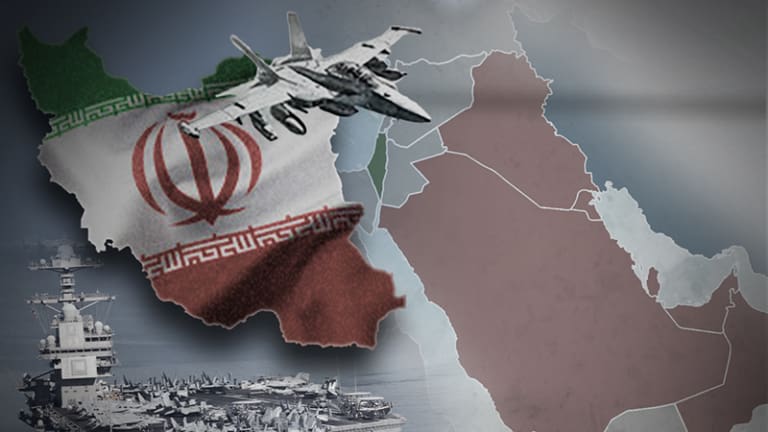
No sooner had news broke of a US-Israeli attack on Tehran on the morning of 28 February 2026, than Iran had launched a series of its own strikes targeting the six member states of the Gulf Cooperation Council. The Iranian attacks included missile and drone strikes against military, civilian, and economic sites, aimed at raising the costs of war for the United States and its allies, and at shocking the global economy in a way that might force an end to the war. The United Arab Emirates received the largest number of Iranian strikes, followed by Kuwait, Bahrain, Qatar, Saudi Arabia, and Oman.
From Mediators to Parties to the Conflict
The US-Israeli strikes against Iran punctured efforts by several Gulf states to contain the escalation between Washington and Tehran. Since the Twelve-Day War in June 2025, they had intensified their political and diplomatic efforts to prevent the region from sliding into another conflict that could undermine the security and stability of the Gulf, as well as its economies and the global energy markets that depend heavily on it.1 Oman and Qatar in particular exerted sustained efforts to avert the outbreak of war. Oman took the lead in mediation efforts, hosting the first round of indirect negotiations between the United States and Iran in Muscat on 6 February 2026, and working to forge new understandings regarding Iran’s nuclear programme.2
The Omani sponsored negotiations had, prior to the outbreak of war, come close to achieving a genuine breakthrough. Following the conclusion of the round of talks held in Geneva on 26 February, the Omani Foreign Minister, Badr Al Busaidi, announced that Iran had agreed to transfer its stockpile of enriched uranium abroad and to accept strict monitoring of its nuclear facilities, including US oversight. He affirmed that “the nuclear negotiations have so far achieved significant, important, and unprecedented progress”.3 However, the US and Israel, which were preparing to strike Iran under the guise of engaging in negotiations, did not allow any progress in Geneva to stop them launching a surprise attack. Only hours after the minister’s remarks about the possibility of reaching an agreement had generated an atmosphere of optimism, the US and Israel struck Tehran. Reportedly exploiting intelligence indicating that the Supreme Leader, Ali Khamenei, would be holding a meeting on the morning of Saturday, 28 February 2026, with a group of senior security and military aides, The White House sought to deliver a decisive strike aimed at paralysing the Iranian regime and forcing it to comply with US demands, or even causing it to collapse.
Events quickly unfolded in the manner Gulf states had most feared. They found themselves at the centre of the confrontation between the United States and Israel on one side and Iran on the other, when Iran – immediately after confirming that the Supreme Leader had been targeted – began carrying out its threat that any attack on its leadership would extend the war to the entire region. It had long been clear that a war launched by the United States and Israel against Iran could ignite the region. Iran carried out strikes against the Arab Gulf states despite several of them having declared that they would not permit the United States to use their territory or airspace to attack Iran. In response to the Iranian attacks, the Ministerial Council of the Gulf Cooperation Council convened its fiftieth extraordinary meeting via video conference on 1 March 2026. The council condemned the Iranian strikes against member states, describing them as a serious violation of their sovereignty and of the principles of good neighbourliness.4 It reaffirmed its commitment to political and diplomatic solutions as the sole path to overcoming the current crisis, ending the war, and restoring regional stability.
Despite bearing the brunt of Iran’s retaliation for the US–Israeli attack, the Gulf states have maintained their refusal to be drawn into the war, limiting their response to self-defence and intercepting Iranian strikes on their territories.
Iranian Motives
Iranian statements regarding the targeting of the Arab Gulf states have been marked by clear contradictions. While some Iranian officials denied responsibility for the attacks against their Gulf neighbours, other Iranian voices attempted to justify the strikes by claiming that they did not target Gulf states themselves, but the US military bases located on their territories. At the same time, other Iranian actors tried to disclaim responsibility altogether, arguing that Tehran did not carry out the attacks. This approach was articulated explicitly by the Iranian foreign minister, Abbas Araghchi, who asserted that Iran was not attacking its neighbours in the Gulf but was instead targeting the US presence on their soil. In this context, he attributed the strikes on Gulf states to Iran’s inability to strike a target inside the United States, leaving US regional bases the only viable target.5
The contradictions in Iran’s stance peaked when the Iranian president, Masoud Pezeshkian, apologized for the targeting of Gulf states and pledged not to attack them again in the future, provided that their territories were not used as a launchpad for attacks against Iran. Yet mere hours later, Iran resumed its strikes against Qatar, Bahrain, United Arab Emirates, and Saudi Arabia. This development suggests the presence of divisions within the ruling elite and pointed to the limited control of the political leadership over the Islamic Revolutionary Guard Corps (IRGC).
In reality, there is little connection between the positions of the Gulf states toward Iran – or even the differences among them regarding how to deal with Tehran – and the Iranian bombardment. The objectives of the strikes appear strategic, aimed at increasing the cost of the US-Israeli attack at both the regional and global levels, as well as on the geostrategic and economic fronts, regardless of the political behaviour of the targeted states. At the same time, regardless of Iran’s motives and the limited means available to it to defend itself against a superpower such as the United States – whose regional policies are strongly influenced by Israel – it is unrealistic to expect the Gulf states that have come under attack to understand or accept the Iranian rationale. The strikes have already mobilized a deeply hostile public opinion across the Gulf toward Iran.
Moreover, the Iranian claim that its attacks were aimed solely at US bases in the region was undermined by the nature of the targets. Iranian strikes have hit airports, service facilities, tourist sites, residential areas, and oil and gas production installations in Gulf countries, disrupting many of them. This has created the impression that Tehran was attempting to broaden the scope of the conflict, based on an approach that links Iran’s security with that of the Gulf states. 6 In other words, Iran appears to treat regional stability as an interconnected equation in which no actor could achieve stability independently of the others – thereby raising the cost of war for all parties.7 This strategy is particularly significant given the central role of the Gulf states in the global energy system. In 2025, the combined crude oil production of the member states of the Gulf Cooperation Council exceeded 17 million barrels per day – around 17 percent of total global production – while their reserves reached approximately 511.9 billion barrels, representing 32.6 percent of global reserves.8 In the same year, GCC states exported about 180.9 billion cubic metres of natural gas, accounting for 13.1 percent of global exports, and possessed around 44.195 trillion cubic metres in reserves – roughly 21.4 percent of the world total.9
Tehran appears to be treating this Gulf energy weight as a strategic lever on the US and the global economy. By linking its targeting of the American presence in GCC countries to the potential disruption of shipping through the Strait of Hormuz – through which roughly one-fifth of global oil and gas supplies pass – Iran hopes to raise the global economic cost of the war.10 Iranian calculations also seem to assume that higher energy prices in the United States would intensify already elevated inflationary pressures and prompt public opinion and Congress to pressure the President to end the war – particularly as the country approaches campaign season ahead of the midterm election scheduled for November.
Repercussions of the Attacks on the Gulf States
The Iranian attacks on the Gulf states are likely to produce major security, economic, and political repercussions, especially as Tehran continues to target vital economic facilities across the region and the pace of strikes intensifies. Gulf states have stressed in their official statements that these attacks constitute direct aggression against their territories and critical civilian infrastructure.11 They also affirmed their legal right to respond under Article 51 of the United Nations Charter, which guarantees the right of states to individual and collective self-defence in the event of armed aggression, and to take all necessary measures to protect their sovereignty, security, and stability.12
As the war and Iranian attacks continue, economic consequences are also emerging. Iranian strikes targeted energy facilities in Saudi Arabia, United Arab Emirates, Qatar, and Kuwait. Qatar was forced to halt its liquefied natural gas production entirely after its facility in Ras Laffan Industrial City – one of the world’s largest LNG production centres – came under Iranian attack. Doha subsequently declared a suspension of gas exports under the force majeure clause following the attacks and the closure of the Strait of Hormuz.13 Unable to export its crude oil after the closure of the strait, Kuwait also announced a reduction of oil production to levels sufficient only to meet domestic demand, due to storage capacity. Iraq likewise announced a production cut of about 1.5 million barrels per day. In addition, production was disrupted at the Ras Tanura Refinery in Saudi Arabia after it was struck by an Iranian drone. These developments have deprived global markets of a substantial share of their daily oil and gas supplies.14
Markets have reacted rapidly. Prices for Brent crude rose by around 35 percent to reach approximately $93 per barrel, with estimates suggesting that prices could reach $150 if the war continued for another week.15 Gas prices in Europe also surged by more than 50 percent.16 Meanwhile, maritime trade through the Gulf has been severely disrupted: oil tanker traffic through the Strait of Hormuz has declined by up to 80 percent,17 and around 3,200 vessels are stranded inside the Gulf, disrupting global supply chains.18 The crisis has raised the operating costs of Gulf energy exports, as war-risk insurance premiums for vessels operating in the Gulf increased fivefold.19 At the same time, US gas companies have benefited from the disruption in global supplies following Qatar’s production halt. Shares in companies such as Cheniere Energy and Venture Global LNG rose by about 7 percent and 24 percent respectively during the same week.20
The repercussions are not limited to the energy sector. The escalation also threatens economic diversification strategies across the Gulf, with projections indicating that the regional tourism sector could see a decline of between 11 and 27 percent in international visitors this year, resulting in losses estimated between $34 billion and $56 billion in visitor spending.21 With Gulf states having been attacked by Iran for the second time in less than a year – alongside the Israeli strike on Qatar last September despite the presence of a US military base on its territory – some Gulf policy circles have begun to question the usefulness of US bases in the region. Increasingly, there is a perception that the American military presence and its defence systems no longer guarantee effective protection for Gulf states in the event of attack. In contrast, the Gulf states appear to be the ones protecting the US presence rather than receiving any protection from that presence, turning it into a growing strategic burden.
Conclusion
Iran’s expansion of the war to include the Arab Gulf states reflects an attempt to tie the fate of the region to its own, raise the cost of the war for Washington and its allies, and disrupt the global economy in order to pressure them into ending the conflict without achieving their stated objectives; namely the overthrow of the Iranian regime or its submission to external demands. Tehran also hopes that the Gulf states, given the ramifications of the conflict, will in turn exert pressure on United States to move in this direction. However, the ability of the Gulf states to influence Washington remains limited. Moreover, the Iranian attacks have produced the opposite effect, mobilizing an angry public opinion across the Gulf against Iran as a result of its assaults on their territories. At the same time, signs have emerged that the strategic relationship between the Arab Gulf states and the United States may be turning into a security, economic, and political burden rather than an advantage. Furthermore, it appears increasingly unlikely that Iranian–Gulf relations will ever be the same again.
1 Maha El Dahan & Andrew Mills, “Four Arab states urged against US-Iran escalation, official says,” Reuters, 15/1/2026, accessed on 8/3/2026, at: https://acr.ps/1L9B9YO
2 Mohammad bin Mansour, Parisa Hafezi, and Nayirah Abdullah, “Iran: Talks with US in Oman ‘a good start’ and will continue,” Reuters, 7/2/2026, accessed 8/3/2026, at: https://acr.ps/1L9B9Ut
3 Adam Hancock, “Oman’s foreign minister meets with US’s Vance as Iran tensions rise”, Al Jazeera, 27/2/2026, accessed on 8/3/2026, at https://acr.ps/1L9BacT
4 “Statement Issued by the 50th Extraordinary Meeting of the Ministerial Council of the Gulf Cooperation Council (GCC) Regarding the Iranian Aggression Against the GCC”, General Secretariat, Gulf Cooperation Council, 1/3/2026, accessed 8/3/2026, at: https://acr.ps/1L9Ba4O
5 “Araghchi to Al Jazeera: The new Supreme Leader will be appointed within two days and we will not close the Strait of Hormuz at present,” Al Jazeera, 1/3/2026, accessed 8/3/2026, at: https://acr.ps/1L9B9Xw
6 Sarah Shamim, “Is Iran Expanding Attacks to Target Energy and Civilian Sites in the Gulf?” Al Jazeera, 3/3/2026, accessed on 8/3/2026, at: https://acr.ps/1L9Ba4I
7 Ibid.
8 “Gulf States Lead the World in Oil Production, Reserves, and Exports,” Al Bayan, 15/2/2025, accessed on 8/3/2026, at: https://acr.ps/1L9B9T4
9 Ibid.
10 “US-Israeli War on Iran Causes Major Oil, Gas Disruptions,” Reuters, 3/3/2026, accessed on 8/3/2026, at: https://acr.ps/1L9B9LP
11 “Advisor to Prime Minister and Spokesperson for Foreign Ministry: Qatar Resilient Against any Aggression Targeting Its Security and Sovereignty” Qatar Ministry of Foreign Affairs, 3/3/2026, accessed on 8/3/2026, at: https://acr.ps/1L9B9Ze
12 “Statement Issued by the 50th Extraordinary Meeting”.
13 “Qatar Energy halts LNG production,” Qatar News Agency, 2/3/2026, accessed 4/3/2026, at: https://acr.ps/1L9B9GV
14 “Facts – War on Iran disrupts oil and gas supplies,” Reuters, 3/3/2026, accessed 8/3/2026, at: https://acr.ps/1L9Ba0R
15 “Qatari Energy Minister warns oil prices could reach $150 a barrel if regional war continues,” TRT Arabic, 6/3/2026, accessed 8/3/2026, at: https://acr.ps/1L9B9iC
16 “Gas prices in Europe rise by 50% after Qatar suspends production,” Al-Araby Al-Jadeed, 2/3/2026, accessed 8/3/2026, at: https://acr.ps/1L9B9Fr
17 Dan Sabbagh, “Iran Has Largely Halted Oil and Gas Exports Through Strait of Hormuz,” The Guardian, 3/3/2026, accessed on 4/3/2026, at: https://acr.ps/1L9BaiD
18 Mae Anderson, “Iran War Disrupts Global Ocean Freight and Air Cargo Supply Chains Beyond Oil,” AP, 4/3/2026, accessed on 4/3/2026, at: https://acr.ps/1L9Ba7c
19 “London Marine Insurers Widen High-Risk Zone in Mideast Gulf as Conflict Escalates,” Reuters, 3/3/2026, accessed on 4/3/2026, at: https://acr.ps/1L9B9Dc
20 “US gas exports benefit from Qatari supply disruption,” CNBC Arabic, 3/3/2026, accessed on 4/3/2026, at: https://acr.ps/1L9Bak9
21 Georgi Kantchev, “Iran Strikes Shatter the Gulf’s Post-Oil Pivot,” The Wall Street Journal, 3/3/2026, accessed on 4/3/2026, at: https://acr.ps/1L9B9Pd