
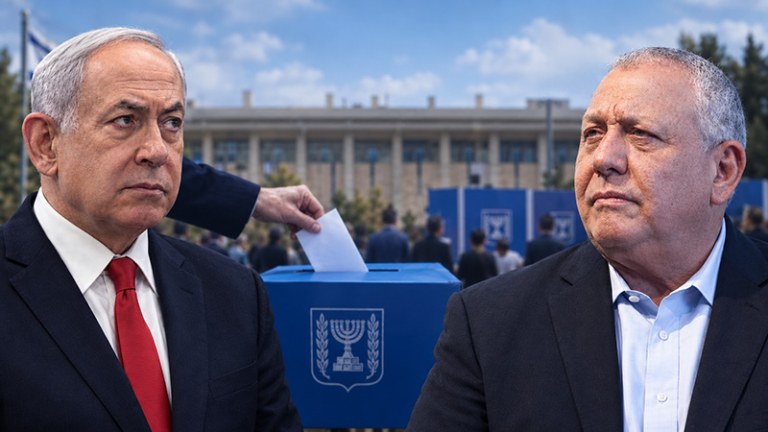
On September 23, 2026, Israel’s Central Elections Committee disqualified every Arab-majority party from running in the October Knesset elections. The committee—composed of representatives from the outgoing parliament—oversees elections and can bar candidates or parties from running. On October 2, 2026, Israel’s Supreme Court unanimously overturned the bans. But this turn of events is more than a legal dispute: it also reveals Israeli Prime Minister Benjamin Netanyahu’s broader campaign strategy for the elections, given that he is unlikely to win an outright majority. Instead, he appears to be working to prevent anyone else from forming a new government, leaving him in office as caretaker prime minister until Israel holds another round of elections.
Turning Arab Votes into an Electoral Liability
Israel’s parliament, the Knesset, has 120 seats. To form a government, a party or coalition of parties needs to secure at least 61 of those seats. The most recent polls have shown Netanyahu’s coalition—made up of his own Likud party and the ultra-Orthodox and far-right parties—taking around 52 seats, with no partners willing to help close the gap. His main challenger, former military chief Gadi Eisenkot, leads an opposition that is ahead of Netanyahu’s coalition in some polls and tied in others. Either way, this bloc also falls short of the 61-seat threshold.
The opposition’s only realistic path to 61 seats runs through Israel’s Palestinian-majority parties.
The opposition’s only realistic path to 61 seats, therefore, runs through Israel’s Palestinian-majority parties, which were projected to win around 12 seats before the bans were announced. Now that the bans have been lifted, Eisenkot faces an even more intractable dilemma: he needs these seats to reach a majority, but relying on them would risk alienating centrist and right-wing voters. Likud’s campaign has already capitalized on this electoral vulnerability. An AI-generated Likud campaign video, which Netanyahu himself has shared, shows Eisenkot running toward a young man wearing an “Israeli unity” shirt who resembles his son Gal, who was killed in the Gaza war. At the last moment, the young man turns away from Eisenkot to embrace Mansour Abbas, the leader of the United Arab List (Ra’am). Knesset Speaker Amir Ohana has similarly said that “Eisenkot has no coalition without Abbas.” Such messages target so-called soft-right voters who might otherwise drift toward Eisenkot.
The Netanyahu coalition categorically rejects the inclusion of parties led by Palestinian citizens of Israel. Their representatives in the Central Elections Committee banned Ra’am and the Joint List, an alliance of three Palestinian-led parties, in an 18-5 vote, despite Israel’s Attorney General informing the committee that the evidence against the parties did not meet the legal threshold for disqualification. Ra’am’s leader, Mansour Abbas, condemned the Hamas-led October 7, 2023, attack and called for the release of the Israeli hostages. In 2026, the party also cut ties with the Islamic Movement’s Shura Council, which had previously played a major role in party affairs. It also named Yoav Segalovitz, a former senior police commander and deputy public security minister, to the second position on its list—the first Jewish candidate in the party’s history. For Netanyahu’s coalition, however, Ra’am’s real offense is more likely that it joined the coalition that removed the prime minister from power in 2021 and has the potential to do the same in October 2026. Even with the Supreme Court’s reversal of the bans, Likud has captured a political win from the headline that Israel’s election authority originally disqualified the parties led by Palestinian citizens on its watch.
How Deadlock Keeps Netanyahu in Office
If neither Netanyahu’s coalition nor the opposition wins 61 seats on October 27, 2026, the keys to the prime minister’s office will not change hands. Netanyahu will then remain in office to oversee a caretaker government. Under Israeli law, the outgoing government keeps running the country until a new coalition is formed and sworn in.
If the opposition falls short of 61 seats, the deadlock itself becomes the latest win for Netanyahu.
If Palestinian-led party support becomes politically toxic and the opposition falls short of 61 seats, the deadlock itself becomes the latest win for Netanyahu. Such a scenario is not new for Israel. Between April 2019 and November 2022, Israel held five elections. Netanyahu managed to remain prime minister through most of this period of political crisis, using various maneuvers to prolong his tenure. For example, in May 2019, facing a deadlock like today’s, he pushed the Knesset to dissolve itself rather than step aside and allow another lawmaker the chance to form a government. In 2020, Netanyahu formed a coalition with rival Benny Gantz under a power-sharing agreement that would have presumably handed Gantz the premiership in November 2021. Instead, the government collapsed in December 2020 after failing to pass a budget, triggering new elections and allowing Netanyahu to remain prime minister in a caretaker capacity until June 2021.
While the Israeli High Court and Attorney General have placed limitations on caretaker administrations—and an expectation that they show restraint in making long-term commitments—most of the powers of government remain in the prime minister’s hands under such an arrangement. For Netanyahu, the advantage of leading a caretaker government is that he can continue to set the security agenda and dominate the news cycle as the incumbent rather than having to campaign from the opposition benches. In this election cycle, it would mean he could continue running the country and directing the wars in Iran, Gaza, Lebanon, and the broader region. It also buys him time on a more personal front. Every month Netanyahu remains in office is another month in which he faces his ongoing corruption trial with all the advantages of a sitting prime minister rather than as a private citizen.
Winning Without a Majority
In the end, Netanyahu does not need to win the upcoming election. He only has to ensure that everyone else loses. The move to disqualify parties led by Palestinian citizens of Israel—which appears aimed more at winning over public opinion than at establishing legal credibility—will further aid his bid to remain in office at the head of a caretaker government. It is a playbook that is already yielding political and legal advantages. The Supreme Court restored Ra’am and the Joint List to the ballot, but the initial bans have already served Netanyahu’s immediate strategic purpose. And if neither bloc can reach 61 seats after the October 2026 elections, the resulting deadlock becomes Netanyahu’s win, allowing him to govern from the center of a prolonged stalemate.
The views expressed in this publication are the author’s own and do not necessarily reflect the position of Arab Center Washington DC, its staff, or its Board of Directors.