
The April 12, 2026, collapse of US-Iran talks in Islamabad, Pakistan, could open the door to the perils of mutually assured devastation. This differs from the logic of mutually assured destruction, or MAD, which kept the United States and the Soviet Union from using nuclear weapons during the Cold War. Fearing Armageddon, Moscow and Washington chose détente over a potential cataclysm. Paradoxically, the perils of mutually assured destruction opened the door to diplomacy.
Today, a very different calculus prevails. For the United States, Israel, and Iran, mutually assured devastation rests not on the threat of total annihilation, but rather on a prolonged assault—a form of death by a thousand cuts that, with each thrust, damages an adversary’s economic, military, educational, security, and energy infrastructure, leaving that foe wounded but alive. The advantage of mutually assured devastation is that, if calibrated, it might eventually compel a rival to accept a deal that, however skewed, is preferable to political extinction. But it can also invite a spiral of mutual devastation, especially if one or more of the warring parties reject the implicit constraints of coercive diplomacy.
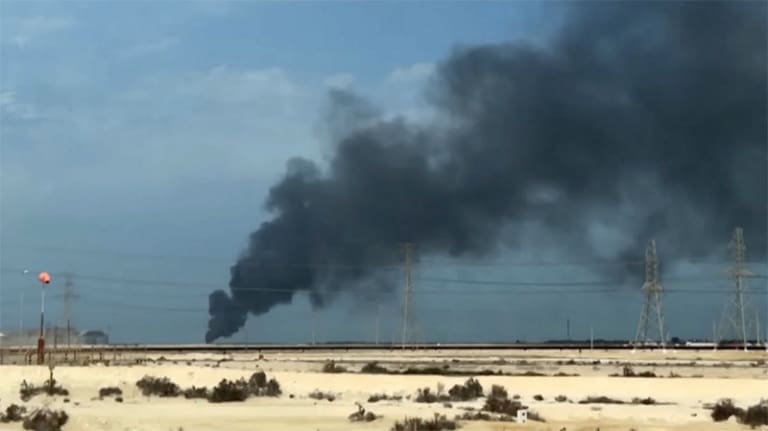
US President Donald Trump’s decision to blockade Iran’s Gulf ports starting on April 13, 2026, could increase the risk of mutually assured devastation, especially if, or when, Tehran or Washington uses military force to defy or enforce the blockade. Mocking Trump’s move, one Iranian official suggested that Iran would outlast the president’s “revenge of choice against the global economy.” Yet the risk of a military escalation following the US blockade is not simply that the flow of Iranian oil through the Strait of Hormuz would cease, but that Gulf energy facilities producing about a third of the world’s oil and about a quarter of its liquefied natural gas could be severely damaged or destroyed. If this happens, Trump’s April 7, 2026, warning that Iran’s “civilization will die…never to be brought back” will be remembered not only as a hazardous and failed bid to force Iran’s capitulation at the negotiating table, but also as a prophecy of global ruin.
Escalation in the Gulf
When they launched their assault on Iran on February 28, 2026, President Trump and Israeli Prime Minister Benjamin Netanyahu reportedly hoped that their assassination of Iran’s leaders, starting that day with Supreme Leader Ali Khamenei, would spur a new popular uprising that would bring down the regime. But after the “decapitation” strategy failed to trigger new mass protests, the United States escalated its attacks on Iran’s military and security assets in a bid to compel Iran’s new (and even more hardline) leaders to capitulate to Washington’s terms for a deal. Israel pursued another ambitious goal in service of its regime change goal: the destruction of Iran’s oil and gas facilities, the lifeblood of the state itself. For Trump, this Israeli goal has created both risks and opportunities. The growing threat of devastation of its energy industry might compel Iran’s compliance. But if uncontrolled, it could invite massive Iranian escalation, potentially causing the destruction of the energy and desalination facilities of one or more Arab Gulf states.
Underscoring this peril, in a March 18, 2026 “Truth Social” post, Trump lashed out at both Israel and Iran after Israel attacked Iran’s South Pars liquefied natural gas (LNG) facility and Iran retaliated, hitting Qatar’s Ras Laffan Industrial City and destroying some 17 percent of Qatar’s LNG capacity in one fell swoop. Trump declared:
NO MORE ATTACKS WILL BE MADE BY ISRAEL pertaining to this extremely important and valuable South Pars Field unless Iran unwisely decides to attack a very innocent, in this case, Qatar – in which instance the United States of America, with or without the help or consent of Israel, will massively blow up the entirety of the South Pars Gas Field at an amount of strength and power that Iran has never seen or witnessed before.
His threat perfectly captured the wider conundrum facing Trump. Because Qatar and Iran share the South Pars, an assault on any part of it could threaten both countries—or worse, open the door to mutually assured devastation in the wider Gulf region. Trump tried to skirt this danger by insisting that Israel did not inform the White House in advance of its attack. But Israeli officials promptly contradicted him, in the process illustrating a gap between Washington and Tel Aviv. As one Israeli analyst put it, “The strike attempted to…signal…that Israel can paralyze the whole electricity network in the country…If you stop the electricity supply…in many ways you stop [Iran].” But the very threat of such an outcome triggered Iranian retaliation, a response that Netanyahu may have calculated would draw the United States further into the battle.
Trump did not follow through on his threat to destroy the South Pars field. Instead, he had the US military escalate attacks on Iranian military and security targets in tandem with Israel’s expanded assaults on Iranian oil, gas, and industrial installations. Netanyahu insisted that this was a coordinated strategy. But for the United States, these attacks were intended to force Iran to reopen the Strait of Hormuz, while Israel’s goal was to devastate the Iranian state and to wreck any chance of diplomacy. As for Iran, it continued to hit oil facilities and at least one desalination plant in several Gulf Cooperation Council countries, in an attempt to force them to pressure Trump to call for a ceasefire.
For Trump, an escalating war was becoming politically unsustainable.
The US military intercepted most of Iran’s attacks, but enough landed to rattle Arab Gulf leaders and help send the price of oil soaring. This strategy of “preemptive destruction”—as some Iranian officials dubbed it—expanded on March 28, 2026, when Yemen’s Houthi forces fired missiles at Israel (which reportedly has been unable able to intercept all Iranian missiles and drones), and threatened to close the Bab al-Mandab Strait. On April 4, 2026, a fourth Israeli-US attack near Iran’s Bushehr nuclear plant prompted a warning from International Atomic Energy Agency Director General Rafael Grossi, who voiced “deep concern…noting that auxiliary site buildings may contain vital safety equipment.” While they did not produce radiation leaks, these attacks—which killed one person—illustrated the dangers facing the entire region as the United States and Israel deployed a common strategy to advance their not fully aligned agendas. If neither was succeeding—as demonstrated by the Iranian regime’s defiance and its continued capacity to strike Israel and the Arab Gulf states—for Trump, an escalating war was becoming politically unsustainable for him. He thus raised the stakes by threatening to bomb Iran “back to the Stone Age,” and then warning that if Iran did not open up the Strait of Hormuz by the evening of April 7, 2026, a “whole civilization will die.”
Why Talks Fail Under the Threat of Mutual Devastation
While these dire threats prompted the highest-level direct negotiation between Iran and the United States in nearly half a century, the Pakistan meeting failed to yield an agreement. It was inevitable that the Islamabad talks would collapse. Each side brought a list of its ultimate demands, suggesting that rather than aim for a more limited agreement, they would pursue a more comprehensive deal. No such deal could be hammered out in a week, much less in the 21 hours that the parties spent in Islamabad. That both sides entered the talks believing they were in a strong position made matters worse. Vice President JD Vance’s statement that “we’ve made very clear what our red lines are…they have chosen not to accept our terms,” highlighted the dangers of hubris. The US delegation seems to have assumed that it would force Iran’s capitulation or leave the table. This was an exercise in mutual devastation—coercion dressed up as negotiation.
It was inevitable that the Islamabad talks would collapse.
Strange as it may seem, in the weeks leading up to the Israeli-US launch of their war on Iran in February, it appeared that the United States and Iran were getting closer to reaching an agreement during a late February 2026 Geneva meeting. Reliable reporting from multiple sources suggests that the two sides were nearing a compromise, not only on the fate of the 540 kilograms of 60 percent-enriched uranium buried near the Isfahan nuclear facility, but also on the contentious issue of enrichment. In Geneva, a face-saving formula that would not have explicitly negated Iran’s claim of its supposed “right” to enrichment but would have allowed for the dilution of its uranium and some form of suspension of enrichment was being discussed, along with proposals for sanctions relief and even economic cooperation. Trump’s negotiators Steve Witkoff and Jared Kushner, together with veteran British diplomat Jonathan Powell, who served as a kind of mediator, reportedly agreed with their Iranian counterparts to hold another round of technical talks in Vienna. But two days later, Israel and the United States attacked Iran. Fast forward to the Islamabad marathon and it is not surprising that the talks were marked by deep mistrust. What was needed was more time, not threats of mutually assured devastation.
Trump Faces Two Unequally Bad Options
In concert with announcing a blockade on Iranian ships leaving port to sail through the Hormuz Strait, Trump threatened Iran. “Warning,” he declared on his social media site Truth Social, “If any of these ships come anywhere close to our BLOCKADE, they will be immediately ELIMINATED.” An Iranian official responded in kind, warning that “if the security” of Iran’s ports is threatened, “no port in the Persian Gulf and the Sea of Oman will be safe.” The country’s new hardline leaders, from Supreme Leader Mojtaba Khamenei to senior officials, will resist compromise despite the fires burning around them. Like their counterparts in Washington, they believe that God is on their side. The threat of mutual devastation has reemerged with all that implies for Iran and its Gulf neighbors, and for the global economy.
Given the stakes, we can only hope that once President Trump sees that his war of choice may devastate his own presidency, he will cut a deal acceptable to both sides. The irony is that he was very close to such a deal just two days before he and his Israeli counterpart launched their coordinated assault on Iran. Now, Trump needs another exit ramp off a road that he helped to build. His April 14, 2026, statement that Iran and the United States might restart talks “in the next two days” suggests he may take it. Indeed, reports of a deal that would allow Iran to suspend enrichment might echo the terms of the one discussed in late February. Vance insists that “the ball is in the Iranian court.” But unless he accepts the principle that genuine negotiations must produce a win-win outcome, a new round of talks could again fail. Moreover, Netanyahu opposes such talks and, for this very reason, had continued to pursue Israel’s war on Hezbollah despite the April 8 US-Iran ceasefire. If Trump wants to transform mutually assured devastation into mutually assured peacemaking, he will now have to muster the will to compel Israel to adhere to the Lebanon ceasefire he brokered on April 16. The ball is in Trump’s court.
The views expressed in this publication are the author’s own and do not necessarily reflect the position of Arab Center Washington DC, its staff, or its Board of Directors.
Featured image credit: Screencap/X