
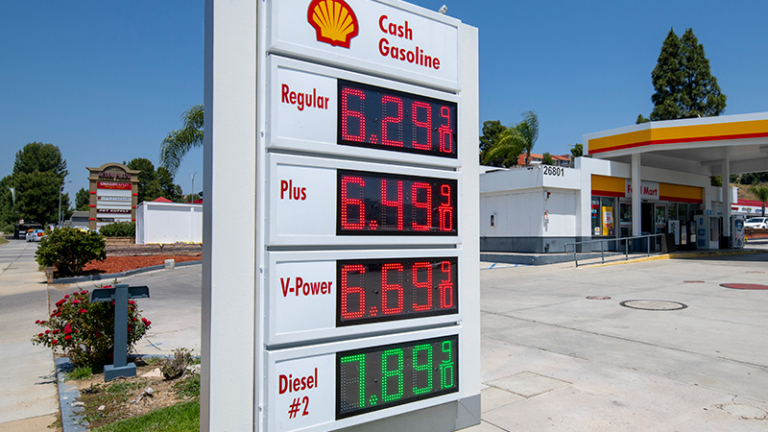
Midterm elections in the United States are usually a referendum on whichever party holds the White House. Going into this year’s midterms on November 3, 2026, anxieties are high among Republicans as President Donald Trump’s approval ratings fall, giving Democrats hope that they can take back the majority in Congress. Trump’s declining popularitysagging poll numbers can be partly explained by the economic consequences of his decision to wage war with Iran—a conflict that has now entered its seventh month, with no end in sight. Even in rural America, which has supported Trump in previous elections, voters are expressing frustration with rising diesel and fertilizer costs that have resulted from the war’s disruption of global energy supplies. Moreover, Trump’s argument that Americans will have to endure higher gasoline prices to prevent Iran from obtaining nuclear weapons contradicts his June 2025 claim that Iran’s nuclear program had been “obliterated.” In an apparent effort to address voters’ economic discontent, on September 9, 2026, Trump promised a $5,000 “Trump Dividend” to every American adult if Republicans retain control of Congress in November. Although the president offered no detailed funding plan for the payment, which would cost over $1 trillion and require congressional approval, the timing of his proposal reflects how America’s affordability crisis has become a prominent issue in the 2026 midterm campaigns.
Trump’s Campaign Promises Ring Hollow to the Electorate
As a candidate, Trump repeatedly promised the American people that he would not engage in “endless” Middle Eastern wars and would focus instead on bringing down the cost of living. During the 2024 presidential campaign, he capitalized on the public’s anger with the Biden-Harris administration over high prices during their term, even though inflation had significantly fallen by the time Biden left office in January 2025. Trump’s decision to launch a war with Iran has upended both of these campaign promises. Iran has shown that it can withstand US pressure and use asymmetric tactics to its advantage. Although the US military campaign has severely degraded Iran’s military assets, Tehran reportedly is still producing enough drones and rockets in its underground facilities to continue hitting ships in the Strait of Hormuz, as well as regional US bases and infrastructure targets in the Arab Gulf states. In September 2026, the Department of War Office of Inspector General reported to Congress that as of June 29, the war with Iran had cost the department an estimated $33.4 billion, in addition to the $113 million reported by the Department of State.
One estimate suggests that Trump’s war with Iran has cost American families more than $1,000 per household.
One estimate suggests that Trump’s war with Iran has cost American families more than $1,000 per household since it began, a figure which takes into account higher prices for gasoline, household expenses, and groceries. On average, gas prices have risen by more than a dollar per gallon since February 2026, while diesel has increased by more than $2 per gallon. The US Department of Labor reported that the August 2026 consumer price index had increased by 3.4 percent in just one year, largely due to the higher cost of gasoline. On September 9, 2026, Trump admitted that the price of oil was likely to remain high until the November midterms.
Many Americans are worried by these developments. A July 2026 Pew Research Center poll found that 56 percent of Americans said that they were “very concerned” about the price of gasoline, while an AP/NORC poll reported that 40 percent of Americans identified gas prices as a major cause of stress. The same month, a CNN poll found that three-fourths of those Americans surveyed said higher gasoline prices were causing some level of financial hardship for their families. Finally, a July 2026 University of Maryland Critical Issues poll found that 59 percent of Americans view the war’s impact on US interests as being more negative than positive.
Trump Voters and the Affordability Crisis
Although a majority of Republicans still view Trump favorably, growing public dissatisfaction with inflation has prompted some of his supporters to reconsider their position. Even in so-called Trump country—rural America which has consistently supported him—voters are apparently feeling “buyer’s remorse.” Farmers have been hit hard by both Trump’s tariffs and the economic impact of the Iran war. They have had to deal with the rising costs of both diesel fuel for agricultural vehicles and nitrogen-based fertilizers, whose production relies heavily on natural gas and for which Gulf producers are major suppliers. Republicans in Congress have included a $12 billion supplemental emergency aid bill for farmers as part of a broader budget resolution. However, the measure also provides tens of billions of dollars in additional defense and intelligence spending associated with the Iran war. The combination has drawn criticism from some agricultural groups. In a July 2026 letter to congressional leaders, the National Farmers Union stated that “we are troubled by funding that perpetuates a costly military conflict that risks further disrupting global markets, increasing input costs, and contributing to the economic pressures already weighing on farm operations.”
Republicans are also struggling with Trump’s apparent indifference to the everyday struggles of voters who are trying to make ends meet. He has mocked the affordability crisis and flatly contradicted his vice president, JD Vance, who had said that reducing gasoline prices—rather than ending Iran’s nuclear program—was the administration’s top priority. Although recent polls have shown that 63 percent of Americans oppose the Iran war, on September 10, 2026, Trump expressed no regrets for the war, admitting that “if I had to do it again, I would do exactly as I did.” Moreover, he appears to deny that his supporters oppose the war, saying that “I don’t think they’re demoralized. I think they’re proud of the fact that I’m not letting Iran have a nuclear weapon.” Trump’s confidence in his decision-making ability arguably does little to boost the Republican Party’s chances to hold onto power in Congress.
Congressional Concerns
Republican leaders are increasingly concerned that the affordability crisis will cost them their slim majorities in both the House and Senate. Although many Republican politicians supported the February 2026 decision to launch the war on Iran, several members of his party have argued that in doing so, Trump short-circuited congressional oversight prerogatives. Generally, before engaging in military action the president informs the so-called Gang of Eight, senior members of Congress who may receive especially sensitive intelligence briefings. Afterward, the president can request an Authorization for Use of Military Force (AUMF) from Congress to continue military operations. Although the Trump administration gave the Gang of Eight a classified briefing four days prior to attacking Iran on February 24, 2026, it did not subsequently request a new AUMF. Trump has also faced accusations that his conduct violated the 1973 War Powers Resolution. The law requires the president to notify Congress within 48 hours when US troops are introduced into hostilities. It generally requires hostilities to end within 60 days unless Congress takes further steps, though the president can extend this deadline by up to 30 days in special circumstances. At times, Trump has claimed the War Powers Resolution is unconstitutional; at others, he has argued that the 60-day window did not apply because Iran and the United States had agreed on a ceasefire to allow negotiations.
Republican leaders are increasingly concerned that the affordability crisis will cost them their slim majorities in both the House and Senate.
The effects of the war continue to be felt by voters. In July 2026, several more American service members were killed and many more injured. The costs of petroleum products increased during the closure of the Strait of Hormuz (through which 20 percent of the world’s petroleum usually passes) and the military costs of the war have continued to rise. On September 15, 2026, the House of Representatives passed an Iran war powers resolution for a third time by a vote of 220 to 204, with seven Republicans joining the Democrats. This latest resolution reveals the growing congressional dissatisfaction with the war.
Trump’s Falling Approval Ratings
Trump’s popularity rating has fallen from a high of 47 percent shortly after he was inaugurated in January 2025 to around 32 percent in September 2026, a career low. A number of reasons account for this drop, including the public’s frustration with the draconian tactics used by Immigration and Customs Enforcement (ICE), as well as reports that Trump and his family have earned at least $2 billion in the past year and a half alone, allegedly through insider deals. The imposition of tariffs that have bypassed Congress has also led to higher prices. However, the Iran war likely accounts for much of the decrease in the president’s popularity.
Outside of its economic impact, the war has led to the deaths of 18 US service personnel, and the injury of hundreds more. US military bases in the Middle East have suffered severe damage, and the stockpiles of certain US weapons have dwindled. Given that Trump claimed that Iran’s nuclear program had been obliterated in June 2025 and that the Strait of Hormuz was open prior to the start of the current war, many Americans are undoubtedly wondering why the war was launched in the first place, particularly since it is apparent that Iran has not accepted defeat and the Strait of Hormuz is now effectively closed to commercial shipping.
Likely Political Outcomes
While hurting the Republicans, the affordability crisis—stemming largely from the Iran war—has boosted the political fortunes of Democrats. A late August 2026 Economist/YouGov poll reported that Democrats had a seven-point lead over Republicans on the question of who does a better job of handling the economy. Democrats are likely to connect the economy to Trump’s war against Iran ahead of the midterm elections. For their part, Republicans, who have fewer favorable issues to run on, will probably continue to condemn the Democrats for their so-called extremism, highlighting the growing influence of democratic socialists within the party. Although name-calling may scare some independents from supporting Democratic candidates, such tactics will probably not be enough to turn the tide in the race for the House and Senate.
If Democrats do win control of Congress in November, it will mean that the party will head the appropriations process. By controlling the power of the purse, Democrats in Congress could also seek to deny the administration funds to continue this war, similar to what they did in 1969 with the Vietnam War. With a majority in the House and the Senate, the Democrats will gain the power to subpoena administration officials to testify before Congress and obtain documents on the war that can show the extent to which certain munitions have been depleted, as well as the full scale of the damage inflicted on US bases in the Middle East. In addition, they could thoroughly investigate the chaos in the upper echelons of the Pentagon under Pete Hegseth’s tenure as secretary of war. The Democrats could also signal to Trump that they will not approve his loyalists as nominees for top positions unless they possess the necessary experience and qualifications.
Bringing greater transparency about the war will likely convince even more Americans that Trump’s war was not worth its high cost and its role in further undermining the country’s standing in the world and the stability of its economy. However, even with a Democratic majority in Congress, Trump would remain commander-in-chief and chief executive of the US federal government—meaning that he would likely veto any additional attempts by Congress to pass a war powers resolution on the Iran war. Nevertheless, Trump would be a lame duck president with limited time and power. As such, he would no longer have a Republican majority in Congress to rubberstamp his policies.
The views expressed in this publication are the author’s own and do not necessarily reflect the position of Arab Center Washington DC, its staff, or its Board of Directors.
Featured image credit: Robert V Schwemmer via Shutterstock