
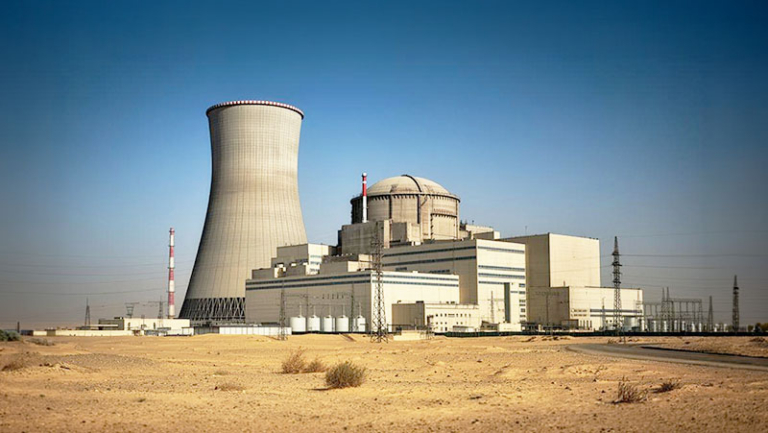
The July 22, 2026, US-Saudi Arabia Nuclear Cooperation Agreement caused some observers to scratch their heads. Why would a country bother with nuclear energy when it holds a fifth of the world’s oil, in a region with 40 percent of global natural gas, and enough sunshine to generate the world’s cheapest solar power? The enormous complexity and expense, radioactive waste, financial and proliferation risks, and frequency of war in the region raise many doubts about the wisdom of launching a nuclear program in the Middle East.
Criticism of the deal targeted US concessions on Saudi enrichment safeguards, suggesting Saudi enrichment could open the door to a potential future challenge to Israel’s de facto regional monopoly on nuclear weapons. The opposition prompted President Donald Trump to backtrack and insert a contingency clause stipulating that Saudi Arabia would have to normalize diplomatic ties with Israel before the deal could be implemented. Trump’s last-minute addition renders the agreement uncertain and provides Washington’s Gulf partners with yet another example of declining US credibility.
The US-Saudi nuclear agreement nevertheless marks a significant step forward in ties between Washington and Riyadh, while highlighting new uncertainties. For example, the deal is at odds with the tenets of the longstanding US-Saudi energy-for-security partnership. In the future, it is the United States that could provide the energy—in this case, 30 years’ access to US technology and support in developing nuclear power generation—while Saudi Arabia looks elsewhere for security.
The Case for Nuclear
There are solid policy reasons for even major oil exporters such as Saudi Arabia to pursue nuclear power in the Middle East. The first is comparative cost: nuclear power could undercut power generation based on the expensive oil feedstocks that are still common in countries such as Iraq, Kuwait, and Saudi Arabia. As all three enjoy interconnected power grids, Saudi Arabia’s neighbors could benefit from the kingdom’s future electricity exports.
The Saudi argument for nuclear energy is strengthened by its domestic uranium deposits and a commitment to develop mining as an economic diversification strategy. Eventually, the kingdom might be able to mine and enrich its own reactor fuel. However, Saudi ore is low grade: a joint 2022 assessment from the International Atomic Energy Agency and the Organization for Economic Cooperation and Development’s Nuclear Energy Agency describes uranium deposits in Saudi Arabia as “severely uneconomic” to produce under standard market conditions, although it may be possible to extract uranium as a byproduct from otherwise viable Saudi phosphate deposits. Yet Saudi Arabia’s motivation is not simply economic: there are further rationales related to transfers of technology and strategic benefits that extend beyond electricity. Perhaps most importantly, mastery of the nuclear fuel cycle is symbolically important as a step toward the great power status that the kingdom has long pursued.
There are further rationales related to transfers of technology and strategic benefits.
If Saudi nuclearization is inevitable, the Trump administration may have calculated it would be better for the United States to be involved. “When countries decide that they want to pursue a peaceful civil nuclear program, we’d prefer them do it with us than do it with some other country. It allows us to have some influence over the direction that it goes,” said US Secretary of State Marco Rubio after the signing. There are also US commercial interests involved: the Trump administration is seeking to promote overseas adoption of US small modular reactors (SMRs), which promise a less capital-intensive method of generating nuclear power, with reduced fuel and waste. SMR technology is newly emerging, with several US firms promoting competing designs seeking to capture market share. Getting an early foothold in Saudi Arabia’s nuclearization plans would be a significant prize in this race.
Displacing Saudi Oil
From Riyadh’s perspective, the potential benefits of nuclear development are many and persuasive. The kingdom is increasingly desperate to stop burning an average of one million barrels per day of subsidized oil-based fuels in power generation. Rather than using expensive liquid fuels to supply subsidized electricity to the domestic market, it would be more economically rational for Saudi Arabia to develop alternatives and export oil at higher international prices, or convert it to more valuable petrochemicals.
Saudi Arabia has been struggling to replace oil-generated electricity with either natural gas or renewable power. Although both are growing quickly, so is overall power demand. Solar power is the cheapest, but since it is available only 25 percent of the time on average, it requires battery storage or backup generation. This limitation means that solar power is most useful as a “fuel saver” to drive down costs of conventional generation. By contrast, nuclear provides 24-7 baseload power that can meet demand around the clock, including during the evening peak period that is difficult to meet with solar power. Nuclear power is also a great source of waste heat to desalinate seawater. All of these benefits come without emissions, a key advantage in attempting to meet the Saudi Green Initiative commitments made as part of Vision 2030 and the pledge from Saudi Crown Prince Mohammed bin Salman (MBS) to reach net-zero emissions by 2060.
Transferring Oil Rents to Future Generations
Building a nuclear power plant is a daunting task. For most countries, it involves setting up a regulator, gaining regulatory approval, holding public hearings, vetting vendors and complex bids, and most onerously, making an initial investment worth about two-thirds of the plant’s lifetime costs. The financial risks grow more acute as construction moves toward completion, with potentially huge losses from eleventh-hour delays or cancellations, as an incomplete power plant is almost worthless. Recouping that investment cannot commence until the first sale of electricity—again, at least a decade after the project began. Unsurprisingly, nuclear power is rarely built without significant government support.
Building an enduring nuclear plant is a deft way to transfer today’s oil wealth to future generations.
For cash-rich oil exporters, however, such sizeable capital investments are not necessarily a drawback. Periodic oil booms create fiscal surpluses that are tailor-made for infrastructure investment. Building an enduring nuclear plant is a deft way to transfer today’s oil wealth to future generations.
In many Gulf states, investments for future generations are usually handled by sovereign wealth funds, often through purchasing foreign assets. But these investments are subject to market volatility and geopolitical risks, which make domestic projects an increasingly attractive hedge. Nuclear power generation represents a highly skilled economic sector that offers a way to diversify the economy, transfer technology, and provide jobs. Nuclear energy therefore fits neatly into Saudi Arabia’s recent plans to refocus its economic strategy.
Seeds of a Future Weapons Program?
More controversial are dual-use issues. As Iran’s nuclear program has demonstrated, building out gas-centrifuge enrichment, even for low-enriched civil reactor fuel, creates knowledge and technical infrastructure that can potentially be repurposed toward weapons-grade enrichment. Saudi Arabia remains vulnerable to attack from Iran and its Houthi allies in Yemen, which have shown willingness to attack targets including energy infrastructure in the kingdom. Since 2017, Houthi strikes have damaged Saudi naval and commercial ships, the main civilian airport in Riyadh, and various oil production, processing, and export sites; Iran’s attacks since 2019 have hit oil tankers, a major export pipeline, Saudi Aramco facilities, and military bases. Saudi Arabia may therefore consider the optionality of a nuclear program useful as a future deterrent. “Without a doubt, if Iran developed a nuclear bomb, we would follow suit as soon as possible,” MBS told CBS News’ 60 Minutes in 2018.
Israel’s regional nuclear weapons monopoly and its demonstrated willingness to strike US-allied countries in the region—such as its conventional missile strikes on Qatar in September 2025—have also concentrated Saudi minds on the need for a strategic deterrent. The prospects for a Saudi civil nuclear program to segue into a military one, in sum, are not zero.
Regional Competition
Saudi Arabia may also be looking to other regional competitors. The United Arab Emirates (UAE) is Exhibit A in demonstrating the fruits of Gulf nuclear power—as well as reminding Washington of the hard truth that signing a nuclear agreement does not guarantee the largest contracts to US firms.
Signing a nuclear agreement does not guarantee the largest contracts to US firms.
The US-UAE 123 Agreement was signed in May 2009; seven months later, the UAE awarded the contract to build its four-reactor Barakah plant to a South Korean consortium. Even when the UAE’s nuclear energy program confronted delays, US firms were still not first in line for new contracts. At the time, the UAE was undergoing fast growth in electricity demand and was uncertain about how to generate increased supply. The country had just become a net importer of natural gas, bringing in liquefied natural gas (LNG) from as far away as Texas. In 2016, Dubai turned to coal—the only fossil fuel not found on the Arabian Peninsula—launching the Chinese-built Hassyan Power Complex which imported its coal from faraway Colombia.
A major source of relief arrived when the Barakah plant fired up its fourth and final nuclear reactor in 2024, reaching its full capacity of 5.6 gigawatts, enough carbon-free power to supply a quarter of the UAE’s consumption. A fast-growing array of renewables has also reduced the pressure on natural gas supplies. Although the UAE’s overall power demand is still growing, gas-fired generation has declined. LNG imports have all but halted. Freeing up gas in Abu Dhabi has allowed Dubai to drop coal and switch its mammoth Hassyan power plant to natural gas.
Abu Dhabi’s Barakah is the second civilian nuclear power plant in the Middle East. It follows Iran’s 915 megawatt Bushehr 1 plant, built by Russia’s Rosatom. In Turkey, further nuclear plants are under construction—a four-reactor, 4.5 GW plant with the first reactor scheduled to come online in 2026—and a similar plant in Egypt is awaiting startup in 2028. The Turkish and Egyptian plants are also Russian imports, built by state-owned Rosatom. Russian nuclear leadership and increasing Chinese nuclear cooperation and construction also contribute to Washington’s interest in returning to the nuclear game in the Middle East. At the same time, the growing roster of nuclear-powered neighbors adds pressure on Riyadh to join in.
Going Nuclear: Potential Costs
There are good reasons to consider alternatives to nuclear power, financial hardship among them. Saudi Arabia is already dealing with huge costs from the 2026 Iran war, even as it emerges from a decade of often disappointing giga-projects that soaked up huge amounts of domestic capital and effort before being cancelled with little to show. After spending some $50 billion on The Line—a pair of linear skyscrapers envisioned to stretch across 100 miles of desert—for example, the Saudi Public Investment Fund (PIF) cancelled the project when it was little more than a trench in the ground. By one estimate, finishing The Line would have cost nearly $9 trillion. Riyadh’s gargantuan Mukaab, a cube-shaped skyscraper, was similarly scrubbed after $100 million was spent on site preparation. The implausible Trojena mountain ski resort saw $4.7 billion in contracts cancelled after construction was well underway.
The Saudi government and the PIF have now shifted into austerity mode.
The Saudi government and the PIF have now shifted into austerity mode, freezing use of consultants, cutting budgets, and writing down losses. As nuclear power plants are unlikely to pay for themselves for decades, such fiscal strains are anathema to the long lead times and vast capital investments that nuclear projects require.
There are further downsides. Nuclear output is not easily cycled up and down to meet daily demand peaks or to provide backup for intermittent solar. These roles are more easily handled by natural gas-fired plants or batteries. Nuclear power also involves managing radioactive spent fuel for decades—with all the associated environmental, safety, and security risks.
Finally, nuclear plants and scientists, especially in the Middle East, are frequent targets of deliberate attacks. The US-Israeli war on Iran has struck nuclear enrichment sites in Iran, and Iran’s retaliatory attacks on energy infrastructure in its neighboring Gulf Cooperation Council countries have exemplified the risks that nuclear reactors and spent fuel storage could likewise become targets. In May 2026, an Iranian drone strike caused a fire on the site of the Barakah plant in Abu Dhabi. Since the 1960s, Israel has also assassinated nuclear scientists and attacked facilities to hamper nuclear ambitions in Egypt, Iraq, and Iran. Saudi sites and experts could be exposed to similar risks.
Conclusion: Geopolitical Considerations
Saudi policymakers must now determine whether the risk and expense of going nuclear are worth the potential gains in energy and geopolitical power. The Saudi nuclear pact with the United States provides some protections for Saudi Arabia and the region—especially regarding proliferation—but no guarantees. There are also no guarantees that future US administrations will honor Trump’s agreement—or even that Trump himself will follow through. Allowing development of Saudi enrichment increases the chances that another Middle Eastern state will seek “breakout” weapons potential, though whether this would undermine or enhance stability is a question open to debate.
The Trump administration’s willingness to accept Saudi enrichment, at least in principle, suggests that Saudi Arabia’s regional rivals will also rebalance their own relationships with nuclear power. The abundance of conflict in the Middle East points toward a continued era of contested maritime routes and zones of influence, proxy conflicts, and asymmetric warfare. Rampant instability is part of the equation facing policymakers considering mastery of the nuclear fuel cycle—for power of the electric sort and of the strategic variety.
The views expressed in this publication are the author’s own and do not necessarily reflect the position of Arab Center Washington DC, its staff, or its Board of Directors.
Featured image credit: Shutterstock