
War Powers Debate Intensifies After Trump Orders Iran Strikes Without Congressional Approval. On February 28, the United States and Israel launched a joint military operation against Iran, dubbed “Operation Epic Fury,” that killed Supreme Leader Ali Khamenei. In an eight-minute video posted to Truth Social, President Donald Trump said that the strikes were part of a “massive and ongoing” campaign targeting Iranian missile sites and the country’s navy. He urged Iranian forces to “lay down your weapons and have complete immunity, or, in the alternative, face certain death.” Trump asserted that the United States had “repeatedly” sought a deal with Iran, and called on the Iranian people to overthrow the regime. In a separate post, Trump described Khamenei’s death as a “chance for the Iranian people to take back their country” and warned that strikes would continue “uninterrupted throughout the week or, as long as necessary.”
On March 1, Trump warned that the United States would strike Iran “with a force that has never been seen before” if Tehran followed through on threats of retaliation. US and Israeli forces conducted another round of heavy strikes that day. Trump said that 48 Iranian officials had been killed and told CNBC that the US-Israeli operation is “ahead of schedule.” He also reportedly signaled openness to dialogue with Iran’s new leadership.
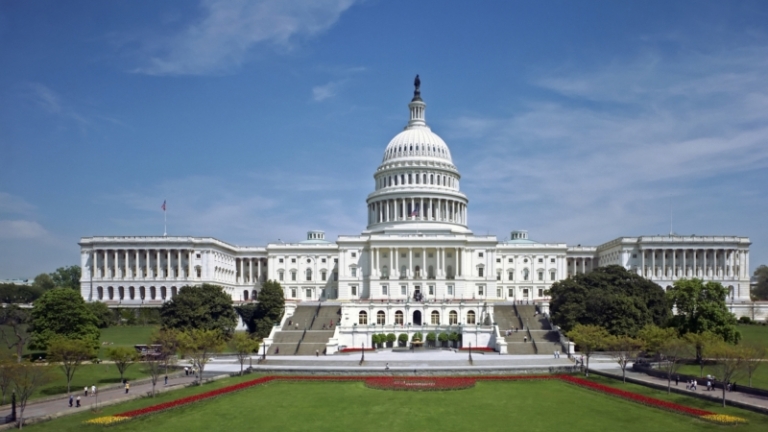
In response to the strikes on Iran, many Democrats and a small number of Republicans condemned the US attack as a “dangerous” and “unnecessary” escalation and called for swift votes on a war powers resolution that would block further military action without congressional approval. Sen. Chuck Schumer (D-NY) said that the administration had withheld “critical details about the scope and immediacy of the threat” and urged lawmakers to “quickly return to session and reassert” their constitutional duty. Sen. Tim Kaine (D-VA) called the strikes “a colossal mistake” and pressed for a vote on his bipartisan resolution to block US forces from hostilities against Iran. Reps. Gregory Meeks (D-NY) and Hakeem Jeffries (D-NY), along with Sen. Jeanne Shaheen (D-NH), also condemned the attack.
On the Republican side, Rep. Thomas Massie (R-KY) called the operation “acts of war unauthorized by Congress,” and Sen. Rand Paul (R-KY) said that his opposition is rooted in constitutional principles. Most Republicans, however, defended the strikes, including House Speaker Mike Johnson (R-LA), Sen. Lindsey Graham (R-SC), and Sen. Jim Risch (R-ID).
Any war powers measure, even if passed, would likely face a presidential veto that Congress lacks the two-thirds majority to override.
Also happening in Washington last week…
I. Legislative Branch
1) Legislation
House Bill to Ban US Arms to Israel if It Violates Gaza Ceasefire. On February 23, Rep. Sean Casten (D-IL) introduced H.R.7645, which would prohibit Israel’s use of US-origin weapons in Gaza and the occupied West Bank if Israel violates the October 10, 2025, ceasefire agreement and President Donald Trump’s peace plan, annexes the West Bank, or fails to address settler violence against Palestinians. The bill maintains support for Israel’s right to self-defense.
Senate Bill Seeks to Advance Human Rights and Internet Freedom in Iran. On February 24, Sen. David McCormick (R-PA) introduced S.3900 to promote human rights, internet freedom, and accountability in Iran.
2) Personnel and Correspondence
Democrats Pledge to Force Vote on Iran War Powers Resolution. On February 26, Reps. Gregory Meeks (D-NY), Hakeem Jeffries (D-NY), Pete Aguilar (D-CA), Katherine Clark (D-MA), Jim Himes (D-CT), Adam Smith (D-WA), and Ro Khanna (D-CA) pledged to force a vote on the Khanna-Massie Iran War Powers Resolution, which seeks to restrict President Trump from attacking Iran without congressional approval.
II. Executive Branch
1) White House
Trump Rejects Reports of Joint Chiefs Chairman’s Opposition to Iran War. On February 23, President Trump said on Truth Social that reports that Chairman of the Joint Chiefs of Staff Gen. Dan Caine opposed a US war against Iran were “fake news.” He wrote that the general, “like all of us, would like not to see War” but believes that a US war would be “easily won.”
Trump dismissed reports that the administration is considering limited strikes against Iran and asserted that Iran’s nuclear development “is a Development no longer,” claiming that it “was blown to smithereens.”
US Officials Press Iran as Nuclear Talks Continue Without Breakthrough. On February 24, Secretary of State Marco Rubio delivered a classified briefing on Iran to the “Gang of Eight,” comprising the senior lawmakers from both parties and the chairs and ranking members of the House and Senate intelligence committees. Exiting the briefing, Senate Minority Leader Chuck Schumer (D-NY) said that “this is serious, and the administration has to make its case to the American people.” Ranking Democrat on the House Intelligence Committee Jim Himes (D-CT) said, “Wars in the Middle East don’t go well for presidents, for the country, and we have not heard articulated a single good reason for why now is the moment to launch yet another war in the Middle East.”
Hours later, President Trump used his State of the Union address to say that Tehran would never be allowed to develop nuclear weapons and demanded that Iran abandon its production of ballistic missiles. He said that the Iranians “are working to build missiles that can reach the United States of America,” adding that after US strikes last year, his administration warned Tehran “to make no future attempts to rebuild their weapons program, in particular nuclear weapons, but they continue.”
Also on February 24, Axios reported that Special Envoy Steve Witkoff told AIPAC donors that the administration is demanding that any future nuclear deal with Iran last indefinitely, in contrast to the Obama administration’s 2015 Joint Comprehensive Plan of Action, which included sunset clauses.
On February 25, Rubio accused Iran of continuing to pursue a nuclear weapon and warned that its ballistic missiles pose a major threat to US assets. He said that Iran is “not enriching [uranium] right now, but they’re trying to get to the point where they ultimately can,” and argued that its conventional missile capabilities are “solely designed to attack America and attack Americans if they so choose to do so.”
The following day, Iran and the United States held a third round of nuclear talks in Geneva, which concluded without a deal.
Trump Says United States Has Sunk Nine Iranian Ships. On March 1, President Trump said that the United States had sunk nine Iranian naval vessels and “largely destroyed” Iran’s navy headquarters.
2) Department of State
Department Orders Departure of Non-Essential Personnel from Lebanon. On February 23, the Department of State ordered non-essential personnel at the US Embassy in Beirut, along with their family members, to depart Lebanon and restricted in-country travel for US personnel remaining in the country.
Rubio Speaks with Saudi Foreign Minister. On February 23, Secretary Rubio spoke with Saudi Foreign Minister Faisal bin Farhan Al Saud to discuss economic cooperation and continued close coordination on regional security.
United States to Provide Consular Services in Illegal Israeli Settlement. On February 24, the United States announced it will provide in-person passport services at an illegal Israeli settlement in the occupied West Bank. According to a US official, this will be the first time the United States has “provided consular services to a settlement in the West Bank.”
Department Approves Military Sale to Jordan. On February 26, the Department of State approved a possible Foreign Military Sale to Jordan of radio frequency system radars and related equipment for an estimated cost of $280 million.
United States Designates Iran as State Sponsor of Wrongful Detention. On February 27, Secretary Rubio announced the designation of Iran as a “state sponsor of wrongful detention” and called on the country to release any Americans in its custody. Rubio warned that if Iran does not stop taking hostages, the United States will “be forced to consider additional measures, including a potential geographic travel restriction on the use of US passports to, through, or from Iran.”
Rubio Cancels Trip to Israel Amid Iran Strikes. On February 27, the Department of State announced that Secretary Rubio was scheduled to travel to Israel from March 2 to 3 to discuss regional priorities, including Iran, Lebanon, and Trump’s Gaza peace plan. It was later reported that Rubio canceled the trip “due to current circumstances.”
United States Defends Iran Strikes at UN. On February 28, during an emergency meeting of the UN Security Council, UN Secretary-General Antonio Guterres urged members to do everything possible to prevent further escalation. He warned that “the alternative…is a potential wider conflict with grave consequences for civilians and regional stability.” Guterres said the US and Israeli airstrikes violated international law, including the UN Charter, and condemned Iran’s retaliatory attacks.
US Ambassador to the United Nations Mike Waltz defended the strikes as lawful, claiming that the United States, in close coordination with Israel, acted “in line with Article 51 of the Charter of the United Nations,” which outlines sovereign nations’ right to self-defense.
United States, Arab Countries Condemn Iranian Attacks, Reaffirm “Right to Self-Defense.” On March 1, the United States, Bahrain, Jordan, Kuwait, Qatar, Saudi Arabia, and the United Arab Emirates released a joint statement condemning Iran’s “indiscriminate and reckless missile and drone attacks against sovereign territories across the region,” stating that they “stand united in defense of our citizens, sovereignty, and territory, and reaffirm our right to self-defense in the face of these attacks.”
3) Department of War
US Military Begins Withdrawal from Key Syria Base. On February 23, the United States began withdrawing from a key military base in northeastern Syria and redeploying forces to Iraq’s Kurdish region.
United States Sends F-22 Fighter Jets to Israel. On February 24, the New York Times, citing a US official, reported that the United States deployed a group of F-22 Raptor fighter jets to Israel.
AFRICOM Conducts More Strikes in Somalia. From February 22 to 26, US forces conducted airstrikes against the so-called Islamic State in Somalia.
CENTCOM Announces US Service Members Killed During Iran Operation. On March 1, CENTCOM announced that three US service members had been killed in action and five were seriously wounded during ongoing operations against Iran. On the same day, Trump said that “sadly, there will likely be more [losses] before it ends. That’s the way it is. Likely be more, but we’ll do everything possible where that won’t be the case.”
4) Department of the Treasury
Treasury Expands Sanctions on Iran over Oil Sales, Weapons Programs. On February 25, the Department of the Treasury’s Office of Foreign Assets Control (OFAC) sanctioned more than 30 individuals, entities, and shadow fleet vessels accused of enabling Iran’s illicit petroleum sales and its ballistic missile and weapons production. OFAC also targeted networks that enable Iran’s Islamic Revolutionary Guard Corps and Ministry of Defense and Armed Forces Logistics to procure precursor materials and machinery required for ballistic missile and other weapons production.