After the civil war ended in 1990, Lebanon entered a new phase of rebuilding state institutions and ending internal conflict. However, that phase was not equitable for all Lebanese groups: A significant portion of the Christian community felt that they had lost the leading role they had played before the war.
Understanding this experience is not a mere return to the past, but an attempt to draw a profound lesson: how can major political choices, or the rejection of possible compromises, lead an entire community into long years of frustration, isolation, and decline?
Before the civil war, Christians were thought to represent about 40 percent of Lebanon’s population and held a central position through the presidency of the Republic as well as in government institutions, the army, the economy, and education. With the outbreak of war in 1975, this position began to erode due to internal divisions, civil strife, widespread emigration, and regional shifts. By the time the war formally ended with the 1989 Taif Agreement, the Lebanese landscape had fundamentally changed. A return to the status quo ante was no longer possible.
The Taif Agreement was not only a constitutional settlement, but a declaration of new power balances inside Lebanon and across the region more generally. It redistributed power among the presidencies (of the republic, the council of ministers, and parliament), reduced some of the president’s prerogatives, and enshrined a broader partnership between Muslims and Christians in governance. However, a significant segment of the Christian community, including influential leaders at the time, rejected the agreement, viewing it as an unfair compromise that came at the expense of the Christian position in the state.
Their rejection did not lead to the amendment or overthrow of Taif. Instead, it effectively led to a large number of Christians becoming isolated from the process of reconstituting power, especially after Christian bloody infighting and the moves undertaken by Syria to undermine the spirit of Taif after the 1991 Gulf War.
Believing that the country was entirely under Syrian control and that their participation would change nothing, large segments of the Christian population boycotted the 1992 parliamentary elections. The boycott led to reduced Christian representation in elected institutions, which only intensified their sense that national decisions were being made without them. Later developments proved the validity of their stance against Syrian hegemony, which later transformed into a full-blown occupation.
Syrian influence in Lebanon reached its peak and became entrenched between the 1991 Gulf War and the regional shifts that preceded and followed the 2003 US invasion of Iraq. Damascus maintained a tight grip on the Lebanese political landscape, while Christian leaders were variously scattered, isolated, exiled, or imprisoned. This situation gave rise to what later became known as “Christian frustration,” characterized by declining trust in the state, increased emigration, reduced investment in the local economy, and a growing sense that the community had lost its influence in determining the country’s fate.
This frustration persisted until 2005, when the Syrian army was forced out of Lebanon under pressure by a wave of popular protests known as the Independence Uprising. Only then did the Christians begin to regain some political initiative—not because everything changed overnight, but because they returned to the national arena from inside the institutions, rather than becoming active outside them.
The Possibility of Shia Frustration After the War
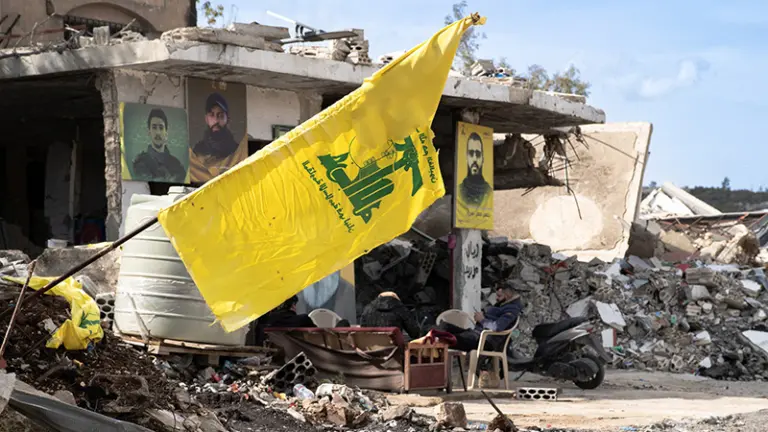
The Christian experience does not mirror the reality of Lebanon’s Shia today, but it does serve as a clear warning. The Shia today are estimated to represent approximately 35 percent of the population and wield significant political, economic, and social influence, but they are currently facing a moment of peril. The 2024 war with Israel and its ongoing repercussions (including the current conflict), as well as the accompanying widespread destruction of villages, towns, and institutions, open the door to profound transformations within the Shia community itself. What further complicates matters are declining Iranian funding, the damage inflicted to Hezbollah’s organizational and service infrastructure, and the 2024 fall of Bashar al-Assad’s Hezbollah-aligned regime in Syria.
Accompanying these transformations in the Shia community are waves of displacement and continuous Israeli bombing that may lead to widespread emigration, as happened previously with the Christian community. Many Shia feel they live in areas whose economic and security futures are under threat and worry that the cost of staying in the country is higher than that of leaving—especially if international pressure on Shia capital in Lebanon continues, and if Hezbollah continues to dominate political decision-making within the Shia community.
In such a climate, a frustration similar to that experienced by Christians might soon emerge among Lebanon’s Shia. This time, it would stem from the devastation of war, a loss of trust in the state, and a suspicion that official institutions might change from being a source of protection to one of pressure or oppression. This concern is acute given that a segment of this community has over the years developed an ambiguous relationship with the state due to the excessive power secured by Hezbollah’s weapons.
This outcome is not inevitable, however, and can be avoided if serious discussions begin within the Shia community about its priorities for the next stage—discussions that place Lebanon’s national interests and stability above all other considerations. Such discussions should seriously reconsider the feasibility of maintaining Hezbollah’s military and ideological stance with its regional dimension in light of the increasing cost of this stance to Lebanon’s state, society, and national integrity. The Shia should also think about how to actively contribute to reconstituting the Lebanese state and reconstructing the country as part of a settlement that would end the armed conflict with Israel and pave the way for a political and security agreement that puts all weapons under the control of the state.
Such a decision undoubtedly would be difficult and painful, especially for those who have directly suffered from Israel’s crimes, wars, losses, and displacement. People cannot be expected to forget their pain, their martyrs, and their losses, or to easily erase their memories. However, politics is not merely about managing memory; it is also about protecting future generations. If the choice is between continuing open-ended attrition and a painful settlement that preserves what remains of South Lebanon and the Shia community’s active involvement in the state, then the less costly option in the long run may be preferable, even though it is bitter in the short term.
In this context, the problem lies in Hezbollah’s ideological leanings, its dependence on Iran, and its inability to accept the limited options realistically available with regard to its relationship with the Lebanese state. When options are limited, wisdom lies in choosing the least harmful one, not in denying reality or in fighting doomed battles. A genuine Shia contribution to Lebanon’s future could begin with re-establishing the state as the sole framework for securing their rights and improving their prospects, as well as for protecting and rebuilding South Lebanon.
Participating in the state, even from a position of weakness and setbacks, is the most difficult path but also the most viable. Any Lebanese faction that chooses to save the nation without being held hostage to external power dynamics will not be surrendering but protecting its future.
Ultimately, it is not about one team losing or another winning. It is about preventing a new Lebanese community from slipping into the cycle of frustration and isolation through which Lebanon has previously suffered. Historical experiences do not repeat themselves precisely, but they demonstrate that turning away from the state or becoming beholden to external powers—however justifiable it may seem at a given moment—often leads to a diminished role and a reduced ability to influence events.
The challenge today is not just to end the war, but to get out of the cycle of war. Is that challenge overcome by reproducing the same conditions of conflict or by opening a different path that restores the state as a unifying framework?
What will determine the answer to this question is not only the balance of power, but also the choices made within each Lebanese community and their ability to realistically reassess their experiences. In this sense, avoiding frustration is not predestined. Rather, it is the outcome of political and social decisions that, if the will exists, can redefine the position of each group within Lebanon, thereby preventing the country from entering another cycle of decline and division.
Mark Daou is a Member of the Lebanese Parliament. This article was first published in Arabic on March 25, 2026, by Daraj online magazine in Beirut, Lebanon.
The views expressed in this publication are the author’s own and do not necessarily reflect the position of Arab Center Washington DC, its staff, or its Board of Directors.
Featured image credit: Photo by SILVIA CASADEI / MIDDLE EAST IMAGES / MIDDLE EAST IMAGES VIA AFP