Lebanon’s sectarian system is severely strained by political fragmentation, deep economic crisis, and the overwhelming impact of incessant and highly destructive attacks by Israel. Among both grassroots constituencies and political elites, the country’s confessional entente is now approaching a dangerous rupture that could unravel its long-standing consociational settlement, potentially fueling instability and renewed conflict. This potential rupture is already visible in calls to transform Lebanon into a federation of self-governing cantons based on sectarian majorities, with the federal center retaining responsibility for national defense, foreign affairs, and monetary policy.
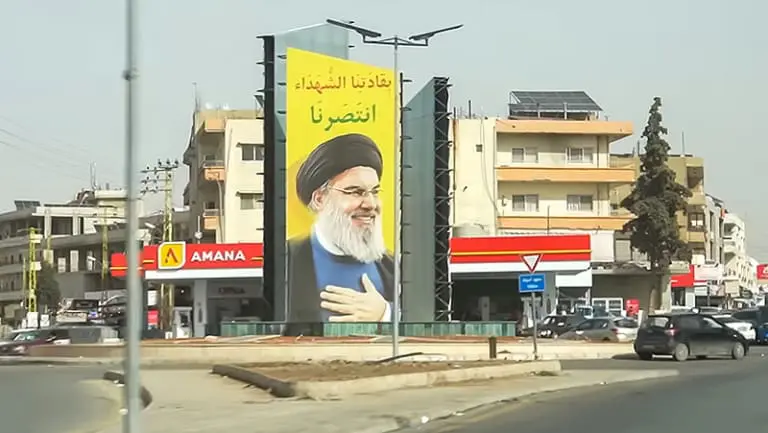
The newfound clamor for federalism in such a small country is primarily a product of the outsized role and impact of Hezbollah and the Amal Movement, the two dominant political actors in Lebanon’s Shia community. Hezbollah’s autonomous decision-making on matters of war and peace with Israel, together with Amal’s entrenched position in state institutions under its leader, longtime Speaker of Parliament Nabih Berri, has convinced broad segments of Lebanese society, especially many Christians, that the country has lost the political balance its founders sought to establish at independence in 1943. More specifically, calls for a federated Lebanon have been driven by the continuing war with Israel, which is supported by few political factions other than Hezbollah and Amal. Since March 2, 2026, when Hezbollah launched rockets and drones against Israel, the war has killed over 3,000 people, displaced over a million others, and caused widespread destruction.
The basic outlines of the proposed federal project for Lebanon envision ethno-religious cantons with authority over local affairs, exercised through elected representatives and civil councils. Proponents assume that the Lebanese people comprise a mix of ethnicities, nations, religions, and sects that should be allowed to govern themselves independently of one another. In this view, individual communities should have the right to exercise self-rule as fully as possible and to impose whatever laws, ordinances, and levies are approved by their constituencies. Some federalists also favor a neutral Lebanon, unaligned with any regional power, as a way to protect the country from external entanglements, most visibly those arising from Hezbollah’s relationship with Iran.
Serious obstacles stand in the way of realizing a federal state.
Serious obstacles stand in the way of realizing a federal state. Politically, Sunnis, Shia, and Druze—Lebanon’s three principal Muslim communities—reject federalism and insist on preserving a unitary state. Under the 1989 Taif Agreement that ended the civil war, Muslims acquired greater political power within the confessional system at the expense of previously dominant Christians, although overall parity between Christians and Muslims was preserved. Muslims have therefore generally been loath to relinquish this power in a unitary state in favor of smaller and weaker cantons. Christians, in contrast, have been dissatisfied with the redistribution of political power after Taif and, perhaps more importantly, reject the fact that Hezbollah, representing only one sectarian constituency, has plunged the country into a war with Israel that is exacting unbearable costs on all Lebanese.
Demographically, there are no purely or exclusively sectarian zones in the country, although sizeable majorities dominate particular areas. Most Shia live in the south, the southern suburbs of Beirut, and the northeast. Sunnis are heavily represented in coastal cities and the far north. Christians are concentrated along the coast north of Beirut, central and northern Lebanon, and in some eastern areas. Druze live mainly in the central mountains and the southeast. Beirut, however, houses all sects, and all of Lebanon’s regions contain sizeable sectarian minorities whose rights could not easily be guaranteed in federated units governed according to majoritarian principles. How, for example, would Christians live in a Shia canton if its majority voted for an Islamic conservative constitution regulating local affairs? By the same token, how could a Sunni be elected to office in a Christian-majority district or enjoy the same privileges as Christians?
This demographic reality makes drawing accurate or acceptable borders between federated regions practically impossible. Besides, what guarantees can there be for sectarian minorities if majorities decide, through free and fair elections and referenda, to pass new laws or impose unreasonable regulations detrimental to minorities? How can minorities ensure their freedoms or protect their economic interests if they are the weaker party administratively and politically? Indeed, can religious, confessional, or sectarian federalism survive the vagaries of religious difference, and how long would it take for armed conflict to erupt if a sectarian minority complained of ill treatment in any of the contrived federal regions?
Demographic reality makes drawing accurate or acceptable borders between federated regions practically impossible.
Other domestic and external difficulties that impede the establishment of a federal Lebanon should also serve as cautionary notes to those advocating the project. These difficulties include devising the political and administrative relationship between the federal center and the new sectarian regions, as well as among the regions themselves. They also include establishing a national force responsible for common defense, forming federal institutions and a federal bureaucracy, and severing the putative sectarian regions’ relations with outside powers and actors, among other problems.
To be sure, after the current war, Lebanon will need to reconstruct and rehabilitate wide areas of its territory that have been devastated by Israel’s lethal military operations. It is hard to predict whether the current US-sponsored Lebanese–Israeli negotiations will produce a cessation of hostilities between Israel and Hezbollah or secure Israel’s withdrawal from occupied areas in South Lebanon. Nor does Lebanon’s government know whether it will succeed in rebuilding the state and its institutions after long years of Hezbollah dominance. But it is hoped that, at both the elite and grassroots levels, Lebanese will recognize that facing the difficult near term together and preserving their unitary state, albeit with serious political and administrative reform, will help them weather regional chaos and uncertainty as they pursue long-term development and stability.
The views expressed in this publication are the author’s own and do not necessarily reflect the position of Arab Center Washington DC, its staff, or its Board of Directors.
Featured image credit: mahdi313 via shutterstock