House Passes NDAA With US-Israel Defense Technology Provision Intact
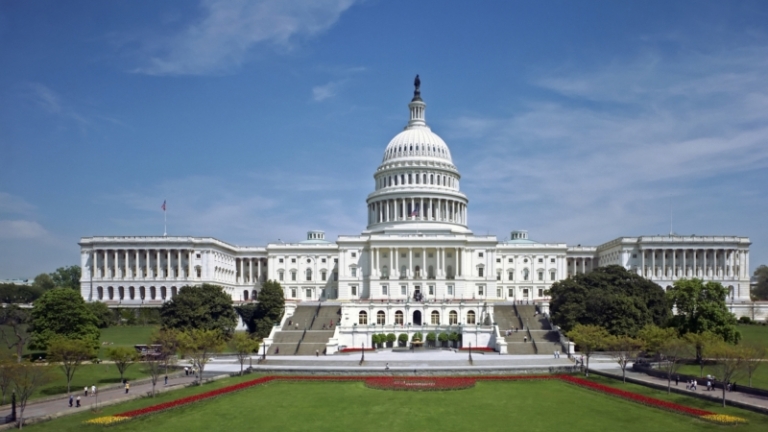
On July 22, the House passed H.R.8800, the $1.15 trillion FY2027 National Defense Authorization Act (NDAA), by a vote of 216 to 212. The vote fell largely along party lines, with all but seven Republicans voting in favor and all but six Democrats voting against. The NDAA now moves to the Senate, where Democrats blocked a motion to advance the chamber’s version on July 14 by a vote of 50 to 46.
The bill retains Section 219, which would integrate the US and Israeli militaries, despite attempts by Reps. Thomas Massie (R-KY) and Ro Khanna (D-CA) to remove it. Massie warned that the measure could compromise American sovereignty and that codifying it would make it harder for future administrations to withdraw from it. Section 622, which would “expand and enhance intelligence sharing” with Israel and limit restrictions on such cooperation, also remains in the bill.
In a statement, AIPAC praised Section 219 and other Israel-related provisions in the NDAA, including the following:
- $750 million for US-Israel cooperative programs, a $65 million increase over FY2026 (this includes $500 million for missile defense, $100 million for counter-unmanned systems, $100 million for subterranean operations, and $50 million for emerging technologies.)
- An extension of the War Reserves Stockpile Allies—Israel
Also happening in Washington last week…
I. Legislative Branch
1) Legislation
Cotton Says Charity Bill Targets Terrorists, But Names Only Palestinian Youth Movement. On July 22, Sen. Tom Cotton (R-AR) introduced S.5083, which would require tax-exempt organizations to disclose information about the groups they fiscally sponsor. Cotton’s press release frames the bill as closing loopholes exploited by “far-left terrorist organizations” and cites the Palestinian Youth Movement as an example of a group that it alleges is manipulating the US tax code. The Palestinian Youth Movement is a Palestinian and Arab youth organization in Canada, the United Kingdom, and the United States that agitates for Palestinian liberation.
House Bill Would Permanently Prohibit US Funding for UNRWA. On July 23, Rep. Chris Smith (R-NJ) introduced H.R.9893, which would permanently prohibit the US government from making voluntary or assessed contributions to the United Nations Relief and Works Agency for Palestine Refugees in the Near East (UNRWA), citing the agency’s alleged “history of espousing and distributing antisemitic rhetoric and materials.”
House Passes Second Iran War Powers Resolution. On July 23, the House passed H.Con.Res.89, another Iran war powers resolution that would halt US military operations against Iran conducted without congressional authorization. The resolution, introduced by Rep. Pramila Jayapal (D-WA), passed by a vote of 214 to 208. Reps. Thomas Massie (R-KY), Brian Fitzpatrick (R-PA), Tom Barrett (R-MI), and Warren Davidson (R-OH) again joined all Democrats in support.
The same day, the Senate voted 49 to 47 to block a similar resolution (S.J.Res.180) introduced by Sen. Chris Van Hollen (D-MD). Sen. Susan Collins (R-ME) was the only Republican to support the measure, while Sen. John Fetterman (D-PA) was the only Democrat to oppose it.
Also on July 23, Reps. Gregory Meeks (D-NY), ranking member of the House Committee on Foreign Affairs (HFAC), and John Larson (D-CT) introduced H.Res.1456, which would direct the House to file a lawsuit against President Donald Trump to enforce the Iran war powers resolution it previously passed (H.Con.Res.86) in June.
2) Hearings and Briefings
Hegseth Says Iran War Has Cost $37.5 Billion. On July 21, Secretary of War Pete Hegseth told the Senate Committee on Appropriations that the Iran war had cost the United States $37.5 billion so far. Hegseth testified in support of President Trump’s $87.6 billion supplemental funding request, including $67.1 billion for the Department of War. He warned that without the additional funding, the department would face shortages affecting military pay, the replenishment of equipment and munitions, and ongoing operations.
HFAC Holds Hearing on Abraham Accords. On July 22, HFAC held a hearing titled “Building a New Regional Security Architecture: The Next Phase of the Abraham Accords.” Witnesses included former US Ambassadors to Israel David Friedman and Dan Shapiro, and Misgav Institute for National Security and Zionist Strategy Executive Director Asher Fredman. Much of the discussion focused on expanding the agreements, the US-Israel relationship, and Palestinian statehood. Lawmakers and witnesses debated whether establishing a path to a Palestinian state is a prerequisite for bringing Saudi Arabia into the agreements. Saudi Arabia has said that it will not normalize relations with Israel without such a path. Subcommittee Chair Rep. Mike Lawler (R-NY) emphasized keeping Israel at the center of regional economic integration through initiatives such as the India-Middle East-Europe Economic Corridor and discussed ways to strengthen Israel’s partnership with Jordan.
HFAC Holds Hearing on United Nations Reform.On July 22, HFAC held a hearing on United Nations accountability and reform. Witnesses included US Ambassador to the United Nations Mike Waltz and US Ambassador to the United Nations for Management and Reform Jeff Bartos. During the hearing, Waltz said that the United Nations had been “weak on Gaza, quiet on Iran” and accused it of funding terrorists through UNRWA.
II. Executive Branch
1) White House
Trump Threatens Iran over US Troop Deaths and Ship Attacks. On July 20, President Trump warned that Iran would “pay” for killing American service members. On July 22, he said that each time Iran attacks a ship in the Strait of Hormuz, the United States would bomb and destroy an Iranian bridge or power plant, including facilities in or near Tehran.
Trump Says Netanyahu Will Not Be Arrested in the United States. On July 20, President Trump said that Israeli Prime Minister Benjamin Netanyahu would not be arrested if he visits the United States, after New York City Mayor Zohran Mamdani said that he was actively reviewing whether his administration could arrest Netanyahu. Mamdani later acknowledged he did not have the legal authority to make the arrest.
Trump Pledges Strong US Support for Lebanon During Meeting with Aoun. On July 21, President Trump met with Lebanese President Joseph Aoun and pledged to help Lebanon “a lot.” Trump said that the two leaders would work to address several challenges facing Lebanon, including Hezbollah’s presence and the implementation of the US-brokered framework agreement between Lebanon and Israel.
Trump also said that Lebanon could play an important role in the future expansion of the Abraham Accords, although he did not indicate whether Beirut would formally join them.
Hours later, Trump announced that US airlines would resume direct flights to Lebanon for the first time in more than 40 years.
Trump Says China and Russia Pledged Not to Sell Weapons to Iran. On July 24, President Trump said that he had received assurances from Chinese President Xi Jinping and Russian President Vladimir Putin that their countries would not sell weapons to Iran. Trump said that he believed neither country was participating in such sales and warned that if they did, “it would be very bad for them.”
Trump Threatens “Major Military Punishment” After Houthi Attacks on Saudi Tankers. On July 23, President Trump threatened Iran and the Houthis with “major military punishment” if they carry out further attacks on Saudi tankers in the Red Sea. Trump described the Houthis as “a surrogate and/or proxy of Iran” and said that the United States would hold Iran responsible.
Later that day, Trump said that the United States would use Iranian funds in its possession to cover damage to ships or cargo.
2) Department of State
Department of State Announces Launch of Pilot Zones in Lebanon. On July 20, the Department of State announced the launch of pilot zone operations in the Lebanese villages of Froun, Srifa, and Zawtar al-Gharbiya under the US-brokered framework agreement between Lebanon and Israel and the Military Coordination Group for Lebanon.
United States Moves Toward Reopening Embassy in Libya.On July 20, the Department of State informed Congress that it planned to move ahead with the potential reopening of the US embassy in Libya. The department proposed nearly $41 million for security-related work connected to a phased resumption of operations. The embassy in Tripoli closed in July 2014, and US diplomats assigned to Libya have since been based in Tunisia and Malta.
Rubio Warns Iran’s Strait of Hormuz Demands Could Set Dangerous Precedent. On July 22, during a meeting in the Philippines with counterparts from the Association of Southeast Asian Nations, Secretary of State Marco Rubio warned that Iran’s demand to control the Strait of Hormuz and collect tolls from passing vessels would threaten the global economy and set a precedent that could be repeated elsewhere.
That day, Rubio also said that the United States remained willing to negotiate an end to the war with Iran, but that Tehran was not serious about talks.
3) Department of War
CENTCOM Launches More Strikes on Iran. On July 20, 21, 22, and 23, CENTCOM announced strikes against targets in Iran. The targets included military command and operations centers, air defense systems, coastal surveillance sites, missile and drone launch and storage facilities, aircraft hangars, communications networks, and maritime capabilities.
4) Department of the Treasury
Treasury Sanctions Muslim Brotherhood Official and Alleged Hamas Financiers. On July 23, the Department of the Treasury’s Office of Foreign Assets Control (OFAC) sanctioned a senior UK-based Egyptian Muslim Brotherhood official, along with three individuals and three entities based in Gaza, Indonesia, and Turkey, over alleged ties to Hamas financing.
Treasury Sanctions Iranian Financial Network.On July 24, OFAC designated four individuals and nine entities connected to Iranian financier Babak Zanjani’s sanctions evasion network. The measures target Zanjani’s Iran-based commercial holdings and companies outside Iran that supported his digital asset exchanges. OFAC sanctioned Zanjani and the exchanges on January 30, 2026, saying that they were used in part to launder money for the Islamic Revolutionary Guard Corps.
5) Department of Energy
United States and Saudi Arabia Sign Nuclear Cooperation Agreement. On July 22, Secretary of Energy Chris Wright and Saudi Minister of Energy Abdulaziz bin Salman signed a civil nuclear cooperation agreement, known as a 123 Agreement, and a “bilateral safeguards agreement.” The Associated Press reported that the framework could eventually allow Saudi Arabia to enrich uranium for its civilian nuclear program. Secretary Rubio said the same day that the United States would not “reach any agreement with any country in the world that leads to the risk of proliferation.”
On July 23, Trump said that the agreement would be contingent on Saudi Arabia normalizing relations with Israel through the Abraham Accords; however, reports indicated that Trump had not discussed the new condition with Saudi officials.