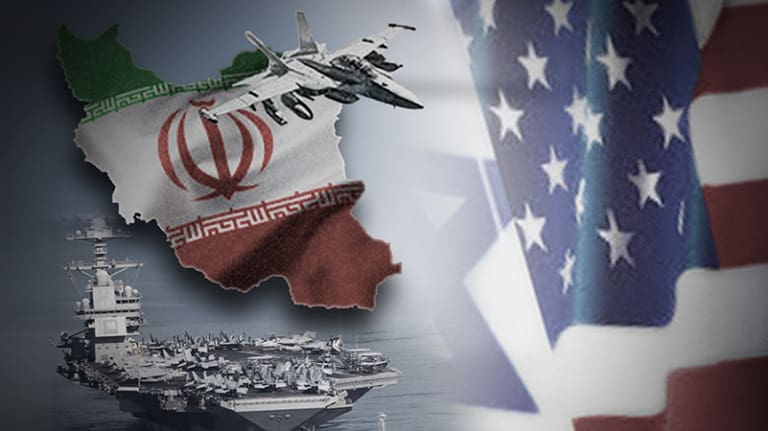
Following weeks of military mobilization and statements hinting at escalation from the White House, the United States and Israel launched a large-scale attack on Iran on 28 February 2026. US President Donald Trump claimed in a recorded address broadcast a few hours into the assault that the aim of the operation was to prevent Iran from acquiring a nuclear weapon. At the same time, he called on Iranians to seize a “once-in-a-generation opportunity” to take control of their country, suggesting that the ultimate objective of the operation – if indeed there was a clear and specific one – was regime change.1 The first day of strikes resulted in the assassination of the Iranian Supreme Leader, Ali Khamenei, along with a large cadre of military and political leaders. Iran responded swiftly with ballistic missiles and drones directed at Israel and US bases. Tehran went on to target economic facilities in Bahrain, Kuwait, Qatar, the United Arab Emirates, Saudi Arabia, Oman, Jordan, and a British military base in Cyprus, in an attempt to inflame the region, raise the costs for the United States and its allies, and inflict maximum damage on the global economy in the hope it might generate enough international pressure on the Trump administration to halt the war.
Background
These latest strikes constitute the second direct military confrontation undertaken by the administration of US President Donald Trump against Iran in less than a year. In June 2025, during negotiations between Tehran and the United States, Israel launched an attack on Iran that triggered a twelve-day military confrontation. The conflict ended with US strikes targeting Iran’s three principal nuclear sites in Natanz, Fordow, and Isfahan, causing extensive damage and significant disruption to Iran’s nuclear programme.
Since last June’s attack, Trump had hoped that Iran would return to the negotiating table and accept his terms for reaching an agreement. These terms included Iran’s complete relinquishment of its right to enrich uranium (that is, dismantling its nuclear programme according to the principle of zero enrichment), the handover of approximately 440 kg of uranium enriched to 60 per cent, limits on the range of its missile programme so that it would no longer be capable of reaching Israel (estimates in this regard ranged between 300–500 km), and the cessation of support for its regional allies. In addition, US companies were to receive a share of Iranian contracts in exchange for a gradual lifting of US sanctions on Iran. However, Iran remained unmoved by the US demands or to calls to resume negotiations.
On 28 December 2025, widespread popular protests erupted in Iran, beginning in Tehran over the currency drop and rising prices, before spreading to numerous cities across the country. Yet protests over economic and living conditions quickly evolved into a broader movement demanding regime change, accompanied by outbreaks of violence. The authorities responded to the demonstrators with lethal force, mass arrests, and internet shutdowns to suppress the flow of information.2 The Trump administration viewed these developments as an opportunity to recalibrate the equation of pressure and negotiation with Tehran. Trump called on the protesters to seize control of state institutions, promising that “help is on the way”.3 He soon backtracked, however, stating that he had received assurances from the Iranian authorities that the execution of around 800 individuals who had participated in the protests would be halted.4
Trump’s retreat at the time was attributed to the lack of sufficient forces in the region to launch an attack against Iran and absorb the likely response, as well as to Israel’s request that he exercise restraint until it had made adequate preparations to confront Iran. Additional pressure was exerted by Arab Gulf states and Turkey to avoid war and give diplomacy a chance. This facilitated a return to the negotiating track with Iran, which had been suspended since the twelve-day war in June 2025. The negotiations seem to have been largely performative however, intended to buy time to complete preparations for war, unless Iran were to concede fully to US demands, thereby achieving the anticipated war objectives without the need for war.
Three rounds of gunboat diplomacy negotiations took place in February, after US President Donald Trump ordered an increased American military presence in the region and set a one-month deadline for reaching an agreement with Iran. The first round of talks was held on 6 February in Muscat. During this round, Tehran insisted on limiting discussions to its nuclear file, while the United States pressed for a broader agreement encompassing the missile programme and Tehran’s relations with its regional allies. Iran also maintained its right to low-level enrichment for peaceful purposes and rejected the principle of “zero enrichment”.
The Muscat round ended without agreement but paved the way for further talks in Geneva, even as the US continued its military build-up in the region. In Geneva, Washington agreed initially to confine negotiations to Iran’s nuclear programme, on the understanding that discussions would later expand to other issues (the missile programme and regional matters) once progress had been achieved. However, a sharp gap soon emerged between the two sides. The United States insisted on a complete or near-complete halt to enrichment inside Iran, together with the removal abroad of the entire stockpile enriched to 60 per cent. Iran, by contrast, proposed lowering enrichment levels and expanding cooperation with the International Atomic Energy Agency in exchange for a phased lifting of sanctions.
For a brief period, an atmosphere of optimism prevailed that an agreement might be reached that would spare the region a costly military confrontation. This followed remarks by the Omani Foreign Minister and mediator between Washington and Tehran, Badr Albusaidi, in an interview with a US television network during a brief visit to Washington aimed at preventing war and salvaging the negotiations. He stated that Iran had agreed to transfer its entire stockpile of enriched uranium abroad and had accepted a stringent inspection regime for its nuclear facilities.5
Yet war broke out and the assault on Iran began just as the negotiations were making progress, suggesting that Israel and pro-war factions aligned with it within the US administration feared the prospect of a settlement – even one involving painful concessions by Iran. While Washington sought an explicit Iranian commitment to dismantle its nuclear programme through a complete halt to enrichment activities on Iranian soil, Iran had made numerous other concessions, and a settlement was undoubtedly possible. The United States and Israel reportedly exploited intelligence indicating that a meeting of senior political and military leaders would be held the following morning (Saturday, 28 February 2026) at the residence of the Supreme Leader, Ali Khamenei, and launched the attack by means of deception and surprise. It thus became clear that the objective was not to reach a settlement with Iran but to bring about the overthrow of its ruling regime.
Motives
The United States dubbed the joint military campaign it is conducting with Israel against Iran “Epic Fury”,6 while Israel referred to it as “Operation Roaring Lion”. The attacks began as soon as Washington had completed the build-up of its forces in the region, following the deadline set by Trump for Iran to reach an agreement.7 In a brief statement posted on the eve of the attack via his Truth Social platform, Trump outlined four objectives for Operation Epic Fury: (1) Preventing Iran from acquiring a nuclear weapon; (2) Destroying its missile arsenal; (3) Degrading proxy networks; and (4) Annihilating its navy.8 Alongside these military goals, however, Trump signalled a broader political aim: to push towards regime change from within by exploiting popular discontent over economic conditions, for which US sanctions are a principal cause.
For many years, Iran’s nuclear programme has been one of the most prominent points of contention between Washington and Tehran. An agreement was reached under Barak Obama in 2015 that subjected the programme to stringent monitoring in exchange for permitting Iran to enrich uranium up to 3.67 per cent. Trump later withdrew from the agreement and instead adopted a policy of “maximum pressure” in pursuit of a deal of his own. After efforts by the Biden administration to revive the agreement or reach an alternative formula faltered, Trump returned to the White House declaring his desire to reopen negotiations with Iran. During the first year of his second term, he repeatedly stressed that he would not hesitate to resort to military force if diplomatic efforts failed to produce the agreement he sought.
Following June 2025’s Twelve-Day War, Washington announced that it had inflicted severe damage on Iran’s nuclear programme and that any new agreement must include the complete dismantlement of Iran’s nuclear infrastructure and a total halt to enrichment activities on Iranian soil. Iran rejected these demands and also refused to address non-nuclear issues, arguing that the 2015 agreement had been limited to the nuclear issue, excluding its ballistic missile programme and its relations with allies in the so-called “Axis of Resistance” from the negotiating agenda.9
Owing to its lack of substantial air power, Iran regards its missile programme as its primary defensive tool and has therefore refused to negotiate over its range, which in some missile types reaches up to 2,000 kilometres. This has remained a major sticking point for Washington, whose Secretary of State, Marco Rubio, has argued that the ballistic missile file must be addressed at some stage.10 Nevertheless, the dispute over Iran’s nuclear or ballistic missile programmes does not appear to have been the sole immediate driver behind the latest US–Israeli strike, particularly in light of indications that the operation had been planned for months in coordination between Washington and Tel Aviv within a broader strategic framework extending beyond strictly military and nuclear considerations.11
In announcing the start of the attack on Saturday morning, Trump addressed the Iranian people directly, urging “When we are finished, take over your government. It will be yours to take”. He added: “Now you have a president who is giving you what you want, so let’s see how you respond”. Trump accused Iran of practising “mass terror”, stressing that the United States “will no longer tolerate this” and declaring Washington’s determination to “destroy their missiles and raze their missile industry to the ground”.12
These statements reflect an escalatory intention that suggests Trump is betting on “internal” transformations within the structure of the Iranian regime, following the deep damage inflicted on its security and political architecture, in a manner intended to weaken and prepare it to be overthrown. The decision to carry out extensive strikes against regime-linked targets goes beyond Trump’s earlier assurances to protesters that “help is coming” and instead points to a comprehensive campaign aimed at undermining the leadership and its centres of power.13 It appears that the US administration, in light of what it considers indicators of internal fragility within the Iranian system during the January events, sees an opportunity to attempt a far-reaching reshaping of Iran’s political landscape and to create conditions conducive to structural change in the Iranian political order.
This has been reflected in the targeting of senior officials, sovereign institutions, and strategic military infrastructure, as well as the destruction of headquarters and strikes against internal security apparatuses, in addition to attacks on command complexes and elements of Iran’s military leadership structure. The operations have therefore not been limited to degrading specific military capabilities but have instead moved towards undermining the pillars of the security state and its decision-making centres.
The US approach rests on an assessment that the Iranian system is experiencing structural weakness in the aftermath of last year’s Israeli and American strikes, in addition to the wave of mass protests the country witnessed in January, during which demonstrators raised slogans calling for regime change. Moreover, Israel’s wars over the past two years have contributed to weakening Iran’s network of regional allies, thereby limiting Tehran’s ability to open multiple fronts that might have been used to deter a large-scale attack or to disperse its effects.14
All of this appears to have reinforced a growing conviction within the US administration that a large-scale military operation could be executed at relatively low cost, aimed – according to Trump – at “ending an Iranian threat that has persisted for decades”.15 Washington is thus clearly hoping that its joint air strikes with Israel will trigger an internal uprising leading to the overthrow of the regime.16 This has also been underscored by Benjamin Netanyahu,17 who describes the Iranian regime as an existential threat to Israel and argues that the US–Israeli attack may “create conditions that will enable the brave Iranian people to cast off the yoke of this murderous regime”.18
Experience, however, suggests that such strategies often lead to chaos, civil war, or both. There is no organized alternative to the existing system of rule, nor does the US administration appear willing to deploy ground forces to manage a transition of power, unlike in Iraq. The contradictory statements issued by the US President further indicate the absence of any clear post-war vision and a lack of concern for the fate of the Iranian state and its people.
Conclusion
Together with Israel, the United States, through the large-scale military operation it launched against Iran on 28 February, and which in its first hours resulted in the assassination of the Iranian Supreme Leader, Ali Khamenei, and a substantial portion of the state leadership, seeks to achieve a number of objectives. Foremost among these is to destabilize the structure of the regime and create favourable internal conditions that would pave the way for its overthrow should the air campaign fail to compel it to capitulate and accept the US–Israeli terms relating to the nuclear programme, the ballistic missile programme, and regional allies.
This objective is evident in the targeting of the regime’s internal security apparatus alongside its missile and nuclear capabilities, with the aim of weakening the regime’s grip and its capacity for internal control in a manner that would permit the outbreak of an uprising against it once military operations conclude.
*This paper was published by the Arab Center for Research and Policy Studies on March 5, 2026.
1 Phill Stewart and Idrees Ali, “Exclusive: Ahead of strikes, Trump was told Iran attack is high risk, high reward”, Reuters, 28/2/2026, accessed on 4/3/2026 at: https://acr.ps/1L9B9xX
2 “Iran Protests Stir International Convergences and Conflicting Interests”, Situation Assessment, Arab Center for Research and Policy Studies, 9/1/2026, accessed on 4/3/2026 at: https://acr.ps/1L9Bah4
3 “’Help is on its way,’ Trump tells Iranians as he urges them to keep protesting”, BBC News, 12/1/2026, accessed on 4/3/2026 at: https://www.bbc.com/news/live/cj691w2e840t
4 “Trump Says Iran Has Halted Executions as Tehran Postpones Hanging of Protester,” Le Monde, 15/1/2026, accessed on 4/3/2026, at: https://acr.ps/1L9B9my
5 “Oman’s Foreign Minister Says U.S.-Iran Nuclear ‘Deal is within Our Reach’,” Face the Nation, accessed on 4/3/2026, at: https://acr.ps/1L9Bahk
6 U.S. Central Command, “U.S. Forces Launch Operation Epic Fury,” Press Release, Summary of Operational Details and Targets, 28/2/2026, accessed on 4/3/2026, at: https://acr.ps/1L9B9OJ
7 Trevor Hunnicutt & Matt Spetalnick, “Trump Warns Iran of ‘Bad Things’ if no Deal Made, Sets Deadline of 10-15 Days,” Reuters, 19/2/2026, accessed on 4/3/2026, at: https://acr.ps/1L9B9mp
8 “Read Trump’s full statement on Iran attacks”, PBS News, 28/2/2026, accessed on 4/3/2026 at: https://acr.ps/1L9Ba4X
9 “US and Israel Launch ‘Pre-emptive’ Attack against Iran,” Reuters, 28/2/2026, accessed on 4/3/2026, at: https://acr.ps/1L9Ba8X
10 “US-Iran Nuclear Talks End without a Deal as Threat of War Grows,” The Guardian, accessed on 4/3/2026, at: https://acr.ps/1L9Ba9y
11 “US and Israel Launch ‘Pre-emptive’ Attack against Iran.”
12 “Read Trump’s full statement on Iran attacks”.
13 Nicholas McEntyre, “Trump Directs Tehran to ‘Lay Down Your Arms’ or Face ‘Certain Death’ after US, Israel Strikes as he Appeals to Protesters,” New York Post, 28/2/2026, accessed on 4/3/2026, at: https://acr.ps/1L9B9pf
14 Herb Scribner, “4 Reasons why the U.S. Attacked Iran with Israel,” Axios, 28/2/2026, accessed on 4/3/2026, at: https://acr.ps/1L9Ba6W
15 Phil Stewart et al., “Iranian Leader Khamenei Killed in Air Strikes as U.S., Israel Launch Attacks,” Reuters, 28/2/2026, accessed on 4/3/2026, at: https://acr.ps/1L9B9oZ
16 Matt Spetalnick, Andrea Shalal & Idrees Ali, “Trump’s Iran Strikes Mark His Biggest Foreign Policy Gamble,” Reuters, 28/2/2026, accessed on 4/3/2026, at: https://acr.ps/1L9B9TI
17 Joseph Rodgers and Bailey Schiff, “Operation Epic Fury and the Remnants of Iran’s Nuclear Program,” Center for Strategic and International Studies (CSIS), 28/2/2026, accessed on 4/3/2026, at: https://acr.ps/1L9B9Xz
18 “Full text of Netanyahu’s Message as Israel, US Strike Iran: We Will Remove ‘Existential Threat’,” The Times of Israel, 28/2/2026, accessed on 4/3/2026, at: https://acr.ps/1L9B9iq