
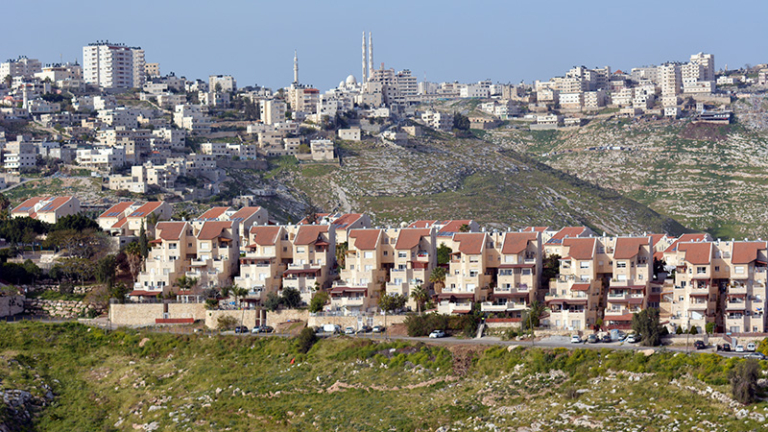
On February 8, 2026, Israel’s security cabinet adopted a series of decisions concerning the occupied West Bank, followed on February 15 by a government resolution to launch land registration (a process of determining and formally recording land ownership, also known as land title settlement) in Area C. According to the Oslo Accords, these regions, which comprise around 60 percent of the West Bank, were supposed to be transferred gradually from Israeli administration to Palestinian control by 1997; the fate of the settlements located in these areas was to be determined in the final status negotiations. This gradual transfer did not take place.
The Israeli government’s February 2026 decisions allow any land to which Palestinians cannot prove their ownership to be immediately registered as state-owned land, which Israelis and Jews overseas are then entitled to lease and build upon. Taken together, these measures constitute one of the most consequential shifts in Israel’s declared policies in the West Bank since the beginning of the occupation. These measures reflect a broader political trajectory: since its formation in December 2022, Israel’s 37th government has openly advanced plans for territorial expansion in the West Bank, including the annexation of Area C. Set by the government’s coalition agreements, this direction was reinforced by the July 23, 2025, Knesset vote declaring the West Bank “an inseparable part of the Land of Israel.”
Although Israel has presented them as simply technical or administrative reforms, the February 2026 decisions form part of its strategy to consolidate Israeli control. In fact, they facilitate de facto annexation—the gradual integration of the West Bank into Israel’s legal and institutional framework without formal declaration. The land registration plan is not merely an administrative reform, but a political mechanism through which Israel will assert sovereignty over Area C.
These measures constitute one of the most consequential shifts in Israel’s declared policies in the West Bank since the beginning of the occupation.
Israeli officials themselves have underscored the significance of these changes. Minister of Finance Bezalel Smotrich described the February 2026 decisions as producing a “fundamental change in the legal and civil reality,” while Minister of Defense Israel Katz said that they express a “clear policy, strengthening Israel’s hold on the West Bank, strengthening settlement and securing this land for generations.”
Crucially, land registration does more than regulate ownership: it confers formal legal title that is difficult to challenge or reverse, thereby embedding control within a durable legal framework. In this sense, it transforms territorial control into a permanent legal reality, making it a central mechanism through which annexation can be realized in practice. Thus, the policy does not merely expand Israeli control over land—it redefines property relations in ways that preempt future negotiations. International institutions, including the United Nations, call the measures unlawful. By introducing them, Israel is effectively replacing the temporary regime of occupation with an increasingly permanent structure of control.
Land Registration and Sovereignty Under Occupation
Land registration is often presented as a technical, routine administrative process. In the West Bank, however, it is highly contested because it determines ownership over land under military occupation, where the occupying power is using legal and administrative tools to reshape property relations and to permanently control Palestinian land.
International law has long recognized that conducting land registration exceeds the permissible powers of a military occupier. Following its occupation of the West Bank in 1967, Israel suspended Jordanian land registration procedures in the West Bank that were in place at the time. Under international humanitarian law, including the Hague Regulations and the Fourth Geneva Convention, an occupying power must administer territory without altering its permanent legal status or assuming sovereign authority.
Land registration in the West Bank has a layered legal history. Under Ottoman and later British rule, land registration was introduced as a mechanism to formalize ownership, although implementation was partial and complex; many Palestinians were consequently unable to register their land. During the Jordanian administration (1948–1967), efforts were made to expand land registration, particularly in parts of the West Bank, resulting in significant—but incomplete—registration of land titles. These efforts to register land aimed to clarify and formalize ownership, rather than to establish control or to assert sovereignty over the territory. Following the 1967 occupation, Israel suspended the ongoing Jordanian land registration process in the West Bank. After the 1993 Oslo Accords, responsibility for land registration in Areas A and B was transferred to the Palestinian Authority, while Area C remained under Israeli control and largely outside Palestinian registration processes. In recent years, as Israel has increasingly treated Area C as its own sovereign territory—contrary to the framework established under the Oslo Accords, which leaves the future status of Area C to negotiations—the Palestinian Authority launched national land registration initiatives aimed at protecting Palestinian ownership, particularly in response to Israel’s ongoing land confiscation through its declaration of “state land” and its allocation to settler use. The February 2026 Israeli land registration plan, which seeks to replace Palestinian efforts in Area C, thus reflects a shift in approach: it is a step towards applying Israeli sovereignty over Area C.
Prior to 1967, 18.4 percent of Area C was registered as state land’; following the occupation, 24.5 percent was declared as “state land”, today leaving around 57 percent of Area C lands subject to the Israeli land registration plan. For decades, Israeli authorities have applied an expansive interpretation of Ottoman land law under which unregistered land is presumed to be “state land” unless proven otherwise. This interpretation bestows an authority that international law does not grant to Israel as an occupying power. Nor did the Oslo Accords grant Israel the authority to determine ownership or conduct unilateral land registration, instead explicitly deferring such matters to final status negotiations. Since 1979, Israel has expanded this definition to classify uncultivated land—particularly land not planted with fruit-bearing trees—as state land, a policy that helps to explain patterns of Israel’s banning of Palestinian access to land and destruction of Palestinian agriculture in recent years. Through these practices, Israel declared approximately 900,000 dunams (around 225,000 acres) of the West Bank as “state land” between 1979 and 2012 and treats an additional 450,000 dunams (around 112,000 acres) as such without officially declaring it. Israel continues to declare Palestinian land as “state land” today.
Within this framework, Israel effectively substitutes itself for the sovereign, transforming a system originally designed to regulate ownership into a mechanism for illegal annexation and land appropriation. The emerging legal regime in West Bank will ensure that by the end of the land registration plan, most of the land within Area C will be registered as “state land” and as such will be designated for the use of the settlement enterprise.
Crucially, the burden of proof imposed on Palestinians under the Israeli registration plan is exceptionally high. Palestinian claimants must produce decades-old documentation, often from Ottoman, British, or Jordanian records. Even where such documentation exists, an additional obstacle arises from the requirement—based on Israel’s expansive interpretation of Ottoman land law—to prove continuous cultivation of the land, typically over the preceding 10 years. This requirement is exceedingly difficult to meet, given that restrictions on access and systematic settler violence prevent Palestinian landowners from maintaining their property. The result is a system that presumes land to be state-owned unless Palestinians can satisfy impossible conditions.
Land registration is […] a legal instrument for restructuring property relations, for denying Palestinian claims over lands, and for consolidating territorial control.
Upon completion of the land registration process, Israel stands to be registered as the owner of most land in Area C. The timing is not incidental. It reflects not only the current government’s annexation agenda, but also the culmination of decades of legal and administrative engineering that have reshaped the governing framework to facilitate this outcome. Land registration is therefore a legal instrument for restructuring property relations, for denying Palestinian claims over lands, and for consolidating territorial control. Within the broader set of February 2026 cabinet decisions, it serves as a central mechanism in the shift from a regime of occupation toward one of permanent governance.
Reconfiguring Governance: The February 2026 Decisions
While framed as administrative adjustments, the February 2026 decisions reconfigure authority, ownership, and institutional control in ways that align with a broader strategy of territorial consolidation. Read alongside the July 23, 2025, Knesset declaration that the West Bank constitutes “an inseparable part of the Land of Israel,” they reflect a coherent political and legal trajectory.
A central component of this new regime of permanent governance is the extension of Israeli administrative authority beyond Area C into Areas A and B, which under the Oslo framework fall under Palestinian Authority jurisdiction. The new measures grant Israeli authorities enforcement powers over construction, environmental regulation, water resources, and cultural heritage—domains that are central to land use and development. In practice, this enables direct Israeli intervention in Palestinian urban centers, including decisions on home demolitions, infrastructure, and urban planning. The result is an overarching system of Israeli administrative control that crosses boundaries established under Oslo.
Israel is not only constraining Palestinian governance structures but, in key areas, is replacing them. In Hebron, planning and building authority in the old city’s H1 and H2 areas–which belong to the Hebron Municipality under agreements between Israel and the Palestine Liberation Organization—has been transferred entirely to Israeli administrative bodies, eliminating Palestinians’ capacity to contest settlement expansion. At the same time, Israel has established a separate Israeli “municipal service authority” for settlers operating under Israeli law within the city, transforming settlers’ presence into a permanent and institutionalized governance structure embedded in Israel’s administrative system. Similarly, control over key religious and cultural sites, including the Ibrahimi Mosque in Hebron and Rachel’s Tomb in Bethlehem, has been transferred to Israeli authorities. These measures embed Israeli administrative structures within Palestinian urban space, reshaping governance in ways that privilege settlement expansion and long-term control.
Furthermore, the February 2026 cabinet decisions introduce a set of legal and procedural changes that enable a large-scale land grab by settlers. Israel’s publication of land registries—previously protected under the applicable legal framework in the West Bank—has exposed detailed information about Palestinian landowners, facilitating targeted blackmail, coercion, and, in many cases, illegal transactions. The removal of longstanding restrictions on land sales allows settlers to register property directly in their own names, eliminating earlier legal barriers and making transferring land into settler ownership significantly easier. In parallel, the reactivation of a state-backed land acquisition committee provides an institutional mechanism to identify, purchase, or otherwise secure land for settlement expansion. Thes developments raise serious concerns about whether resulting land transfers are voluntary and valid and contribute to patterns widely characterized as a legalized land grab.
These processes form an integrated system through which territorial control is consolidated, institutionalized, and rendered increasingly difficult to reverse—entrenching, in practice, the foundations of de facto annexation.
When understood alongside existing Israeli legal frameworks, this process forms a closed loop of dispossession. It resembles the measures that Israel implemented under the Absentee Property Law (1950) to appropriate the land of the Palestinians who became refugees in 1948, as well as measures used against Palestinians who became Israeli citizens. Absence leads to expropriation; presence is constrained by near-impossible standards of proof. In both cases, the outcome converges: the transfer of land into state ownership. Together, these processes form an integrated system through which territorial control is consolidated, institutionalized, and rendered increasingly difficult to reverse—entrenching, in practice, the foundations of de facto annexation.
These developments are reinforced by ongoing efforts to restructure Israel’s judicial system. Historically, the Israeli Supreme Court exercised only a limited and deferential form of review in cases relating to the occupied territories. While largely avoiding challenges to the legality of settlements and intervening primarily on narrow procedural grounds, judicial review has functioned as only a modest check. Recent reforms aimed at reducing judicial independence and narrowing avenues for review weaken even this limited constraint, diminishing the likelihood that the new land registration measures will face meaningful scrutiny. As judicial oversight contracts, the institutional space for contesting settlement-related policies narrows, facilitating the more effective implementation of measures that consolidate control on a permanent basis.
Political Implications for Palestinians
The February 2026 measures fundamentally reshape the legal meaning of ownership itself in the West Bank. Registration in the Israeli land registry bestows a legal status that will be difficult to challenge in any future political or legal arrangement. The implications extend beyond individual ownership claims. By conferring formal title through Israeli institutions, land registration becomes irreversible. In practical terms, the large-scale registration of land in Area C under Israeli ownership amounts to de facto annexation without formal declaration.
For Palestinians, the consequences are structural and far-reaching. The reallocation of land ownership undermines the territorial basis of self-determination, weakens the Palestinian Authority, and fragments geographic continuity necessary for a viable state. As control becomes embedded in law, prospects for reversal diminish, consolidating a reality of large-scale dispossession, normalized permanent control, and unequal rights—potentially foreclosing the two-state solution.
Conclusion
Israel’s February 2026 decisions mark a turning point in the governance of the West Bank. While presented as administrative measures, they collectively restructure land, authority, and law in ways that extend beyond the logic of temporary occupation. Through land registration, control is converted into ownership; through governance reforms, Israeli authority is extended across territorial lines; and through judicial changes, the limited constraints on these processes are further weakened. Together, these developments reflect a shift from managing occupied territory to integrating it into Israel.
This transformation carries significant legal and political implications. By embedding control within legal and institutional frameworks, these measures reduce the prospect of reversal and reshape the conditions for any future political settlement. In this sense, they illustrate a broader strategy of annexation through law—one that proceeds without formal declaration yet produces many of its defining effects.
The views expressed in this publication are the author’s own and do not necessarily reflect the position of Arab Center Washington DC, its staff, or its Board of Directors.
Featured image credit: ChameleonsEye via Shutterstock