
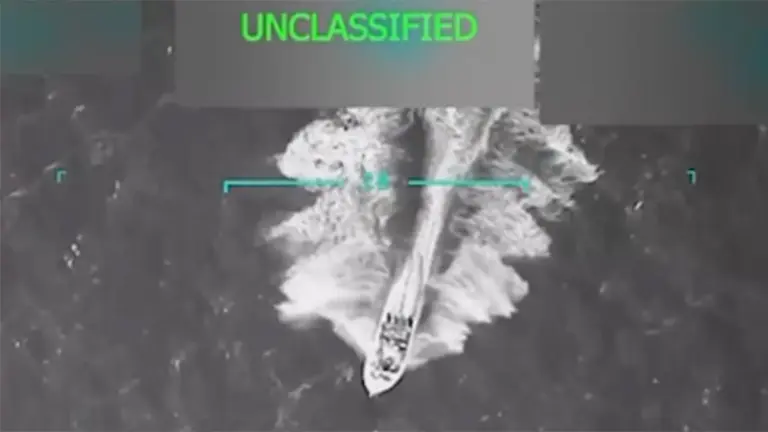
From the torture carried out during the George W. Bush administration to the surge in drone warfare under President Barack Obama, from President Joe Biden’s unconditional support for Israeli war crimes to President Donald Trump’s mass deportations and extrajudicial maritime killings, senior US decision-makers have almost never been held personally accountable for the human consequences of their policies.
After the attacks of 9/11, 2001, the Bush administration capitalized on a traumatized nation to rush the United States into war, with Congress passing an Authorization for Use of Military Force (AUMF) on September 18, 2001. Bush’s “either you are with us, or you are with the terrorist” remark enabled an atmosphere in which the AUMF was used to grant the president minimally constrained authority to use force against anyone accused of a connection to 9/11. The 2001 AUMF contained no geographical boundaries, no limits on who could be deemed a target, and—most harmfully—no sunset clause. Although Congress limited the language to those involved in the 9/11 attacks, the AUMF continues to be used to this day, with terms like “co-belligerent” and “associated forces” (whose identities were sometimes classified), the targets added by different administrations (the so-called Islamic State under President Obama, drug traffickers under President Trump) without having to request congressional reauthorization. Congress does hold the power to repeal or amend the AUMF, but attempts to do so have never succeeded despite debates around the matter and calls to do so.
A decisive moment in entrenching this pattern came when President Obama declined to investigate or prosecute Bush administration officials, framing the decision as a belief that “we need to look forward as opposed to looking backwards.” Obama’s decision effectively converted what had been justified as emergency wartime practices into enduring features of US power, signaling to future administrations that even grave violations would carry no consequences.
After campaigning on a human rights agenda, President Biden continued to provide large-scale US military aid to Israel despite its actions in Gaza since October 7, 2023, even as Prime Minister Benjamin Netanyahu and Defense Minister Yoav Gallant were charged with war crimes by the International Criminal Court amid credible allegations of genocide. As of late 2025, no Israeli unit has been cut off from support under the Leahy Law, which prohibits US assistance to foreign security units credibly implicated in gross human rights abuses, despite a classified Department of State watchdog report documenting “many hundreds” of possible Israeli violations in Gaza. Senior Biden administration officials lied to Congress about Israeli human rights violations and ignored warnings of potential war crimes, thereby enabling Gaza’s destruction.
Trump’s second term has extended elite impunity to the high seas. Lethal strikes on alleged drug-trafficking boats in the Caribbean and eastern Pacific, justified by secret intelligence and shielded by a classified Department of Justice opinion, have killed dozens of people with no public evidence that the targets posed an imminent threat to the United States.
Impunity at Home
While the AUMF primarily authorized military action against groups abroad, the 2001 USA Patriot Act provided a domestic counterpart: sweeping surveillance and investigative powers aimed at identifying “potential threats” among American citizens. Subsequent legislation such as the Foreign Intelligence Surveillance Act Amendment Act of 2008, even when amended, targeted US citizens when they were not supposed to be. Edward Snowden’s 2013 revelations regarding the National Security Agency later exposed systemic violations of privacy and civil liberties—yet it was the whistleblower, not the senior officials who designed and authorized these programs, who faced ramifications. Meanwhile, immigration enforcement agencies, including Immigration and Customs Enforcement (ICE), conducted raids and family separation policies that escalated under the current Trump administration into highly visible kidnappings, abuse, and deportations, often targeting vulnerable communities, with little accountability for senior officials. Just as unchecked authority abroad has facilitated large-scale harm, these patterns at home demonstrate that the same lack of accountability ultimately threatens US citizens and democratic norms, showing how the costs of impunity inevitably come home to roost.
The targets may have changed over the decades, but the underlying principle has remained the same: by using “national security” as justification, officials could bypass laws and norms with no ramifications. It is a dangerous world to live in, one in which US citizens and non-citizens alike are less safe.
Enforcing Accountability
Decrying the actions of one president and his team without addressing the core issue of elite impunity across administrations is akin to putting a band-aid on a bullet hole. A serious response would treat structural accountability not as a moral luxury but as a core security requirement. That means:
- A congressionally mandated truth and accountability commission should be created to systematically review US policies from 9/11 to the present, identifying instances where senior officials authorized, condoned, or failed to prevent illegal actions. The commission should have the authority to recommend sanctions, to disqualify individuals from holding public office again, or to submit referrals for prosecution. Beyond individual consequences, the commission would serve broader democratic purposes by establishing a public record, restoring confidence in the rule of law, and, it is hoped, deterring future abuses.
- Reparations should be made to those harmed by US policies. Victims of US military, surveillance, and immigration actions have rarely received acknowledgment or compensation for the harm that they suffered. Reparations, whether financial, symbolic, or policy-oriented, would not only provide some measure of justice to those directly affected but also signal that the US government takes responsibility for its actions. This is crucial for credibility abroad and legitimacy at home.
- Professional ramifications for perpetrators: A longstanding hallmark of elite impunity has been the ability of senior US officials to evade accountability and to secure lucrative, corporate, consultancy, or academic positions after leaving public office. They are also often recruited by new administrations in positions similar to the ones in which they committed illegal acts. Instituting professional consequences such as disqualification from certain posts, oversight requirements, or prohibitions on contracts would create meaningful deterrence, reinforce norms of ethical governance, and ensure that public office can no longer be a pathway to prestige after committing serious abuses.
In a world where human security is repeatedly sacrificed in the name of national security, everyone is less safe. Unless the culture of elite bipartisan immunity is confronted and rectified, we can expect a continuation of the same harmful policies pursued under different names by different administrations.
The views expressed in this publication are the author’s own and do not necessarily reflect the position of Arab Center Washington DC, its staff, or its Board of Directors.
Featured image credit: DJT/TS

