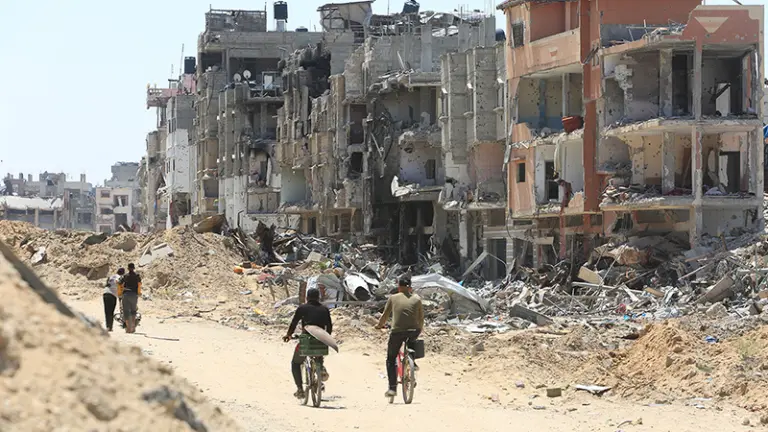
In 2025, the Middle East and North Africa saw Israel’s genocidal war on Palestinians and destabilizing military attacks across the wider region, Sudan’s unsalutary political and humanitarian conditions, troubles in Yemen, and grassroots protests in Morocco. In 2026, such confrontations will invariably continue to make the region a focus of strategic competition. Developments in the Middle East and North Africa will continue to reverberate around the world: Today, the region is more deeply intertwined with global powers, great and small, than ever before. Looking back on the calamities of 2025 might lend us unique insight into what could transpire in the year ahead.
At the start of 2026, Arab Center Washington DC (ACW) fellows and affiliates analyze how current crises and future developments might unfold in the MENA region over the coming year.
Will Palestine Be Forgotten in 2026?
Yara M. Asi, Non-resident Fellow
While not always fully acknowledged, the genocide in Gaza has been consistently documented and reported on for two years. Civilians, including hundreds of thousands of children, visibly suffered seemingly unending horrors. The world has seen the starvation, violence, and disease. It has heard the stories: the child who could only sleep on the dirt of his mother’s grave; the man carrying the body parts of his children to the hospital in plastic grocery bags. There were so many horrors that each was soon overtaken by the next. But who could ever forget the stories of Hind Rajab, Dr. Adnan al-Bursh, and Anas al-Sharif?
Forgetting these stories is easy for the most powerful actors in the international community, however. For them, forgetting is preferable to hearing the countless Palestinian tales of dispossession, violence, and humiliation that go back much further than October 7, 2023.
The plight of Palestinians was pushed to the sidelines even before the figurative ink was dry on the ceasefire agreement that purportedly took effect in October 2025. The international community was quick to move on, despite continuing Israeli violence, ongoing restrictions on aid delivery in Gaza, increasing lawlessness and violence from Israeli settlers across the occupied West Bank, land seizures in both territories, and an Israeli government that has made abundantly clear that there will be no sovereign Palestine in any form. Barring some significant development, the international community is likely safe in assuming that it can continue to ignore the Palestinians in the coming year.
We do still expect in 2026 a ruling from the ongoing International Court of Justice case on genocide that South Africa has brought against Israel. But even if South Africa’s case is successful, it is difficult to imagine that there will be any meaningful accountability. An increasing number of experts and organizations have come to the same conclusion, as a verdict of genocide would implicate numerous global actors who have until now been content to ignore the reality of Palestinian suffering.
Enforcing accountability for genocide also would disrupt weapons sales from many Western countries to Israel, not to mention the repression against Palestinian activism that many countries have eagerly etched into their laws, and the recent diplomatic efforts that Israel has made to reingratiate itself into a global community that seemed—for just a moment—as if it might have grown tired of justifying Israel’s daily violations. As 2026 begins, it becomes apparent that it is not Israel’s violations that disturb the international community, but the Palestinians’ unwillingness to succumb to them. It is the persistence and resilience of the Palestinian people, despite every effort to break them, that is among the only certain predictions for the new year.
Prospects for the Opposition in Tunisia in 2026
Daniel Brumberg, Non-resident Senior Fellow
The December 4, 2025, arrest of Tunisia’s veteran politician Nejib Chebbi underscores President Kais Saied’s resolve to quash any opposition. Carted off to serve a 12-year sentence for being part of a purported “security plot against the state,” the 81-year-old icon of democratic resistance now faces what is effectively a death sentence. Chebbi’s arrest was preceded by the imprisonment of human rights lawyer Ayachi Hammami and activist Chaima Issa, who were sentenced to five and 20 years, respectively. All three were among some 40 activists whose fate had earlier been decided in a November 2024 sham trial that propelled most of the Tunisian opposition into exile. Yet these dramatic events are unlikely to spark the kind of mass opposition that would threaten the regime. Recent protests, both supporting and opposing Saied, highlight enduring cracks in Tunisian society. Until the fragmented middle class and splintering labor movement forge a sustained coalition that can win over a wider social base, Saied’s hold on power will continue.
The reported December 23, 2025, resignation of Noureddine Taboubi, the leader of the Tunisian General Trade Union, is telling. Coming ahead of a nationwide strike planned for January 21, 2026—and possibly signaling a desire to avoid confrontation with the president—Taboubi’s resignation is likely to result in the cancellation of the strike or in the proliferation of smaller protests across the country. If the storied labor union, which has some one million members in a country of 12 million, cannot replay its vanguard role in the 2011 “Jasmine Revolution,” then Saied can probably continue to rely on a subordinated military and judiciary to sustain his one-man rule. Saied also knows that the European Union and the United States are not going to lift a finger to defend a democratic opposition in whose leaders many Tunisians lost faith years ago. The country whose uprising gave birth to the 2011 Arab Spring has entered a dark tunnel of economic, social, and political decline, with little hint of any light ahead in 2026.
Will Sudan Be Partitioned in 2026?
Elobaid Elobaid, Adjunct Professor, Georgetown University
Pessimism is creeping into Sudan that the country may experience a second partition—this time with the western regions of Darfur and much of Kordofan breaking away. This anxiety has been fueled by the formation of a de facto government in areas controlled by the Rapid Support Forces (RSF), alongside the rise of xenophobic rhetoric in parts of the north, sometimes referred to as the “State of the River and Sea,” that openly calls for separation from the west. Although alarming, these calls come from extremists and do not represent northern Sudanese society at large.
There is a cautiously optimistic alternative. Four factors suggest that Sudan will remain unified but broken, one fragile country rather than multiple new ones.
First, the separation of South Sudan in 2011 did not bode well for either state. Old oppressors in the South were merely replaced by new ones, while the North squandered a historic opportunity to reinvent itself as the “New Sudan” that was envisioned by John Garang, the late South Sudanese leader. Secession did not resolve Sudan’s structural crisis; it merely deferred it. The logic of partition also invites an endless question: who is next—Red Sea State? Blue Nile?
Second, despite the RSF’s feverish attempts to rebrand itself as a defender of the marginalized, it remains another Arab militia reproducing the racial hierarchies of the very “1956 state”—the independent Sudanese state—that it claims to oppose. The RSF’s recent atrocities—against the Masalit in Geneina and the Zaghawa in al-Fasher, both in the Darfur region—underscore this contradiction. Both communities are among those whom the RSF purports to represent, yet they have borne the brunt of its violence.
Third, regional geopolitics matter. Partition may not align with the interests of the main sponsor (kafeel) of the RSF and Sudan’s other regional sponsors. While access to gold-rich western territories is valuable, true strategic leverage lies in ports, maritime corridors, and Red Sea access—assets that would remain outside a western breakaway entity.
Finally, the wider regional turmoil—in the Horn of Africa and Yemen—reinforces inertia rather than rupture. Ethiopia’s fragility, Somalia’s unresolved conflicts, tensions over Somaliland, and the war in Yemen have made regional actors deeply risk averse. Fragmenting Sudan further would introduce uncertainties along already volatile trade, security, and migration routes.
Should current mediation efforts fail, Sudan’s warlords may entrench their control. But regional instability makes outright partition less likely than a prolonged, painful unity—broken, coerced, yet intact.
Prospects for Gen Z 212 in Morocco
Samia Errazzouki, Mellon Postdoctoral Fellow, Stanford University
Just as the underlying causes that prompted the rise of Morocco’s 2025 Gen Z 212 protests transcend generations, so too do the prospects that lie ahead for the movement in 2026. In the coming year, what is at stake for the Gen Z 212 movement is the same as what is at stake for the country as a whole. Everything hinges on how the Moroccan government addresses mounting concerns over socioeconomic inequality, corruption, infrastructure, and public services.
On December 14, 2025, heavy rains caused flash floods across Morocco, resulting in at least 37 deaths in the port city of Safi alone. The floods were just the latest in a series of catastrophic natural disasters that have killed thousands of Moroccans in recent years. Part of the devastating human toll of these natural disasters has been caused by the government’s failure to meet basic social needs, especially in rural regions. Instead, state efforts and resources have been centered around such seemingly frivolous projects as hosting the 2025-26 Africa Cup of Nations and the 2030 World Cup.
These circumstances have resulted in the creation of two Moroccos. The first, typically experienced by foreign tourists, is a country built for outsiders. It is a Morocco with state-of-the-art sports stadiums, award-winning luxury hotels, picturesque filming locations, and high-speed railways that facilitate easy access to popular destinations. The other Morocco is the one experienced by the majority of ordinary Moroccans. It is a country where recent graduates face poor job prospects, death haunts maternity wards, corruption paralyzes the bureaucracy, and those who dared to dream of change crowd prisons. What lies ahead for the country in 2026 will rest upon which of these two Moroccos the government chooses to prioritize.
Potential Lebanon-Israel Peace Deal?
Imad K. Harb, Director of Research and Analysis
Whether Lebanon and Israel reach a peace deal and normalize relations in 2026 is contingent upon three related developments: whether the Lebanese state is able to impose its institutional authority over the country; whether Israel agrees to scale back its aggressive policies; and whether the United States is willing to pressure Israel to do so, in the event that it does not. As things stand at the beginning of 2026, none of these requirements is likely to obtain in any meaningful way to allow for a change in Lebanon’s official position toward the State of Israel.
An essential precondition for Lebanon’s territorial sovereignty is the full disarmament of Hezbollah and the achievement of the state’s monopoly over the use of arms. Weakened by political, economic, and social problems, the Lebanese government lacks the military capability to accomplish disarmament by itself. It also faces constraints posed by the country’s sectarian makeup. As Hezbollah is the preeminent Shia force in the country, attempting to remove its military power could very well lead to civil war. Without controlling Hezbollah or being assured of support from the party’s Shia constituency, the government will not be able to reach any deal with Israel that requires political consensus in Lebanon.
Complicating this picture is an Israeli government that is bent on imposing its will on Lebanon without any willingness to compromise. Despite signing the November 2024 ceasefire agreement that included its cessation of operations against Lebanon and withdrawal from occupied Lebanese territory, Israel continues its daily attacks and rejects ending its occupation. Israel does not even appear interested in reaching a deal with Lebanon, aided as it is by a permissive Trump administration that refuses to pressure Tel Aviv to abide by its own agreements, much less international law. In 2026, Israeli–Lebanese relations are more likely to remain at odds than to show possibilities of a rapprochement that would spare the eastern Mediterranean yet more blood and instability.
The Risk of Power Consolidation in Syria
Marwan Kabalan, Director of Policy Analysis, Arab Center for Research and Policy Studies
As Syria enters its second year after the fall of the Assad regime, cautious optimism coexists with deep uncertainty. While the new administration in Damascus has achieved important foreign policy gains—most notably the lifting of US and European sanctions and the repeal of the US Caesar Act in December 2025—these successes have not translated into meaningful domestic progress. Syria remains a fragmented and impoverished state, marked by weak institutions, divided sovereignty, and the persistence of subnational identities that undermines national cohesion.
Over the past year, interim President Ahmed al-Sharaa has prioritized consolidating personal authority over forging national unity. In January 2025, he declared himself interim president during a meeting restricted to armed opposition factions. A subsequent constitutional declaration granted al-Sharaa sweeping powers, including control over the appointment of all 210 members of the National Assembly and leadership of the Supreme Constitutional Court. This concentration of power has alienated broad segments of Syrian society, including parts of the Sunni majority in major cities as well as Kurdish, Alawite, and Druze communities, whose demands now range from decentralization to secession.
The exclusion of key social and political actors has exacerbated Syria’s fragile security environment. Frequent clashes are reported across the coastal regions, the south, and the northeast. Taking advantage of the situation, the so-called Islamic State has intensified its attacks in several areas. Progress toward bringing all territory under government control and forming a unified national army remains limited, and al-Sharaa’s authority over armed factions is uncertain. Persistent insecurity has also deterred large-scale investment, despite international pledges.
Looking ahead, al-Sharaa is expected to continue consolidating his own authority. Yet all indications suggest that the more power that he centralizes in his hands, the more distant Syria’s unity will become. It is highly unlikely that 2026 will witness the reunification of the country under a single centralized authority. Unless al-Sharaa’s government initiates an inclusive political process, forms a genuine national unity government, and convenes a comprehensive national dialogue to draft a new constitution with broad participation from Syria’s political, ethnic, and sectarian groups, the security situation is likely to remain unstable and national unity elusive.
The Saudi–Emirati Faceoff in Yemen
Nabeel Khoury, Non-resident Senior Fellow
In early December 2025, forces belonging to the Southern Transitional Council (STC) led by Aidarous al-Zubaidi moved eastward from their base in Aden, and northward from their positions along the coast into the governorates of Hadramawt—which extends north to the border with Saudi Arabia—and Mahra, which neighbors both Oman and the kingdom. In so doing, the STC rebelled against the Presidential Leadership Council, Yemen’s provisional government that was appointed by Saudi Arabia and the United Arab Emirates (UAE) in 2022. Separatist sentiment has been strong in the south since at least the time of the 1990 union with the north and the separatist war of 1994, which ended badly for the southerners. The STC’s January 2, 2026, announcement that it would hold a referendum in two years on independence for the south has done nothing to de-escalate the situation. The Saudi air force attacked Emirati weapons shipments to the STC, and the Saudi-supported National Shield armed group launched punishing attacks on STC forces occupying the two governorates. On January 4, 2026, the STC finally withdrew from the occupied areas following a Saudi call for talks to address southern grievances.
Riyadh and Abu Dhabi have been on opposite sides of regional struggles before—in the Horn of Africa and most notably in the bloody conflict in Sudan. In Yemen, their rivalry is too close to home to be easily camouflaged. Saudi Arabia is concerned about the security of its borders with Yemen, as well as about maintaining its influence in the Hadramawt region, where it has historical and cultural ties. The UAE has strategic interests in the Yemeni coastline and the entrance to the Red Sea, interests that it shares with Israel following its signing of the Abraham Accords that Saudi Arabia has so far been reluctant to join.
For the first time, Saudi and Emirati statements concerning recent events in Yemen have directly addressed the growing rift between the two Gulf Cooperation Council (GCC) members, which weakens the organization and shrinks the many areas of common interest where collaboration could benefit the people of the broader Middle East. The UAE cannot afford a direct confrontation with Saudi Arabia, one consequence of which could be UAE excommunication from the GCC. The best-case scenario would be for the UAE to pull the plug on the STC, its ally in Yemen, and to acquiesce to Saudi will. The UAE has announced that it is withdrawing what it calls “counterterrorism troops” from the country, but it should completely renounce its support for the STC. The worst-case scenario would be a bloody civil war in the south, in which the biggest loser would be the Yemeni people.
Is There a Foreign Policy for the Middle East in Trump World?
Laurie King, Member of the Board of Directors
Forecasting the likely trajectories of foreign policy in the Middle East under the second Trump administration depends on whether the aims, personnel, and institutions of US foreign policy still exist in any meaningful form. Trump has recalled dozens of ambassadors and has laid to waste the United States Agency for International Development with the help of the Elon Musk-led Department of Government Efficiency debacle. Trump and his closest ideological associates are more interested in exporting their Christian nationalist and authoritarian perspectives to Germany, France, and Hungary than they are in strengthening bilateral relationships or in buttressing international institutions.
In the second half of the 20th century, foreign and domestic policies were not as interwoven with or as affected by personal proclivities as they are today. During the Cold War, foreign policy expertise was crucial to avoiding nuclear warfare and jockeying for US influence in what was then known as the Third World. In the 1990s, the watchwords were globalization, free markets, and the advent of the Internet. In the 2000s, the George W. Bush administration focused on the “War on Terror” and its long, devastating military engagements in Afghanistan and Iraq that were launched by neoconservatives but that had significant buy-in from some European allies. During these decades, the benefit of knowing languages, history, and economics, and diplomatic engagement in general, was commonly seen as important for US foreign policy success—even if disastrously misapplied by former President Bush.
Today, US foreign policy is no longer interested in diplomacy. Transactional at its core, the Trump administration’s approach to foreign affairs can be summed up as “What’s in it for me?”—the “me” being Trump and his family, not the US body politic. The fact that it is Trump’s personal envoy Steve Witkoff and his son-in-law Jared Kushner—not US Secretary of State Marco Rubio—who show up to make deals with Israel over Gaza and with Russia over Ukraine speaks volumes. National interests have been eclipsed by private interests and personal vendettas.
Trump’s warm welcome and effusive compliments for Saudi Arabia’s Crown Prince Mohammed bin Salman and Israel’s Prime Minister Benjamin Netanyahu continue the Abraham Accords efforts of both the first Trump administration and the Biden administration. But they also broadcast to the world that US foreign policy does not even pretend to care about human rights in the Middle East. In this respect, Trump’s second term does not significantly differ from Biden’s White House tenure. The principal difference now is the power of the US-based and global billionaire class, and their associated private interests, which now exercise unprecedented influence on the levers of government and economics through frightening new technologies like AI, automated weapons systems, and digital surveillance—which are being developed without meaningful public guardrails or accountability. Israeli corporations and interests are notably key players in this new world of power politics, both in and beyond the region.
Yet, domestic pressures might still bring about change. The Cold War and the Vietnam War sparked popular American political movements focused on civil rights at home and human rights abroad and arguably helped to end the war in Vietnam and to bring about the de-nuclearization of parts of the former Soviet Union. Today, popular political movements in the United States are focused on Israel’s US-backed genocide in Gaza and on Washington’s role in supporting Saudi Arabia and the United Arab Emirates in committing massive human rights abuses in Yemen and Sudan.
US foreign policy could shift away from Trump’s transactionalism to the “people power” movements of the last decades of the 20th century. US citizens are more critical of Israel than ever before, and AIPAC is facing an unprecedented backlash that may very well have staying power, including an impact on the 2028 US presidential race.
Media on Palestine in 2026
Assal Rad, Non-resident Fellow
In 2026, expectations for western media coverage on Palestine should be based on the patterns established over the last two years of the Gaza genocide. The current so-called ceasefire has allowed space for Israel and its allies to avoid accountability as the daily violence against Palestinians in Gaza continues. So far, major western media institutions have dutifully maintained the illusion of a ceasefire while ignoring the reality on the ground. When Israel continues to kill hundreds of Palestinians, blocks essential winter aid as babies freeze to death, and bars international press and humanitarian organizations from Gaza, the story is not one of ceasefire.
What should alarm people of conscience is what is deliberately omitted from the media coverage. Major human rights organizations—including Amnesty International and Israel’s B’Tselem—have explicitly stated that Israel’s actions constitute genocide and that the ceasefire serves as a cover for its continuation. Yet these statements are absent from mainstream coverage.
As coverage of Gaza has sharply declined under the guise of the “ceasefire,” Israel’s violence elsewhere has accelerated. State-backed settler terror in the occupied West Bank, home demolitions in East Jerusalem, and legislative and military steps toward annexation are treated as isolated developments, if they are reported on at all. Only rarely are they correctly framed as part of a single political project—the systematic destruction of Palestinian life and the foreclosure of Palestinian statehood.
Perhaps the clearest indicator of what to expect in 2026 is the fact that legacy media outlets avoid even saying “Palestine.” Instead, they fragment Palestinian liberation into disconnected crises while implicitly reinforcing Israel’s rejection of Palestinian sovereignty. If current trends continue, western mainstream media will continue to launder Israeli crimes through euphemism, omission, and false balance, while presenting that failure as objectivity. The genocide is not over, but the narrative of ceasefire has made it easier for the media to ignore.
US-Iraq Relations: Challenges for the New Prime Minister
Rend Al-Rahim, Non-resident Senior Fellow, Iraq Initiative, Atlantic Council
The next prime minister of Iraq must deal with three primary hurdles to better Iraqi-US relations, all of which hinge on the country’s relations with Iran. Since 2003, Iraqi prime ministers have sought, or acquiesced in, Iranian political and economic influence, disregarding US objections. When previous Iraqi prime ministers claimed that they sought a balance in relations with the United States and Iran, former US administrations did not press the issue. Such equivocation is no longer tolerated under the Trump administration.
Iraq’s Shia-dominated state has been closely tied to Iran in its political decision-making, foreign policy, and economy. These connections have soured relations with the United States, especially under the Trump administration. To avoid likely punitive measures by Washington, and the real possibility of regional isolation, Iraq’s next prime minister must end the government’s political and economic dependence on Iran and illicit trade with Iranian agencies, including dependence on Iranian gas, oil smuggling, and money laundering.
The Trump administration has demanded the disarmament of Iraq’s Popular Mobilization Forces (PMF), militias that are supported by and ideologically linked to Iran. Even against determined PMF resistance, the Iraqi prime minister must have the political will and resolve to verifiably disarm the militias, both in the interest of building Iraqi state sovereignty and as an essential step toward improving relations with the United States.
On the economic front, Iraq must be actively hospitable to US investment. Iraqi politicians understand the business-driven nature of the Trump administration. They have signed contracts with American oil companies and turned to US majors when Russia’s Lukoil withdrew from the Qurna 2 oil field. The new Iraqi premier must ensure that Iraq offers a secure, transparent, and predictable business environment, free of Iranian pressure or obstruction.
This is a tall order for the new Iraqi prime minister. But for the first time, failing to meet US expectations could be more hazardous to Iraq’s fragile stability and economic prospects than severing its ties with Iran.
The Israeli Right in 2026
Mtanes Shihadeh, Director, Israeli Studies Program, Mada al-Carmel
In October 2026, Israel is scheduled to hold a parliamentary election, though the likelihood is that the vote will be moved to the spring. With another right-wing government likely, Israeli politics will change little from today.
Right-wing political thought and hegemony, especially the traditional variant, will continue as Israeli society becomes more receptive to rightist positions on the question of Palestine, the occupation, and settlements. Since Prime Minister Benjamin Netanyahu first returned to office in 2009, no major political party has provided a different outlook or proposed a different program to occupation. Neither Yair Lapid’s There Is a Future Party nor Benny Gantz’s State Camp Party nor Naftali Bennett’s so-called Bennett 2026 Party has a political project that would be an alternative to Netanyahu’s Likud. All these parties oppose independent Palestinian statehood, the dismantling of settlements, and the right of return for Palestinians; all want to keep Jerusalem united as the capital of Israel.
The struggle today is between the mainstream Israeli consensus that has absorbed the traditional right and the new extremist and religious right that calls for both annexing the occupied West Bank and for fundamentally changing Israel’s own political system. The new right wants to overhaul domestic politics, the relationship between religion and the state, and the separation of powers, all while weakening the judiciary and the rule of law. This internal struggle will continue into 2026, as the current government works to achieve the goals and objectives of the extremist right and the de facto annexation of the West Bank.
Even if Netanyahu loses the next election, the Israeli right will still run the country. Any nominal alternatives to him and to his Likud party essentially replicate the same ideas and programs. The main opponent is Naftali Bennett, who emerged from the heart of religious Zionism and led that tendency in previous elections. Bennett later established other parties in partnership with the right-wing politician Ayelet Shaked and other extremists. Another contender, Yair Lapid, offers a political program little different from that of Likud in the 1980s and 1990s; Lapid’s position is arguably closer to that of Ariel Sharon when he established Kadima in 2005.
Before October 7, 2023, Israeli society and parties were already closely aligned with the traditional right. After October 7, that proximity became even more pronounced. The emerging struggle today is between that traditional right and the extremist, nationalist, and religious Messianic right. The 2026 elections are not likely to advance political ideas and programs any different from those that have prevailed in Israel over recent years.
The views expressed in this publication are the authors’ own and do not necessarily reflect the position of Arab Center Washington DC, its staff, or its Board of Directors.
Featured image credit: Shutterstock/Anas Mohammed

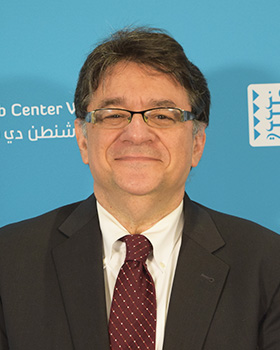

Elobaid Elobaid

Samia Errazzouki
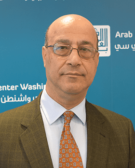
Marwan Kabalan



Rend Al-Rahim