
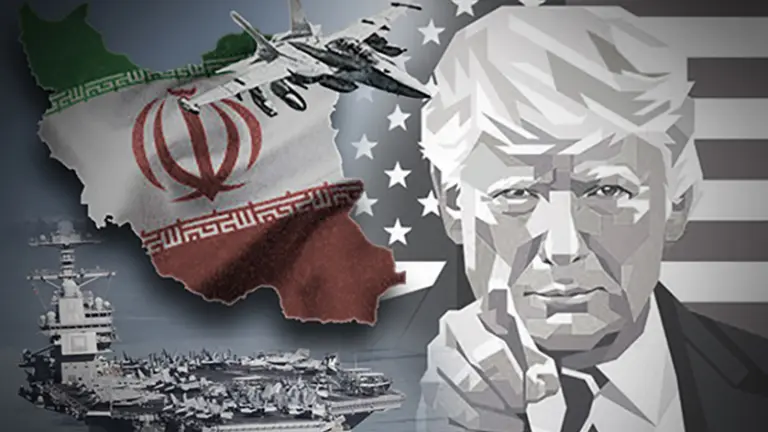
On 28 February 2026, US President Donald Trump announced the launch of a joint US-Israeli military operation, dubbed “Epic Fury”, against Iran. Within 24 hours, the attack had resulted in the assassination of Iranian Supreme Leader, Ali Khamenei, along with several of his senior aides, and the destruction of numerous military and security bases and installations. Iran, followed by its allies in Iraq and Lebanon, responded with a series of strikes against Israel and US bases and interests across the region, as well as oil and gas production facilities in the Gulf states. Although the declared objective of the joint attack is the destruction of Iran’s nuclear and missile programmes, President Trump suggested in a recorded address at the outset of the operation that its broader aim is to bring about regime change in Iran, without specifying how this might be achieved. Consequently, and given Trump’s remarks that the operation could last between four and five weeks and may require the deployment of US ground troops, the likelihood of a prolonged war appears to be increasing, raising the risk that the current escalation could push the region towards a state of total instability. In the meantime, systematic destruction of Iran’s military and civilian infrastructure, carried out in full view of the world and signalling the ascendancy of the logic of force.
Unclear Aims
While Israel’s objectives in the war against Iran appear more straightforward – namely its pursuit of the overthrow of the regime and triggering a state of disorder within Iran, rather than merely destroying its nuclear programme, curbing its capacity to manufacture ballistic missiles, or dismantling its regional alliances – the aims of the United States appear less clearly defined and more inconsistent. This stems largely from the contradictory statements made by US President Donald Trump.
Upon announcing the commencement of military strikes against Iran, Trump declared that their stated objective was “to defend the American people by eliminating imminent threats from the Iranian regime”, without specifying the nature of these threats. He also affirmed that the United States would not allow Tehran to acquire nuclear weapons, and that it would destroy its missile capabilities and dismantle its “terrorist militias” in the region that threaten the United States and its allies. Although these three objectives appeared clearly articulated in his speech, Trump also hinted at a desire for regime change when he called on the Iranian people to take control of their country’s institutions, suggesting that this “will be probably your only chance for generations”.1
However, doubts surrounding the possibility of overthrowing the Iranian regime through air strikes alone raise questions about the seriousness of this proposition. The picture became even more confused the second day of attacks when the US president stated that he had agreed to hold talks with a “new Iranian leadership” that might soon be appointed, without providing further details. In an interview with The Atlantic, as well as in remarks to a journalist from ABC News, Trump said that he could not specify when such talks might take place, noting that some of the Iranians who had been considered potential alternatives had been killed in the bombing.2
Moreover, a disagreement has emerged within the US administration regarding the timeline of the military operations. While US President Donald Trump initially spoke of a war that might last four to five weeks, he later stated that “Whatever the time is, it’s OK. Whatever it takes”.3 This position contradicts remarks made only hours earlier by US Defense Secretary Pete Hegseth, who “rejected suggestions that Iran could become Trump’s Iraq, pledging that it would not spiral into an ‘endless’ war”.4 Adding to the confusion, Trump hinted at the possibility of deploying US troops inside Iran,5 despite repeatedly criticizing his predecessors for becoming entangled in prolonged conflicts and pledging during his electoral campaigns in 2016 and 2024 to end the era of “forever wars”.
Although Hegseth denied that the United States had attacked Iran with the aim of toppling the regime, Trump reportedly called Kurdish leaders in Iraq to discuss the course and objectives of the US-Israeli war against Iran, apparently in an effort to use Kurdish forces in ground operations inside Iranian territory. Kurdish groups possess thousands of fighters deployed along the Iran-Iraq border and control strategic areas that could gain increasing importance as the military operations evolve.6 According to US media reports, these discussions followed months of contacts conducted by Israeli Prime Minister Benjamin Netanyahu with Kurdish leaders in the region. Netanyahu reportedly hopes that the joint US-Israeli air strikes will facilitate thousands of Kurdish opposition fighters to cross from Iraq into Iran, thereby weakening the regime’s territorial control and opening the door to popular uprisings that might lead to its collapse. However, pushback from US ally Türkiye, as well as Kurdish perceptions that Washington tends to use them only to abandon them at critical junctures pose significant challenges to this course of action. US sources have confirmed that such contacts took place, stating that “The president is talking to everyone. He’s talking to the Kurdish leaders. He’s talked to [Turkish President Recep Tayyip] Erdoğan.”7
Shifting Pretexts
Washington’s reasoning for war has shifted noticeably, reflecting an underlying weakness – not only because they rely on falsehoods, but also because the administration appears to underestimate public opinion. Instead, it assumes that appeals to instinct and emotion resonate further politically than rational justification. Although Iran maintains a hostile rhetoric toward the United States, it does not constitute a direct military threat to it. For this reason, Washington – under successive Democratic and Republican administrations – has for decades pursued a policy of containing Iran and attempting to modify its behaviour rather than overthrow its regime. There have even been moments of limited cooperation when the interests of the two sides converged during the US invasion of Afghanistan in 2001, the invasion of Iraq in 2003, and later in the war against Islamic State between 2014 and 2017. Although relations between the two countries experienced occasional military friction – such as the failed attempt to rescue hostages from the US embassy in Tehran in 1980 and the “Tanker War” in the 1980s – this relationship remained constrained by a ceiling that prevented escalation into a large-scale military confrontation with a country of roughly ninety million inhabitants.
When the first administration of Donald Trump assassinated Qasem Soleimani, commander of the Quds Force of Iran’s Revolutionary Guard, in a strike near Baghdad airport in 2020, the Iranian response was calculated and limited. Even when Trump withdrew from the 2015 nuclear agreement concluded by the administration of Barack Obama with Iran, his efforts remained focused on negotiating a stricter nuclear agreement, resorting to military action only in 2025 when the United States joined Israel in its attack on Iran and bombed nuclear facilities in Fordow, Natanz, and Esfahan.
Trump’s latest military campaign against Iran, however – and his call on Iranians to overthrow their regime and seize control of state institutions – signals a significant shift in his approach during his second term.8 This change may partly reflect what he perceives as success in altering the behaviour of the Venezuelan regime after US special forces abducted Venezuelan President Nicolás Maduro and his wife from the heart of Caracas. Yet Iran differs fundamentally from Venezuela, and engaging it in direct conflict entails far greater geopolitical risks. Trump will therefore bear the consequences of his wager on a large-scale air campaign being able to produce decisive political outcomes on the ground.9 He will also carry direct responsibility for any American casualties in this war, as well as for the economic repercussions of sharply rising energy prices, in a climate in which American citizens are already facing inflationary pressures and rising living costs.
Against this backdrop, Trump has offered a series of contradictory arguments to justify declaring war on Iran, claiming that the objective is to prevent Tehran from “threatening America and our core national security interests”. He argued that Iran had “refused every opportunity to abandon its nuclear ambitions” and that the United States could no longer “put up with it”, despite the fact that Iran had made significant concessions during negotiations, including agreeing to transfer all enriched uranium outside its territory and accept stringent oversight of its nuclear programme. Trump also highlighted Iran’s missile arsenal and its “destabilizing” support for regional groups such as Hezbollah and Hamas, presenting these factors as direct threats requiring a decisive military response. To reinforce this narrative, he invoked the long and tense history between Washington and Tehran since the Iranian Revolution, painting current US strikes as the continuation of a protracted conflict and a form of retribution for decades of confrontation.10
Trump cited the 1979 hostage crisis, the killing of 241 US servicemen in the 1983 bombing of their barracks in Beirut, and the attack on the US destroyer USS Cole in Yemen in 2000 – an attack he suggested Iran “may” have been involved in, despite the attack having long been attributed to Al-Qaeda. He also referred to Tehran’s support for attacks on US forces in Iraq during the occupation, presenting this as further evidence that Iran poses a persistent threat to US interests. What is new in Trump’s rhetoric, however, lies in three claims that are not supported by US intelligence assessments. The first is that Iran is attempting to rebuild its nuclear programme. But Trump himself had repeatedly asserted that the United States had completely destroyed Iran’s nuclear programme in air strikes the previous summer. Moreover, the International Atomic Energy Agency has confirmed that there is no evidence that Iran has resumed enrichment activities or is working to build a nuclear bomb – an assessment also echoed in US intelligence evaluations. The second claim is that it continues to develop “long-range missiles capable of threatening Europe and US forces abroad, and which could soon reach American territory”. However, the Defense Intelligence Agency stated in an assessment issued last year that there were no indications Iran had begun developing an intercontinental ballistic missile, and that such a project, if initiated, would likely take an entire decade to complete.11 As for the third claim – that Iran intended to launch a pre-emptive attack on US forces – the US Department of Defense acknowledged in a briefing to members of Congress on the second day of the war (1 March) that no intelligence information supported such an assertion.12
There are therefore grounds to believe that the negotiations themselves may have been little more than an attempt to buy time to complete preparations for war in the event that Iran refused to surrender to all American demands. This interpretation is reinforced by emerging information indicating that Washington and Tel Aviv had planned to launch the attack on Iran roughly a week before it was actually carried out, but that the operation was delayed for operational and intelligence reasons. This postponement effectively granted President Trump an additional week to appear as though he was exhausting all diplomatic options before launching the attack. After the second round of US–Iranian talks ended without agreement on 17 February, US and Israeli military planners were reportedly preparing to execute the strikes four days later, on 21 February. Approval, however, took another week, owing to poor weather conditions in the region that hindered the execution of the plan on its original schedule.13
Although Trump later claimed that he decided to strike Iran after the most recent talks in Geneva, citing intelligence that Iran had secretly resumed work on nuclear projects, various leaks suggest that the final round of negotiations may in fact have been a deliberate decoy to buy time for approval and to catch Iran off guard – convincing Tehran that the diplomatic track remained active while military preparations were in their final stages.14
The contradictions in Washington’s justifications for launching a war against Iran also extended to the role Israel played in the decision. On 2 March, US Secretary of State Marco Rubio stated that the United States had carried out its strike against Iran “pre-emptively” after learning that Israel was preparing to act unilaterally – an action that, he argued, would have provoked Iranian retaliation against US forces and caused greater losses. Yet Rubio’s public account contradicted remarks he had delivered earlier in a classified briefing to a group of senior bipartisan legislators in Congress, parts of which were later leaked to the media. In that briefing, he did not indicate that Iran had been planning to attack the United States unprovoked. Instead, he outlined a scenario in which a unilateral Israeli strike might prompt Iran to target American installations in the region, potentially leaving Washington with little choice but to launch a pre-emptive strike of its own – suggesting that the original impetus for war may have come from Israel. Rubio also discussed the possibility of simultaneous US and Israeli strikes but did not mention attempting to dissuade Israel from proceeding with its plans.15
Rubio’s public remarks triggered considerable criticism, particularly among Trump’s MAGA base, which is be wary of US involvement in foreign wars and suspicious of any role played by Israel in drawing the United States into its conflicts. This reaction prompted President Trump to deny that Israeli plans had driven his decision to launch the strikes, insisting instead that he “might have forced Israel’s hand” to act, not the other way around. He added that he was sure that Iran would have attacked first had Washington not acted pre-emptively.16
Conclusion
It is still too early to determine the trajectory of the current war, which has already expanded to encompass large parts of the Gulf and the wider Middle East. What is clear, however, is that Trump’s decision to launch a war against Iran has plunged the region – and indeed the world – into one of the most dangerous crises since the 2003 invasion of Iraq, with far-reaching political, security, and economic consequences. The danger is compounded by the absence of any clear vision for Iran’s future. The possible outcomes range from widespread internal and regional chaos in the event of the regime’s collapse, given the lack of a credible alternative capable of filling the resulting vacuum, to the rise of an even more hardline current within the regime determined to seek retribution. Under these conditions, the prospect of replicating the Venezuelan scenario – where political change followed the abduction of President Maduro – appears highly unlikely.
1 “Read Trump’s Full Statement on Iran Attacks,” PBS, 28/2/2026, accessed on 5/3/2026, at: https://acr.ps/1L9Ba7y
2 Michael Scherer, “‘I Have Agreed to Talk’,” The Atlantic, 1/3/2026, accessed on 5/3/2026, at: https://acr.ps/1L9Ba9L
3 Daniel Bush, “Trump’s Iran Endgame Unclear After Mixed Messaging on War Aims,” BBC, 2/3/2026, accessed on 5/3/2026, at: https://acr.ps/1L9Balq
4 “Trump on ‘Operation Epic Fury’; Won’t Rule Out Sending U.S. Troops into Iran if ‘Necessary’,” NBC News, 2/3/2026, accessed on 5/3/2026, at: https://acr.ps/1L9B9KV
5 Tara Copp & Alex Horton, “U.S. Won’t Rule Out Sending Ground Troops into Iran,” The Washington Post, 2/3/2026, accessed on 5/3/2026, at: https://acr.ps/1L9Ba78
6 Barak Ravid & Marc Caputo, “Scoop: Trump Calls Kurdish Leaders in Iran War Effort,” Axios, 2/3/2026, accessed on 5/3/2026, at: https://acr.ps/1L9B9VN
7 Ibid.
8 Kevin Liptak, “Trump Deliberated on Iran for Weeks. His ‘Massive and Ongoing’ Operation Comes with Acknowledgment US Lives Could be Lost,” CNN, 28/2/2026, accessed on 5/3/2026, at: https://acr.ps/1L9Baiw
9 Michael Birnbaum et al., “Push from Saudis, Israel Helped Move Trump to Attack Iran,” The Washington Post, 28/2/2026, accessed on 5/3/2026, at: https://acr.ps/1L9B9iw
10 “Read Trump’s Full Statement on Iran Attacks.”
11 Michael Birnbaum et al., “Push from Saudis, Israel helped move Trump to attack Iran”, 28/2/2026, accessed on 5/3/2026, at: https://acr.ps/1L9Bakz
12 Phil Stewart & Humeyra Pamuk, “Pentagon Tells Congress No Sign that Iran Was Going to Attack US First, sources say,” Reuters, 1/3/2026, accessed on 5/3/2026, at: https://acr.ps/1L9B9O5
13Barak Ravid & Marc Caputo, “U.S. and Israel Delayed Original Iran Strike by a Week, Officials Say,” Axios, 1/3/2026, accessed on 5/3/2026, at: https://acr.ps/1L9B9I0
14 Ibid.
15 Tara Copp, Ellen Nakashima, Alex Horton & Lior Soroka, “In Surprise Daytime Attack, U.S., Israel Take Out Iranian Leadership,” The Washington Post, 2/3/2026, accessed on 5/3/2026, at: https://acr.ps/1L9Ba8P
16 Alexandra Koch, “Trump says he Might Have ‘Forced Israel’s Hand’ in Iran Strike Decision as Critics Question War Powers,” Fox News, 3/3/2026, accessed on 5/3/2026, at: https://acr.ps/1L9Ba5x