
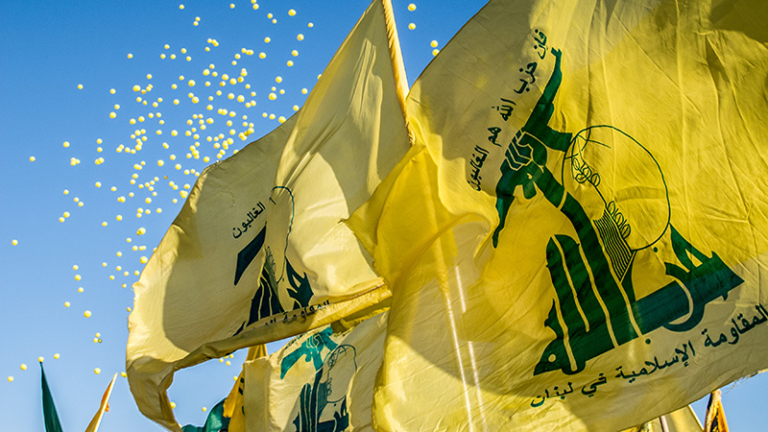
On August 13, 2025, the Secretary of Iran’s Supreme National Security Council, Ali Larijani, made a brief stop in Beirut, but his message was significant. As the trusted envoy of Supreme Leader Ali Khamenei, Larijani reaffirmed Tehran’s steadfast support for Hezbollah, the Lebanese Shia Islamist group whose paramilitary forces Iran has long backed. He emphasized that any push to disarm Hezbollah would threaten the regional deterrence network that Iran has carefully cultivated over the years. Larijani’s visit came shortly after the Lebanese cabinet’s unprecedented decision to instruct the army to produce a plan to limit the possession of weapons to the state alone. The cabinet’s move followed mounting US pressure to implement the terms of the November 27, 2024, Cessation of Hostilities Agreement between Lebanon and Israel, which included a clear timetable for Hezbollah’s disarmament. As Hezbollah’s principal patron, Iran is far from pleased.
The cabinet’s decision and Iran’s opposition highlight the dilemma currently facing Lebanon: can Beirut, under intense US and other international pressure, pursue the disarmament of Hezbollah through a negotiated process linked to an Israeli withdrawal from Lebanon’s south, without fracturing the country’s fragile sectarian equilibrium or triggering renewed conflict? And can Lebanon achieve this objective while reestablishing the state’s exclusive authority over arms, a foundational principle of any sovereign and functioning state?
The Domestic Political Landscape
At its August 5-7, 2025 cabinet meetings, for the first time since the 2006 war between Israel and Hezbollah, the Lebanese government formally endorsed a set of objectives for the complete disarming of the Shia militia and tasked the Lebanese Armed Forces (LAF) with producing a plan to do so by the end of the month. The cabinet’s plan largely enacts measures proposed by US Special Envoy to Syria and Ambassador to Turkey Thomas Barrack, the central premise of which is that Lebanon will commit to a phased transfer of all Hezbollah weapons to state control by December 31, 2025. According to the plan, the state, under international monitoring, will dismantle all of Hezbollah’s heavy weaponry, including missiles, drones, and long-range artillery. In parallel, Israel will end military operations in the country and withdraw its troops from five positions in south Lebanon. Although the plan does not call for the mass integration of Hezbollah’s rank-and-file into the LAF, it leaves room for select non-core personnel to transition into the national army, the Internal Security Forces, or the civil defense agencies, subject to rigorous vetting and retraining; alternatively, they could reintegrate into civilian life. In its final phase, the plan envisions an international donor conference on reconstruction and stabilization to secure funding for Lebanon’s economy, infrastructure, and state institutions, contingent on full compliance.
The cabinet decision on disarmament was not without controversy.
The cabinet decision on disarmament was not without controversy. Hezbollah-aligned ministers and their allies from Amal, another Shia party, walked out before the vote. Hezbollah immediately condemned the plan, dismissing it “as if it does not exist,” and accusing the government of capitulating to US-Israeli diktats. Just days later, tragedy underscored the stakes: six LAF explosives experts were killed while attempting to dismantle a hidden weapons cache in the south—a grim reminder of the human cost of unregulated arms.
Hezbollah’s stance remains uncompromising: it refuses to disarm under what it perceives as enemy pressure and rejects any externally imposed timetable. The party argues that the Taif Agreement, which ended Lebanon’s 1975-1990 civil war, neither explicitly mandated the disarmament of the “resistance” nor directly mentioned Hezbollah, and claims that its arsenal continues to serve as a vital deterrent against Israel. On August 15, Hezbollah Secretary General Naim Qassem accused the government of “implementing an American-Israeli order to end the resistance, even if it leads to civil war and internal strife” and warned there would be “no life” in Lebanon if Hezbollah were disarmed. By contrast, Amal has adopted a more nuanced position. Nabih Berri, Amal’s leader and the Speaker of Parliament, described the recent talks with Barrack as “good and constructive,” hinting at a possible openness to discuss a national defense strategy. Still, the Amal Movement continues to oppose a disarmament schedule dictated by the United States.
Lebanon’s other political factions have taken varied positions on the disarmament issue, reflecting deep-seated ideological divides and shifting calculations about sovereignty, national security, and foreign influence. Samir Geagea’s Lebanese Forces (LF), a staunchly anti-Hezbollah Christian party, has been unequivocal in its support for the cabinet’s decision, framing it as the first serious step toward dismantling the parallel armed authority that has long undermined the Lebanese state. LF’s messaging emphasizes that a state monopoly over weapons is not merely a constitutional principle, but an existential necessity for Lebanon’s survival as a sovereign country. Kataeb leader Samy Gemayel, a vocal critic of Hezbollah and Iranian influence, has rejected foreign interference—especially from Tehran—in Lebanon’s internal decision-making. He has urged the government to enforce its authority without compromise, arguing that sovereignty and institutional integrity demand exclusive state control over arms. For Gemayel this is not just a legal issue, but a national imperative: he insists that no sectarian arrangement can supersede the disarmament required by the constitution. Walid Jumblatt’s Progressive Socialist Party, representing a large segment of the Druze community, also welcomed the cabinet decision. Jumblatt reaffirmed his longstanding belief that weapons must be solely in the hands of the state, describing the cabinet’s move as a necessary step toward restoring state legitimacy and order.
Gebran Bassil’s Free Patriotic Movement (FPM), a Christian party allied with Hezbollah yet eager to maintain ties with Western powers, has staked out a middle ground position. The FPM agrees in principle that all weapons must ultimately come under state authority. Bassil insists, however, that any disarmament process must be contingent on a parallel Israeli withdrawal, a condition aimed at preserving leverage with Hezbollah without alienating the United States and other Western partners. Bassil added that any plan must not simply mirror a blueprint devised in Washington.
Beyond the formal position of political parties, public opinion has been deeply shaped by the lingering trauma of the most recent conflict with Israel. Hezbollah, once honored by Lebanon’s Shia community for its self-proclaimed resistance role against Israeli occupation, is now facing criticism across broader segments of Lebanese society. The group is increasingly viewed as a state within a state and as an obstacle to restoring national authority and long-term stability. For many Lebanese, disarmament is not merely a political demand, it is a prerequisite for peace and economic revival. At the same time, significant portions of Hezbollah’s base remain wary. They fear that disarmament would leave Lebanon exposed to Israeli aggression and diplomatically isolated in a volatile region. Hezbollah’s Naim Qassem has openly declared that disarmament is a direct threat to Lebanon’s security, equating such a demand with surrendering to Israeli pressure. The debate underscores a persistent divide within Lebanon not only over Hezbollah’s weapons, but also over the very nature of national sovereignty, security, and the future of the state.
US Pressure and International Responses
The US approach presents the Lebanese state’s exclusive control over use of force as a prerequisite for unlocking aid for reconstruction following Israel’s 2023-2024 war on Lebanon. US officials have prioritized clear disarmament timelines, arguing that without them Hezbollah will indefinitely delay its compliance. As Barrack pointedly stated, “As long as Hizballah [sic] retains arms, words will not suffice. The government and Hizballah need to fully commit and act now in order to not consign the Lebanese people to the stumbling status quo.” From the Trump administration’s perspective, Hezbollah’s rejection of fixed timelines and its insistence on Israel ending airstrikes and fully withdrawing from territory that it currently occupies in southern Lebanon are stalling tactics. For the United States, Israeli withdrawal is negotiable only within the agreed sequencing of the Lebanese cabinet’s plan for Hezbollah’s disarmament. Accordingly, the United States expects the Lebanese government to present a credible LAF plan by the end of August 2025 and to begin implementation before year’s end, with Washington simultaneously restraining Israel.
Hezbollah will not relinquish its deterrent capabilities absent consensus on a national defense strategy.
Hezbollah, however, has maintained that it will not relinquish its deterrent capabilities absent consensus on a national defense strategy. The United States has rejected this position outright, arguing that Hezbollah cannot retain any armed capabilities. Israel has taken a similar stance, contending that any retained arsenal undermines border security and violates UN Security Council Resolution (UNSCR) 1701 of 2006. Israel has also dismissed any linkage between its withdrawal from the five south Lebanon hills that it occupies and Hezbollah’s disarmament as an attempt to preserve its offensive capacity. Israel’s objectives remain clear: an immediate halt to rocket and cross-border attacks; the removal of Hezbollah’s military infrastructure from the Lebanon-Israel border; the dismantling of the group’s missile and drone stockpiles; and guarantees (possibly including aerial surveillance rights) against the group’s rearmament.
Other international actors are also seeking to shape the disarmament process. In April 2024, France floated a de-escalation proposal calling for Hezbollah to pull back 10 kilometers from the Blue Line (the 2000 UN demarcation of Israel’s withdrawal from Lebanon’s southern frontier) in return for an end to Israeli strikes. French diplomacy later shifted toward reinforcing the ceasefire by urging Israeli withdrawal, substituting Israeli forces with troops from UNIFIL (the UN peacekeeping mission along the Blue Line), and supporting LAF deployment in the south. In October 2024, France pledged 100 million euros (about $108 million) in aid to strengthen the LAF so that it could “deploy more broadly and efficiently” in southern Lebanon. More recently, while acknowledging Lebanon’s demand for Israeli withdrawal from contested areas, France welcomed the Lebanese cabinet’s decision to disarm Hezbollah according to a defined timetable and urged all stakeholders, including Hezbollah, to respect that commitment.
Saudi Arabia and the United Arab Emirates have also expressed support for the disarmament process, regarding it as essential for mobilizing large-scale reconstruction funding. Still, wary of how previous pledges were derailed by Lebanon’s political deadlock or by its incomplete implementation of commitments, both states are conditioning their financial support on demonstrable progress toward disarmament. Qatar has pursued a different course. Having positioned itself as a consistent financial backer of Lebanon’s security institutions, it pledged $60 million in 2024 to help pay for LAF salaries, fuel, and supply vehicles, without linking the aid to a disarmament timetable. Qatar’s approach suggests a preference for an “economy-first” sequencing, in which donor funds are deployed to generate domestic political buy-in for the highly sensitive step of disarmament.
Lebanon’s constitutional framework, as well as UN resolutions, leave little ambiguity on the issue of non-state arms. The Taif Accord, parts of which were inserted into the constitution, mandated the disbanding of all Lebanese and non-Lebanese militias and the delivery of their weapons to the state. UNSCR 1559, adopted in 2004, reaffirmed the requirement for the disarmament of all militias, while UNSCR 1701 banned all weapons south of the Litani River except those held by the LAF and UNIFIL, and prohibited arms transfers into Lebanon without government consent. The cabinet’s recent decision on Hezbollah thus underscores the principle that the state’s monopoly over arms is non-negotiable. The challenge lies in translating this principle into enforceable action without destabilizing the country.
Hezbollah’s Internal Calculus
Despite Hezbollah’s defiant public messaging, inside its ranks a more nuanced debate is unfolding. Publicly, party leaders have rejected the disarmament plan, with some even describing it as tantamount to suicide. Yet the leadership also recognizes that Hezbollah’s continued armed status is a central obstacle to urgently needed international aid for Lebanon’s economy and to position Lebanon as a hub for regional revival and integration. The leadership has therefore begun to weigh the costs of retaining its arsenal. Lebanon’s economic crisis has severely weakened Hezbollah’s welfare and patronage networks, which once underpinned its legitimacy. With inflation and other economic pressures constraining the group’s ability to deliver services to its constituents, Hezbollah’s armed posture increasingly functions as an impediment to rebuilding its own support base. Still, the party’s leadership fears that surrendering its arsenal would strip Hezbollah of its core bargaining chip in domestic politics and in the broader Iran-Israel confrontation.
Several considerations inform Hezbollah’s internal calculus. First is deterrence: for Hezbollah, the arsenal is not only about defending Lebanon; it is also about deterring Israeli strikes on Iranian assets elsewhere in the region. Second is community protection, as Hezbollah fears that disarmament would leave Shia communities politically exposed and vulnerable to marginalization. Third are the risks of a sequenced approach to disarmament. Without early, enforceable Israeli concessions, the party fears that its disarmament would be irreversible while Israeli obligations remain unfulfilled. Finally, there are the challenges of Hezbollah’s integration into the state army. The LAF’s ability to absorb Hezbollah fighters while preserving combat readiness is uncertain, and issues of command and autonomy remain unresolved in light of Hezbollah’s longstanding status as a parallel military force. These factors raise legitimate operational and organizational questions about the future command and structure of the army.
Disarmament Risks and Potential Outcomes
The potential risks surrounding disarmament are broadly acknowledged. Some Lebanese are apprehensive that imposing disarmament without political consensus could ignite sectarian violence, especially if such a move is perceived as an effort to besiege Hezbollah and its Shia base—to which Qassem alluded in his threatening August 15 speech. Concerns also linger about whether the LAF possesses the operational capacity and the political mandate to confront entrenched Hezbollah units. Moreover, any perceived Israeli ceasefire violations could jeopardize momentum, while donors’ failure to deliver pledged funds would undermine the Lebanese public’s buy-in and weaken political backing for the plan.
Yet Hezbollah’s continued possession of arms is itself destabilizing. Its arsenal invites Israeli military action into Lebanon, endangering all communities, not only its Shia base. Prolonging the status quo keeps Lebanon on a permanent war footing, deterring investment and blocking reconstruction. Removing this core trigger for conflict must therefore be managed through an orderly, state-led process.
Concerns about sectarian violence also overlook Hezbollah’s own recognition that such an outcome would be politically disastrous. In previous crises, such as the October 2021 Tayouneh clashes between Hezbollah and the LF, the Hezbollah leadership ultimately de-escalated to avoid a broader conflagration.
Hezbollah’s insistence on political consensus over disarmament is likely to lead to indefinite paralysis.
Moreover, Hezbollah’s insistence on waiting for full political consensus in Lebanon over disarmament is likely to lead to indefinite paralysis. Lebanon’s political system has long been hostage to vetoes, and Hezbollah has little incentive to surrender the main tool that allows it to overrule state authority. As long as an armed non-state actor enjoys de facto immunity from disarmament, Lebanon’s government will remain structurally weak, perpetuating the cycle of war and reconstruction. Far from preventing conflict, inaction on disarmament guarantees it.
Accordingly, while any disarmament process must be carefully sequenced and internationally supported, the only viable route to lasting stability, economic recovery, and sovereignty is to restore the Lebanese state’s constitutional monopoly over arms through a time-bound process with robust external guarantees. Successful implementation would not only secure international assistance, but also set Lebanon on the path to rebuilding its relationship with Syria and acting as a hub for its reconstruction, while opening the prospect of normalization with Israel.
The Narrow Path Ahead
The debate over Hezbollah’s disarmament transcends the question of a militia’s status: it is fundamentally about whether Lebanon can reconstitute itself as a sovereign state under a single armed authority. Larijani’s recent visit to Beirut highlights how this national issue is embedded in the regional struggle between Iran and the United States and Israel. For the first time in years, the cabinet’s August 2025 decisions have placed the principle of exclusive state control over arms at the center of governance.
Translating principle into practice, however, is fraught. The credibility of the forthcoming plan, the capacity of political leaders to sustain cross-sectarian consensus, the willingness of donors to deliver assistance, and the willingness of Hezbollah and Israel to honor commitments will determine whether Lebanon advances toward sovereignty or slides back into its familiar cycle of paralysis and conflict.
The views expressed in this publication are the author’s own and do not necessarily reflect the position of Arab Center Washington DC, its staff, or its Board of Directors.
Featured image credit: Shutterstock/Gabriele Pedrini