
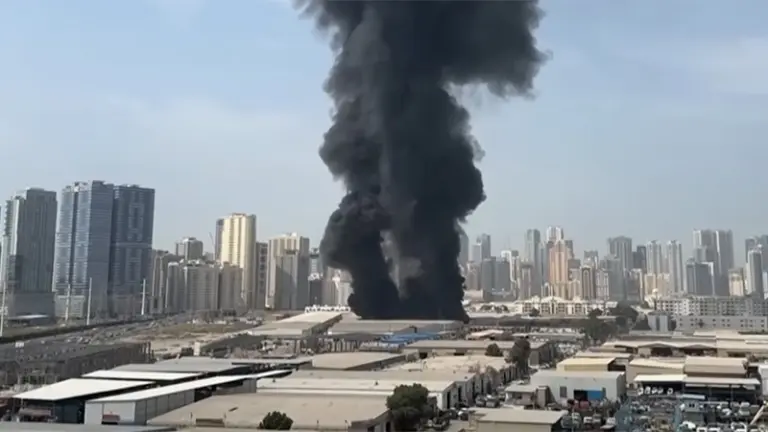
The US-Israel war on Iran, which initially appeared as a series of escalatory exchanges, has evolved into a broader war spanning multiple theaters, drawing in state and non-state actors and threatening the stability of the wider Middle East. Within this evolving landscape, the Gulf states, long positioned as both strategic partners of Washington and economically pivotal actors in the global energy system, have found themselves increasingly victims of the conflict’s operational geography.
The presence of US military bases and personnel across the Gulf has effectively rendered these states part of the conflict’s battlespace. In recent weeks, all Gulf countries have experienced missile and drone attacks attributed either directly to Iran or to allied militias operating in Iraq. The latest Iranian attacks on GCC countries’ oil and gas facilities in the Gulf—themselves initiated after Israel struck Iran’s South Pars, its largest gas field, reportedly in coordination with the United States—promise to make future developments more dangerous for the region.
Notably, Tehran has denied responsibility for some strikes-particularly those targeting Oman and Saudi Arabia’s Eastern Province, while openly claiming attacks on US military installations in the Gulf region. The scale and frequency of these attacks have varied significantly, with the United Arab Emirates reportedly experiencing the largest share of Iranian strikes. Nonetheless, nearly all Gulf states have been affected to varying degrees, not only in terms of security risks but also through mounting economic repercussions.
As the war continues, Gulf economies face increasing strain, and their strategic options appear constrained. Policymakers across the region are effectively navigating a set of choices that range from unfavorable to deeply detrimental in a rapidly deteriorating regional order.
Pre-War Gulf Calculations
Prior to the outbreak of hostilities, Gulf states—particularly Saudi Arabia—had pursued a deliberate strategy aimed at de-escalating tensions with Iran without fundamentally resolving underlying rivalries. The Saudi-Iranian rapprochement brokered by China in March 2023 exemplified this approach. The agreement was intended to reduce immediate tensions and create a more stable regional environment conducive to ambitious economic transformation agendas, including Saudi Arabia’s Vision 2030.
This strategy reflected a broader Gulf consensus on the necessity of regional stability as a prerequisite for economic diversification. Mega-projects, foreign investment inflows, and tourism development all depend heavily on perceptions of security and predictability. Accordingly, Gulf states sought to position themselves as relatively stable enclaves within a turbulent region.
However, the regional environment shifted dramatically following the events of October 7, 2023, and the subsequent escalation across multiple fronts. The intensification of conflict, driven by Israeli military actions supported by the United States and framed in existential terms, undermined the viability of Gulf neutrality. The geographic and strategic realities of the Gulf made sustained disengagement increasingly untenable. The regional conflict was expected to break the Saudi-Iranian detente at some point.
Despite a shared reluctance to enter the conflict directly, Gulf states have demonstrated notable divergence in their perceptions of the war and its desirability. Oman, in particular, has adopted a clearly anti-war stance and stands out as the only Gulf state to have explicitly condemned the war against Iran. Qatar has also leaned toward advocating diplomatic and negotiated solutions, consistent with its established role as a mediator in regional conflicts. However, it has expelled Iran’s military attaché from Doha following Iranian attacks on its gas facility at Ras Laffan.
In contrast, countries such as the United Arab Emirates and Bahrain appear more receptive, at least at the strategic level, to the prospect of weakening Iran through military means. For these states, the Iranian regime represents a persistent and structural threat to Gulf security, and its potential degradation could be viewed as strategically advantageous.
Statements attributed to Saudi officials, and alleged communications between MBS and Trump, have been interpreted as indicating tacit support for the war.
Saudi Arabia occupies a more ambiguous position. Official statements have consistently emphasized a preference for diplomatic solutions and de-escalation, and vowed not to allow its airspace to be used for attacking Iran. Yet, reports and leaks, both prior to and during the war, have suggested a more complex posture. Statements attributed to Saudi officials during high-level engagements in Washington, as well as alleged communications between Saudi Crown Prince and the US President Donald Trump, have been interpreted as indicating tacit support for the ongoing military action against Iran. While Saudi sources have denied claims that Riyadh encouraged prolonging the war, such reports highlight the dual-track nature of what Saudi policy could be: publicly cautious, yet potentially more assertive in private.
Regardless of the veracity of these leaks, it is evident that both the United States and Israel have sought to push Gulf states toward adopting clearer and more explicit positions against Iran during this war. This effort aligns with broader attempts to formalize a regional alignment that includes Israel as a central security partner, an outcome that remains politically sensitive for several Gulf countries, particularly Saudi Arabia.
Iran’s Strategic Logic
From Iran’s perspective, the expansion of the conflict into the Gulf is neither accidental nor purely retaliatory. Rather, it reflects a deliberate strategy aimed at increasing the costs of war for its adversaries while reshaping the regional security architecture.
Unable to strike the US mainland directly, Iran has focused on targeting American forces and installations in closer proximity, particularly those associated with US Central Command (CENTCOM). By attacking bases located in Gulf states, Tehran seeks to inflict material and human losses on US forces while simultaneously signaling the vulnerability of American assets in the region.
This approach serves both immediate and long-term objectives. In the short term, increasing US casualties and operational costs could create domestic political pressure in Washington to curtail or end the war once and for all. In the longer term, Iran aims to undermine the rationale for the continued US military presence in the Gulf by demonstrating that such bases attract, rather than deter, attacks. The implicit message to Gulf states is clear: the presence of US forces may constitute a liability rather than a guarantee of security.
In parallel, Iran has pursued a broader strategy of regional cost escalation. By targeting shipping routes and critical nodes in the global economy, Tehran seeks to internationalize the economic consequences of the conflict. Central to this strategy is the closure of the Strait of Hormuz, through which approximately one-fifth of global energy supplies pass. Such a move would have immediate and severe repercussions for global energy markets, driving up inflation and exerting pressure on major economies, including that of the United States.
Importantly, this strategy also entails imposing direct economic costs on Gulf states. Iranian decision-makers repeatedly claimed that some Gulf territories are being used, either directly or indirectly, in support of US military operations, and that some Gulf countries encourage the United States to attack Iran. As a result, these states become legitimate targets within Iran’s strategic calculus. The underlying principle guiding this approach is encapsulated in a stark formulation: if Iran cannot enjoy security, no actor in the region should.
Economic Fallout
The economic consequences of the war for the Gulf states are both immediate and potentially long-lasting. Despite years of efforts to diversify their economies, these states remain deeply interconnected with global energy markets and highly sensitive to regional instability.
The tourism sector has been among the hardest hit. For example, Dubai—which has positioned itself as a global hub for business and leisure—now finds itself within range of recurrent attacks that affect its economy. The perception of insecurity would lead to declining visitor numbers, cancellations of major events, and a broader erosion of investor confidence. The war could affect the sovereign investments of entire countries.
More broadly, economic diversification initiatives, particularly in Saudi Arabia, face renewed challenges. Even prior to the war, several flagship projects had encountered delays and funding constraints with low direct foreign investment than expected. The current conflict exacerbates these difficulties by deterring foreign direct investment. In an environment characterized by heightened risk, international investors are likely to adopt a more cautious stance, further complicating the implementation of ambitious development plans.
Perhaps the most significant economic threat arises from disruptions to energy exports. The closure of the Strait of Hormuz effectively halts a substantial portion of Gulf oil and gas exports, with profound implications for state revenues and global markets alike. While Saudi Arabia has explored alternative export routes, most notably through pipelines to the Red Sea port of Yanbu, these options offer only partial mitigation. Current estimates suggest that such routes could handle no more than five million barrels per day.
The most significant economic threat arises from disruptions to energy exports.
Moreover, these alternative routes are themselves vulnerable. The potential involvement of Yemen’s Houthi forces in the conflict raises the possibility of disruptions in the Bab el-Mandab Strait, a critical chokepoint for Red Sea shipping. Should both Hormuz and Bab el-Mandab become compromised, Gulf states would face an unprecedented constraint on their ability to export oil.
Taken together, these dynamics point to a likely contraction in GDP across Gulf economies, with the severity of the downturn closely tied to the duration and intensity of the conflict.
Gulf Countries’ Strategic Options
In navigating the current crisis, Gulf states confront a set of strategic options that are uniformly constrained and fraught with risk. Direct military participation alongside the United States and Israel appears unlikely for several reasons. Such a move would carry significant political costs, particularly in the broader Arab and Islamic worlds, where overt alignment with Israel remains unacceptable. It would also expose Gulf states to intensified and sustained Iranian retaliatory attacks on critical infrastructure.
At the same time, Gulf participation would add relatively little to the already substantial military capabilities of the United States and Israel, raising questions about the strategic value of such involvement.
Nevertheless, the possibility of further escalation cannot be ruled out. A widening of the conflict, whether through the closure of Bab el-Mandab, expanded targeting of Iranian oil infrastructure which has led to retaliatory strikes against Gulf oil facilities, or targeting water desalination facilities in the region, could compel some of Gulf states to adopt more assertive positions. The latest Iranian attacks could increase pressure on certain Gulf states to move beyond their current posture and become more directly involved in the conflict.
Underlying these immediate considerations are deeper strategic calculations regarding the outcome of the war. Some Gulf states may quietly prefer a scenario in which the Iranian regime falls or becomes significantly weakened. From this perspective, the persistence of the Iranian regime in its current form would ensure the continuation of a powerful regional actor capable of exerting influence through asymmetric means and control over critical maritime chokepoints.
At the same time, the collapse of the Iranian state carries its own risks. A descent into internal chaos could generate spillover effects, including refugee flows, the proliferation of armed groups, and broader regional instability. For Gulf policymakers, this creates a paradox: while a weakened Iran may be desirable, a failed Iran could prove seriously destabilizing.
The war also raises fundamental questions about the future of US security guarantees in the region. As Gulf states assess the performance of American forces during the conflict, debates are likely to intensify about the reliability and sufficiency of US protection. This may accelerate ongoing efforts to diversify security partnerships, including outreach to countries such as Pakistan and India. However, existing defense agreements with these states have thus far had little tangible impact on the course of the current war.
Conclusion
The ongoing US-Israel war on Iran places Gulf states in an exceptionally precarious position. Caught between powerful adversaries, exposed to direct military threats, and vulnerable to severe economic disruption, these states must navigate a narrow and uncertain path.
Their strategic choices are constrained by both external pressures and internal considerations, leaving little room for maneuver. Efforts to maintain neutrality are increasingly difficult to sustain, yet deeper involvement in the conflict carries substantial risks. At the same time, the long-term implications of the war, whether in terms of regional power balances, economic trajectories, or security architectures, remain highly uncertain.
What is clear, however, is that the consequences of this conflict are likely to go far beyond its immediate duration. For the Gulf states, the political, economic, and security repercussions are likely to persist for a long time, shaping their policies and strategic orientations in profound ways.
The views expressed in this publication are the author’s own and do not necessarily reflect the position of Arab Center Washington DC, its staff, or its Board of Directors.
Featured image credit: screecap/X