
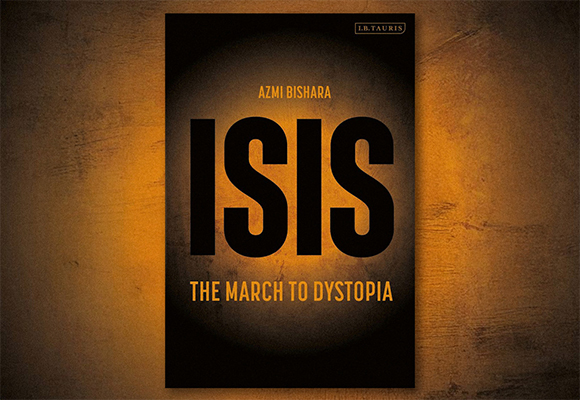
There was worldwide sigh of relief when the ninety-member ‘Global Coalition to Defeat ISIS’, founded under US leadership in September 2014, announced the vanquishing of the notorious insurgency in Syria and Iraq towards the end of 2017. However, the Coalition is still alive and well, continuing to acquire new members and publish statements on its ongoing war to this day. In the meantime, ISIS-related terror groups continue to spring up in regions from Western and Eastern Africa to other areas including Afghanistan. Not to mention recurring atrocities in Europe and the United States.
More worrying is the fact that we are now in the middle of another of those uncalculated American series adventures, this time with global reach and easily predictable consequences. It is to be recalled that this phenomenon, which poses itself as a plague, a sensation and a puzzle, remains closely linked with past foreign, mostly American, military interventions. This makes America’s recent, and much less comprehensible, ‘colonial’ escapades, a glaring red warning light.
The ISIS phenomenon can be traced back to the 1979 Soviet occupation of Afghanistan, and the launching of the (miraculously successful) ‘Afghan jihad’, supported by Reagan’s America. The eviction of the world’s second mightiest army from one of the least developed countries, by a rag-tag collection of infighting militias, within just a few years, was a world-changing event. Although the American role in achieving this victory was greatly exaggerated, the US was heavily invested in this ‘resistance’, together with its Muslim allies, from Pakistan via the Gulf to Egypt. It also boasted for a long time about this ‘Vietnam pay-back’.
As a phenomenon, Azmi Bishara argues in ISIS, The March to Dystopia, ‘Jihadism’ emerged out of this Afghan episode as an ideological neologism, referring to a career-like specialisation of Islamist fighters who trained and fought in terrains like Afghanistan, Algeria, and Bosnia. While most of these veterans returned home after the Afghan war, often to a status of glory, and resumed a peaceful life, many joined new conflicts, or started their own ‘wars’ in places like Egypt and Algeria.
However, a turning point occurred in 1990–1991, when Saudi Arabia became the locus of a massive US military presence in the context of the campaign to end the Iraqi invasion of Kuwait. The coincidence with the eruption of the 1988 Palestinian intifada led to further destabilising. Gulf ‘liberals’ hoped that America’s presence could advance democratisation and began to campaign for change. Islamists launched their own ‘reform’ drive. Afghan veterans, led by Osama bin Laden, a celebrated young jihadist, hailing from one of the wealthiest Saudi families, also intervened, calling for reform and for ending US military presence.
America’s intervention thus became a destabilising factor, alienating its erstwhile jihadi Afghan allies. Especially after America decided to maintain its massive military presence in Saudi Arabia after the eviction of Iraq from Kuwait. There is a centuries-old taboo against any substantial non-Muslim presence, even if civilian, on the Arab peninsula. Saudi traditionalists had grudgingly tolerated the American military presence for the duration of the confrontation with Iraq. However, quite a few objected, including bin Laden, who offered his jihadist colleagues to perform the job instead. His objections became more vociferous after the war.
Under pressure from the authorities, bin Laden left for Sudan, where he started an agricultural business. From there, he launched a Salafi dissident group, which he called ‘The Organization for Advice and Reform’. The body produced a number of documents and public messages to the Saudi government and Ulama, critical of the American presence in the ‘Peninsula of Muhammad’. The group sought to counter more moderate informal ‘liberal’ and Islamist ‘reform’. The group neither threatened nor used violence against the Saudi regime, which did not appreciate its rhetoric, and had more resonance with the wider Salafi audience, including the younger members of the religious establishment. Other regimes in the region were even more unhappy at the fact that bin Laden’s Sudan businesses became a refuge for Salafi Afghan radicals, including some accused of fomenting violence in Egypt and Algeria.
Bin Laden’s movement, later better known as Al-Qaeda, only began to be involved in violence after his expulsion from Sudan to Afghanistan in 1996, under pressure from the US and Saudi Arabia. It is interesting that the Sudanese regime has advised the Americans against the deportation, arguing that it was safer to keep him in Khartoum, where he would remain under close observation and could be held accountable. When the Americans insisted, Khartoum asked for a suggestion for an exile. The answer was: we do not care!
The 2003 US invasion of Iraq gave Al-Qaeda its first armed foothold within the Arab region, leading to the formation of its first fighting branch. Bishara delves deep into the rise and turbulent trajectory of this movement and his book is easily one of the best on this topic, even if we only take its penetrating literature review of the important works in the field.
The uniqueness of ISIS, The March to Dystopia stems from its hybrid approach. In addition to a deep critique of the prevalent narratives on the genesis, impact and character of so-called ‘Islamic State in Iraq and Syria’ (ISIS), and its disturbing trajectory, the book adds a number of interlinked insights into the phenomenon, using sociopolitical analysis, buttressed by a theological and doctrinal analysis of its ideological genesis. The three-phase process that brought ISIS into existence includes the emergence of Salafi jihadism, the link with Al-Qaeda, and the phase of territorial conquest. All the phases include conflict with rival Islamic groups, especially those sticking peaceful activism, such as the Muslim Brotherhood. The later split with Al-Qaeda opened a bloody inter-jihadist war, as ISIS demanded that all jihadist groups must submit to its authority. ISIS also diverged from Al-Qaeda and jihadist groups in that it was the first, and up to now the only, one to hold extensive territory in strategic locations. ISIS imposed on the residents of those areas a miserable life, whether they were Muslim or not. All wanted to leave, but they were prevented. Only those who could afford the exorbitant bribes demanded by the fighters did succeed.
This aspect of ISIS conduct negates the claim that ‘Sunni’ Muslim communities offered an ‘incubator’ and haven for the group. While some Iraqi tribal communities initially allied with proto-ISIS groups against the brutal American-backed Shia militias, the tribes soon rebelled against ISIS and evicted it from their areas.
The book’s starting point is a deep critique of the literature on ISIS, sifting through the deluge of works and commentaries to satisfy the surge of demand for information (or misinformation) on a phenomenon that captivated both the media and policymakers. A representative selection is then subjected to a harsh critical survey. The works ranged from sensationalist contributions to serious academic studies, with a lot in between. The first did not only paint ISIS as the ‘true face of Islam’ but usually took the opportunity to contrast Islam’s ‘savagery’ with ‘Christian tolerance’. A few Arab authors did in fact try to put out a nuanced version of this view, linking ISIS to certain Islamic traditions. In contrast, Western Muslim writers published mostly apologetic works trying to exonerate Islam from these accusations. Most serious academics emphasised the nature of ISIS as a modern phenomenon, seeking to situate its rise in the modern context, including the rise (or at times, the degradation and collapse) of modern secular, mostly brutal, Muslim regimes, and the savage violence these regimes perpetrated. Some linked the phenomenon to consolidation of these regimes, while others blamed their decay and collapse. Foreign occupation and Western hypocrisy regarding the actions of these regimes, as well as towards constant Israeli repression against Palestinians, were also factors. Some authors attempted to explain the ISIS rebellion in terms of modern civil wars, or even the radical youth rebellions of the 1960s in Europe and the US, and their radical left-wing ideologies. Bishara sees Muslim apologetics as a mirror image of the unhinged Western fanatics. Both boast the innocence of their sides, but the Islamic side concedes too much and ignores too much. Islam, like all religions, has elements which could be, and have been, used to encourage or justify violence when taken out of context. Christians and Jews have also weaponised similar features of their creeds, from the Crusades to Colonialism and modern genocide, and continue to do so. On the other side, the vast majority of Muslims shun these violent groups and remain its main victims.
While a good number of academics tend to see the bigger picture, and are conscious of the wider context, including the inordinate amount of violence meted out by external intruders and their local clients and allies. In this they come closer to perceiving the multi-dimensional aspects of ISIS as a modern, global, transnational (but also locally configured) phenomenon.
For Bishara, ISIS needs to be examined from its complex social, political, and religious dimensions to be properly understood. It cannot be explained in terms of one or a few formulas, such as Islamic theology, history, or Salafism. For example, it is difficult to explain the lure of ISIS for Muslim youths, including third generation Muslim migrants to the West, or new converts to Islam, by citing the attraction of ‘Salafism’, or concepts such as the ‘caliphate’. The latter remains marginal in modern Islam even among Islamist groups. That is why ISIS promoted itself as a ‘state’ much of the time. In any case, most of the recruits joining ISIS had little familiarity with Islam in general, let alone complex aspects of its theology or history. For example, a group of young British Muslims arrested on their way to Syria to join ISIS, had the book Islam for Dummies in their backpacks).
In trying to fathom the complexity of ISIS, Bishara sets himself the apparently impossible challenge of questioning the plausibility of the (often biased) urge to link the rogue movement to Islam in general, Salafi fundamentalism in particular, and to Al-Qaeda outfit more specifically. He tries to do this while recognising the organisational and ideological umbilical cord linking ISIS to Al-Qaeda as a parent organisation, and to the latter’s Salafi Jihadist worldview. In fact, he traces and documents these links meticulously, using a wide range of sources.
The tour-de-force in resolving this puzzle is based on multiple strategies, including thorough critique of the prevalent literature, followed by contextualising the phenomenon within a series of interconnected regional and international crises that provided the constitutive background for the rebellion. Religious uprisings, Bishara argues, have been a frequent occurrence in the region throughout the last century, but success has been rare. Only with the composite crises of weak states, deeply divided societies, foreign involvement and rabid sectarianism, did some attain the relative success achieved by ISIS. The chaos, coupled with extremist rivalry, provided the atmosphere for the ISIS signature instrumentalization and brutalisation of religion, enabling the insurrection to gain significant support and expand territorially.
Bishara locates a significant and very modern distinction between traditional concepts of ‘jihad’ and the ideologically constructed ‘jihadism’ as the step that paved the way for the rise of organisations like Al-Qaeda and ISIS. The term jihad originally denoted struggle, peaceful or military. In early Islam the term the ‘greater jihad’ emerged to refer to a person’s obligation to resist sinful temptations and to gather strength to fulfil social and religious obligations. The term used for armed jihad was more often qital (fighting).When jihad came to signify fighting, it was usually defensive war against external enemies. In modern secular Arab parlance, it referred to as struggle against colonialism or for nation-building.
The term ‘jihadism’ is an ideological neologism linked to the emergence of mainly ‘Salafi’ ‘career-jihadist’. Salafism usually refers to ultra-traditionalist followers of orthodoxy, who insist on following what is seen as the creed and conduct of the first generation of Muslims. For them, every later development of Islamic thinking or conduct is an innovative aberration (bid’a). Salafism has expressed itself at its earliest in the Hanbali school of fiqh (Islamic jurisprudence) inaugurated by Ahmad ibn Hanbal (780-855) and resurrected by Muhammad ibn Abdelwahab (1703–1792) in Eastern Arabia, on the eve of the rise of the Saudi dynasty, and in alliance with it.
The connection between Salafism and the modern concept of jihad is contingent, having to do mainly with the enthusiasm of Saudi Arabia for helping America in its attempt to destabilise the Soviet presence in Afghanistan through equipping local tribal rebels. Later, a so-called ‘Arab Afghan’ contingent began to form. The group remained very small (a few hundred at the peak) and militarily insignificant, but with huge propaganda value. Salafism was able to flourish through the crackdown of secular Arab regimes – mainly Nasser’s Egypt, but also Baathists in Syria and Iraq – on modern Islamist groups like the Muslim Brotherhood. Many survivors of this repression found refuge in the Gulf, where they fell under Salafi influence. At the same time, the secular regimes encouraged the spread of Salafi literature and influence as countermeasure to politicised modern Islamism. The book documents the interesting fusion of Salafism in Jihad in Afghanistan, and later in other arenas of jihad, to create Salafi jihadism, a rather unique and very modern formula. It involved the transformation of the concept jihad from its deeply rooted traditional moorings into a novel ‘general ideological space’. Many catalysts facilitated the transformation, including the evolution of sectarianism under both local authoritarianism violent foreign intervention in Iraq, Syria, and Palestine. Thus, it is impossible to understand the rise of ISIS ‘without understanding the social, political, and cultural background that helped shape the rise of a violent organisation that resorts to religious texts in a consummately selective and pragmatic way in order to guide and/or justify its actions’.
What is probably the second major manifestation of jihadism (after Algeria) was the rise of the Islamic State in Iraq (ISI), originally the result of a merger between a local jihadist group and Al-Qaeda. The nucleus of ISI contingent was a Jordanian group named Jamat Al-Tawhid wa’l-Jihad (JTJ- the ‘Monotheism and Jihad Group’), formed by Abu Mus’ab al-Zarqawi in 1999, shortly after his release from a seven-year jail term for gun crimes in Jordan. Zarqawi then travelled to Pakistan in 1999, aiming to cross to Chechnya. He was deported to Afghanistan, where he met bin Laden, who helped him set up an ‘Arab group’ in a camp near Herat. They worked closely with Al-Qaeda, but maintained relative autonomy, since the two sides did not agree on many issues. Following the post-9/11 American invasion of Afghanistan, Zarqawi and his followers escaped to Iran, and from there to northern Iraq. The 2003 American invasion of Iraq offered Zarqawi and his group, still working under the JTJ label, a new opportunity. He joined a violent uprising by former Iraqi army rebels. By the end of 2004, the group affiliated itself to Al-Qaeda and adopted the name Al-Qaeda in Mesopotamia. Al-Qaeda leadership reluctantly accepted the deal, since it, paradoxically, continued to disagree strongly with Zarqawi’s extremist sectarianism. It is ironic that Al-Qaeda HQ continued to oppose Zarqawi’s tactics, which included indiscriminate attacks on Iraqi Shia civilians, the murder of prisoners, often in shockingly brutal spectacles. This savagery not only alienated Iraqis but angered even many of his former Salafi Jihadist mentors, who wrote to bin Laden blaming Al-Qaeda for tolerating his conduct! The correspondence among jihadists was an education in sophistry. Zarqawi argued that inflaming sectarian strife was essential to provoke Shia communities into brutal retaliation and reveal their hidden hate of the Sunnis and to the wider world! It would also force hesitant Sunnis into joining his group – an admission that the bulk of the Sunni population were reluctant to join his savagery.
The tension intensified when Zarqawi asked the burgeoning Al-Qaeda branch in Syria (later known as Jabhat El-Nusra, the Support Front), to pay allegiance to his group. The Nusra, which had not yet disclosed its Al-Qaeda affiliation, refused. It was backed by a number of leading Salafi Jihadist theorists, and Al-Qaeda leadership itself, as confidential correspondence reveals.
As Bishara highlights in interesting detail, the localisation versus ‘pan-Jihadism’ became a key issue. The local supporters of Zarqawi chose over-sectionalisation, probably influenced by his key aides, which included former Baathist Iraqi army and intelligent officers. However, Al-Qaeda HQ favoured moderation, to appease Iran and its Shia clients, seen as potential allies against America. On both sides, pragmatism and contingency reigned.
What started as a localised Salafi jihadist project in Jordan and Afghanistan, ended as a primarily anti-American anti-Shia fighting force. The same dynamics that led to 9/11 were at work. American presence, allied with despotic Arab regimes that marketed themselves as anti-terror allies, ironically boosted ‘terror’ groups. In Iraq as elsewhere, however, the allies became anti-terror terrorists.
In contrast, most of America’s other allies were not in favour of American pro-democracy declarations to make Iraq a democracy ‘model’ for the region. Syria led the pack by making its territory a conduit for jihadist volunteers to Iraq, adding its own share by releasing hundreds of ‘Islamist terrorist’ prisoners to join the crowd. As victims of the extreme terror in Syrian prisons, the latter were yearning for revenge against their ‘infidel’ torturers. The irony was how the senior officials of the Saddam regime, themselves master-practitioners of prison terror, joined groups like ISIS, becoming pillars of the ISIS rebellion, even some of its key theoreticians.
The inter-Jihadist ‘dialogue’, which soon descended into excommunication leading to bloody conflict, is also revealing. There are conflicting narratives about who yielded to who in the rapprochement between Zarqawi and Al-Qaeda but it seems that Zarqawi had the upper hand. The tension in the relationship persisted until Zarqawi was assassinated in June 2006. Bin Laden and his deputy, Ayman al-Zawahiri, kept praising Zarqawi’s group in public, while chastising him in private correspondence. When his successor, Abu ‘Umar al-Baghdadi announced the formation of the Islamic State of Iraq (ISI) in October 2006, four months after Zarqawi’s death, and two years after the latter’s public association with Al-Qaeda, bin Laden was full of praise. However, the group was greatly weakened by the US troops ‘surge’ of 2007 but began to gain strength in 2009. In 2010, Abu ‘Umar was assassinated and replaced by Abu Bakr al Baghdadi, who began to send followers to Syria. In 2014, after dramatic victories in Iraq and Syria, al Baghdadi declared the formation of the Islamic State in Iraq and Syria (ISIS) and launched wars against rival jihadist groups in Syria that refused to join it.
ISIS engaged in a rhetorical war with Al-Qaeda and other senior jihadist leaders, claiming that ISIS was never a follower of Al-Qaeda. Al Baghdadi soon declared himself a ‘caliph’, the spiritual and political leader of all Muslims. The war of words with rival jihadists turned bloody, as it expanded its in grip, extended from North-Eastern Syria to North-Western Iraq and further. The overall atmosphere shifted so radically that the Nusra Front openly declared its allegiance to Al-Qaeda to avoid being swallowed up by ISIS! Bin Laden had become the more ‘moderate’ one, the proverbial lesser of two evils!
This fratricidal in-fighting confirms the points that the focus of the ‘fatal attraction’ of ISIS was not theology, although it could be ideology, of the revolutionary kind. For we can see that groups sharing the same jihadist theology were at each other’s throats. Paradoxically, for one side this involved defending the ‘enemy’. Al-Qaeda and ISIS agreed about the bulk of Muslims being ‘heretics’ of varying degrees, with the Shia topping the list. But bin Laden and his colleagues objected, for purely pragmatic reasons, to the mass targeting of Iraqi Shia as counterproductive. Those who joined, ‘new radicals’, Bishara writes, ‘are united by a bitter hatred for injustice, hypocrisy, and corruption in existing societies, both Western and Muslim, and their willingness to take their own lives in the process of punishing them and exacting revenge’. Jihadi Salafism and ISIS, in particular, are ‘a part of this darker face of modern politics, an anti-politics that regulates war rather than political life, and a reaction to the specific mode of modernisation that Arab and Muslim countries underwent at the same time’.
The strength of ISIS, The March to Dystopia is that it brings this central factor to full view, without evading the importance of the ideology of jihadism in this process. One of its most interesting aspects is how the author probes the genesis and downwards ethical spiral of jihadism, without getting distracted from the complex context that continues to give it life. Bishara’s deconstruction and serious intellectual engagement with Jihadism is clinically incisive. It acknowledges the influence of Salafism but also points out the obvious: that the overwhelming majority of Salafis shun and oppose movements like ISIS. The clear distance between traditional Islam and the thinking and practice of jihadism, and its Machiavellian trampling over Islamic values for short-term political objectives, is clear and could even be a defining element of the movements. Bishara puts it this way: ‘one of the worst consequences of the ideologisation of religion is its decoupling from ethics, turning religion into a political end that justifies the means and condones flouting all moral principles outside the group’. Sometimes even within it.
Bishara describes this deep and extended engagement with the thought and practices of extremist jihadism as a ‘defence of Islamic Civilisation’. ISIS is extremely hostile to the ideas and practices in Muslim communities. Its thought is ‘less a denial of the West—which is of little concern to it—than a denial of the entirety of Islamic civilisation in all its diversity’. Thus, the real ‘war of civilisations,’ if some people insist on such terms, ‘actually took place within each civilisation and that is where they are taking place right now’. Confronting ISIS, Bishara argues, is thus a war to defend Islam’s own civilisation. One could add: and the world civilisation, or what is left of it. For the atrocities in which major western powers and their local despotic allies engage daily, make the ‘war on terror’ look very much like a ‘war of terror’.
This paper was published by the Arab Center For Research and Policy Studies on July 23, 2026.