Speakers

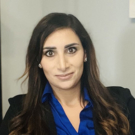
Zahra Ali
Associate Professor, Department of Sociology and Anthropology, Rutgers University

Lahib Higel
Senior Analyst for Iraq and Interim Deputy Program Director, Middle East and North Africa, International Crisis Group
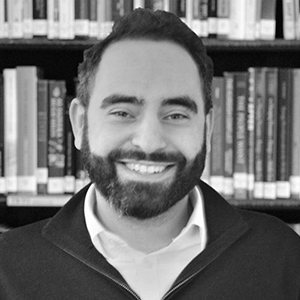
Renad Mansour
Deputy Director, Middle East and North Africa Programme, Chatham House
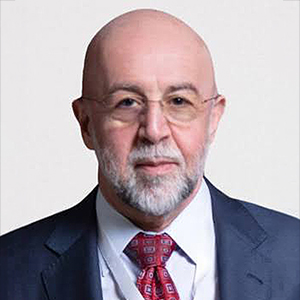
Ahmed Tabaqchali
Chief Strategist, Asia Frontier Capital (AFC) Iraq Fund; Senior Fellow, Institute of Regional & International Studies (IRIS), American University of Iraq-Sulaimani
Moderator
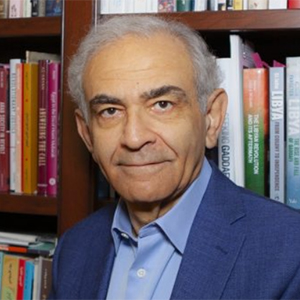
Joseph Sassoon
Professor of History and Political Economy and al-Sabah Chair in Politics and Political Economy of the Arab World, Center for Contemporary Arab Studies, Georgetown University
About the Webinar
The US-Israeli war on Iran has placed neighboring Iraq under serious political, security, and economic strain. Iran-affiliated groups in Iraq have targeted US interests, drawing retaliatory strikes on Iraqi territory. While the memorandum of understanding between the United States and Iran to end the war and reopen the Strait of Hormuz could ease pressure on global energy markets, the broader regional escalation, including attacks on Gulf oil and gas infrastructure and disruptions to maritime transit, has already strained Iraq’s oil-dependent economy.
 To assess the war’s consequences for Iraq, Arab Center Washington DC and the Center for Contemporary Arab Studies at Georgetown University are organizing a critical webinar to explore the governance, security, and economic challenges facing the country. The discussion will address the Muhassasa system and ethnosectarian divisions, the role of Iran-affiliated groups and the question of disarmament, the economic toll of energy disruption, corruption, and oil dependence, and the impact of US policy on Iraq’s stability and future trajectory.
Featured image credit: MORTEZA NIKOUBAZL / NURPHOTO / NURPHOTO VIA AFP
