Arab Center Washington DC
Web Style Guide
Logo
Color Palette
#000000;
#000000;
#000000;
#000000;
#000000;
#000000;
#000000;
Typography
h1
This is an h1.
0
h2
This is an h2.
0
h3
This is an h3.
0
h4
This is an h4.
0
h5
This is an h5.
0
h6
This is an h6.
0
lede
This is lede text. It has more text than most headers do.
0
p
This is paragraph text: Lorem ipsum dolor sit amet, consectetur adipiscing elit, sed do eiusmod tempor incididunt ut labore et dolore magna aliqua. Ut enim ad minim veniam, quis nostrud exercitation ullamco laboris nisi ut aliquip ex ea commodo consequat.
0
a
This is paragraph text: Lorem ipsum dolor sit amet, consectetur adipiscing elit, sed do eiusmod tempor incididunt ut labore et dolore magna aliqua. Ut enim ad minim veniam, quis nostrud exercitation ullamco laboris nisi ut aliquip ex ea commodo consequat.
0
quote
Lorem ipsum dolor sit amet, consectetur adipiscing elit, sed do eiusmod tempor incididunt ut labore et dolore magna aliqua.
0
caption
Lorem ipsum dolor sit amet, consectetur adipiscing elit, sed do eiusmod tempor incididunt ut labore et dolore magna aliqua.
0
ul
- This an unordered list
- This an unordered list
- This an unordered list
0
ol
- This an ordered list
- This an ordered list
- This an ordered list
0
Content Feed - 3 Items
Webinars & Events
- Webinar
 Palestine/IsraelEducation and Development
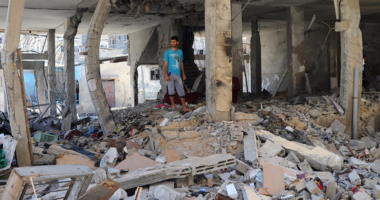
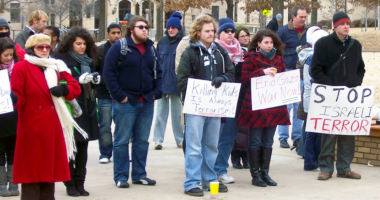
Reconstruction in Gaza: Between Israel’s Siege and the Politics of International Funding
Jul 8, 2021On July 8, 2021, Arab Center Washington DC (ACW) held a panel titled “Reconstruction in Gaza: Between Israel’s Siege and the Politics of International Funding.…
Content Feed - 5 Items
Latest Publications
- Policy Analysis
 The Arab WorldEducation and Development
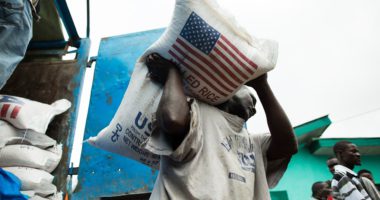
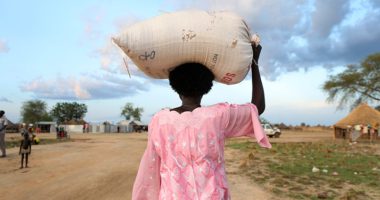
The Human Cost of US Aid Cuts Across the Arab World
Sep 10, 2026Yara M. AsiWhen Fatima, a mother of two in Yemen, went into labor with her third child in May 2025, there was initially little cause for concern. But Yemen is a poor coun…
- Policy Analysis
 US Foreign Policy
What Trump’s Aid Cuts Mean for the Middle East and North Africa
Mar 21, 2025Amy HawthorneAlthough the Trump administration exempted Israel’s $3.3 billion and Egypt’s $1.3 billion in annual foreign military financing (FMF)—the majority of US assista…
Content Feed w/ Filters
- Show all
- Arab Americans/ Muslim Americans
- Climate and Environment
- Conflicts and Conflict Resolution
- Democracy and Governance
- Diplomacy and Negotiations
- Economic Affairs
- Education and Development
- Energy and Economics
- Global Health and Health Policy
- Identity Politics and Sectarianization
- Infographics and Fact Sheets
- International Law
- International Law and International Bodies
- Israeli War Tactics and Genocide
- Justice, Equality, and Human Rights
- Media and Technology
- Migrants, Refugees, and IDPs
- Protests and Activism
- Public Opinion
- Public Opinion, Protest, and Debate
- Regional Implications and Geopolitics
- Regional Relations and Geopolitics
- Religion and Politics
- Security and Defense
- The GCC
- The War in Ukraine
- The War on Gaza
- Top 10 Readings on the Gaza War
- Topic-Test
- US Domestic Politics and Elections
- US Foreign Policy
- US Policy
- Violent Extremism
- Women & Gender Issues
Current Openings FTE
Current Openings
Fellow for US Government Affairs
Arab Center Washington DC is hiring a Fellow for US Government Affairs, based in Washington, DC, on a full-time basis.
The Fellow for US Government Affairs will monitor activities in the three branches of the US government (Congress, the White House and Executive Branch, and the Judicial Branch) and prepare a weekly report (Washington Policy Weekly) of all activities pertaining to the Middle East. The fellow will provide Arab Center executives and researchers with daily analyses of legislative and policy issues related to US policy in the Middle East. S/he will initiate and maintain regular contact and professional relationships with relevant congressional staff serving on the foreign affairs committees and other committees or subcommittees dealing with Arab world and Middle East issues as well as with federal government employees at relevant agencies and departments.
Deadline: August 31, 2021.
Salary commensurate with experience.
Featured Feed - Feature Left
- Policy Analysis
 The Arab WorldRegional Relations and Geopolitics
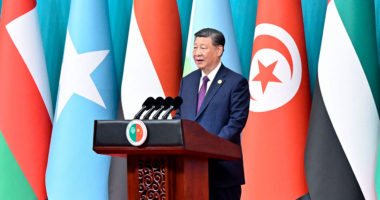
What the Iran War Reveals about China’s Middle East Strategy
Sep 22, 2026Learn MoreOn September 24, 2026, Chinese President Xi Jinping is expected to meet President Donald Trump for the second time since the start of the US-Israeli war on Ira…
- Book
 Palestine/IsraelThe War on Gaza
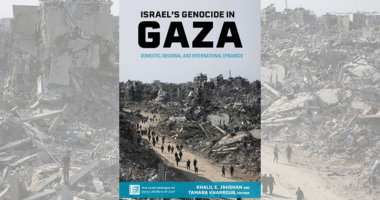
Israel’s Genocide in Gaza: Domestic, Regional, and International Dynamics
Sep 1, 2026Learn Morehttps://form.jotform.com/262604681687063
- Policy Analysis
 Saudi ArabiaSecurity and Defense
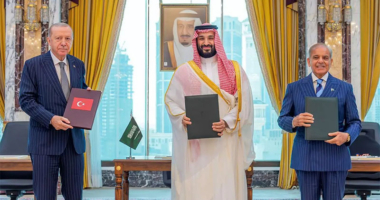
Diversification Without Substitution: What the Mecca Joint Defense Agreement Offers Saudi Arabia
Aug 19, 2026Learn MoreDespite the headlines, the Mecca agreement is unlikely to produce a real military response if an attack happens. Not only has the text of the accord not been m…
Featured Feed - Feature Right
- Policy AnalysisThe Arab WorldRegional Relations and Geopolitics
What the Iran War Reveals about China’s Middle East Strategy
Sep 22, 2026Learn MoreOn September 24, 2026, Chinese President Xi Jinping is expected to meet President Donald Trump for the second time since the start of the US-Israeli war on Ira…
- BookPalestine/IsraelThe War on Gaza
Israel’s Genocide in Gaza: Domestic, Regional, and International Dynamics
Sep 1, 2026Learn Morehttps://form.jotform.com/262604681687063
- Policy AnalysisSaudi ArabiaSecurity and Defense
Diversification Without Substitution: What the Mecca Joint Defense Agreement Offers Saudi Arabia
Aug 19, 2026Learn MoreDespite the headlines, the Mecca agreement is unlikely to produce a real military response if an attack happens. Not only has the text of the accord not been m…
Horizontal Tabs - Regions
- Research Paper
 Palestine/IsraelEducation and Development
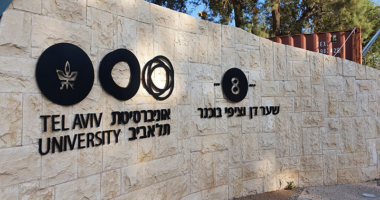
Israel’s Academia Deepens Colonial Control After the Gaza War
Jun 23, 2026Saher GhazawiThis paper investigates Israeli academia in the post-Gaza war era (2023–25) as a structural actor involved in the production of a security-military discourse t…
- Intern Corner
 Palestine/IsraelProtests and Activism
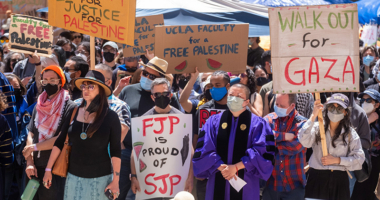
The New University Order: How Repressing the Pro-Palestine Student Movement Has Reshaped US Higher Education
Jun 15, 2026Emesa MelkiIt has been more than two years since Columbia University students established the first Palestine Solidarity Encampment on April 17, 2024. Within weeks, stude…
- Policy Analysis
 IraqUS Foreign Policy
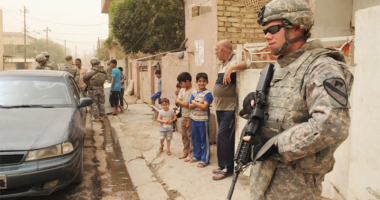
Shock and Awe: Life in Iraq Twenty Years after the US-led Invasion
Jun 16, 2023Yara M. AsiThis year marks a significant milestone in the American-led “Global War on Terror,” especially in relation to Iraq. It has been 20 years since former Secretary…
- Policy Analysis
 LevantEducation and Development
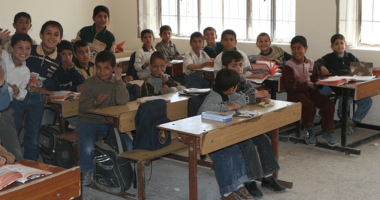
The State of Education in the Arab World
Aug 6, 2018Ilham NasserWhen closely examining reports on the status of education in the Arab region, the main conclusions have pointed to the Arab states’ deficits in educational att…
- Policy Analysis
 EgyptDemocracy and Governance
Is Egypt’s Population Growth a Blessing or a Curse?
Nov 20, 2017Sahar KhamisAt 98 million, Egypt’s rapid population growth is a threat to the national economy and an obstacle to the country’s prospects for development and prosperity.
- Policy Analysis
 SomaliaConflicts and Conflict Resolution
Somalia Continues to Face Crises on Several Fronts in 2023
Jan 10, 2023Imad K. HarbFollowing the conclusion in spring 2022 of its parliamentary and presidential constitutional requirements, Somalia began the process of attempting to re-establ…
How did World War I set Palestine on the path toward the Nakba?
In Brief: World War I set Palestine on the path toward the Nakba because Britain’s wartime deals, broken promises, violent conquest, and later Mandate policies enabled Zionist settlement, denied Palestinian self-determination, and created the political conditions that led to mass displacement in 1948.
In More Detail: Britain sealed Palestine’s fate before it had conquered the territory, setting its people on a course of death and destruction that would reach a peak in the 1948 Nakba. In the midst of World War I (1914-1918), Britain and France planned for the removal of the Ottoman Empire from its Arab provinces. In a secret agreement known as Sykes-Picot (1916), Britain and France divided the territories between themselves, creating, in broad outline, the map of the modern Middle East that we know today.
Meanwhile, Britain made two, mutually exclusive promises to two groups, each conflicting with British and French plans to control the region following the war’s end. First, in a series of communications known as the Hussein-McMahon Correspondence (1915-1916), Britain promised a prominent Arab leader in the Arabian Peninsula, Sharif Hussein of Mecca, an Arab state, which was understood by the leader to include Palestine, in exchange for his support in rallying an Arab rebellion against the Ottoman leadership. Second, Britain promised a “Jewish national homeland” in Palestine to Zionist leaders in Britain through a communication known as the Balfour Declaration (1917).
If avenues for self-determination were precluded prior to Britain’s military takeover in Palestine, the physical arrival of the British in the territory made matters even worse for Palestinians. Britain’s campaign to conquer Palestine and Jerusalem began in March 1917, first in Rafah, then Khan Younis, then Gaza City. Ottoman defenses were fierce; the British anticipated a swift victory and path to Jerusalem, but resistance in Gaza City was so strong that it evaded surrender until November 1917, and eventually Jerusalem was occupied in December 1917.
Gaza City was utterly decimated by the British campaign. In addition to artillery bombardment, new military technology enabled the British military to launch air raids on Gaza City, terrorizing the local population, with many fleeing their homes until the campaign ended, and many returning to find their homes, and much of Gaza City, in total ruin. On December 11, 1917, General Edmund Allenby entered Jerusalem and declared martial law. Palestine was placed under the Occupied Enemy Territory Administration (OETA), a system of joint British-French military rule over recently conquered Ottoman territories in the Levant.
After the war, Allied powers set up mandates over former Ottoman territories. Effectively, this system formalized the secret Sykes-Picot agreement, but with a caveat: Amid the US emphasis on self-determination following US President Woodrow Wilson’s Fourteen Points address (1918), delivered in the final months of the war, Britain and France presented their control over the region as temporary tutelage, rather than formal colonialism. By declaring these territories “mandates,” Britain and France declared that they were preparing the peoples living under this system for eventual self-determination and independence.
The British Mandate for Palestine was established in 1920, but it was clear from the outset that Britain had no intention of relinquishing control or ceding room for Palestinians to transition to independence and statehood. Further, the language of the Balfour Declaration was incorporated into the Palestine Mandate submitted by Britain to the League of Nations. The result was formal British recognition of and cooperation with the Jewish Agency—the governing body of the Jewish community in Palestine prior to Israel’s establishment, headed by Zionist leaders—and this was enshrined in the British Mandate for Palestine, affirming its commitment to facilitating Jewish immigration to Palestine, which British authorities understood to be linked to the Zionist project. Overall, Britain’s violent entry to Palestine, callous destruction of Palestinian homes and lives, and suppression of Palestinian independence would be the rule, not the exception, which eventually created the conditions for the Nakba.
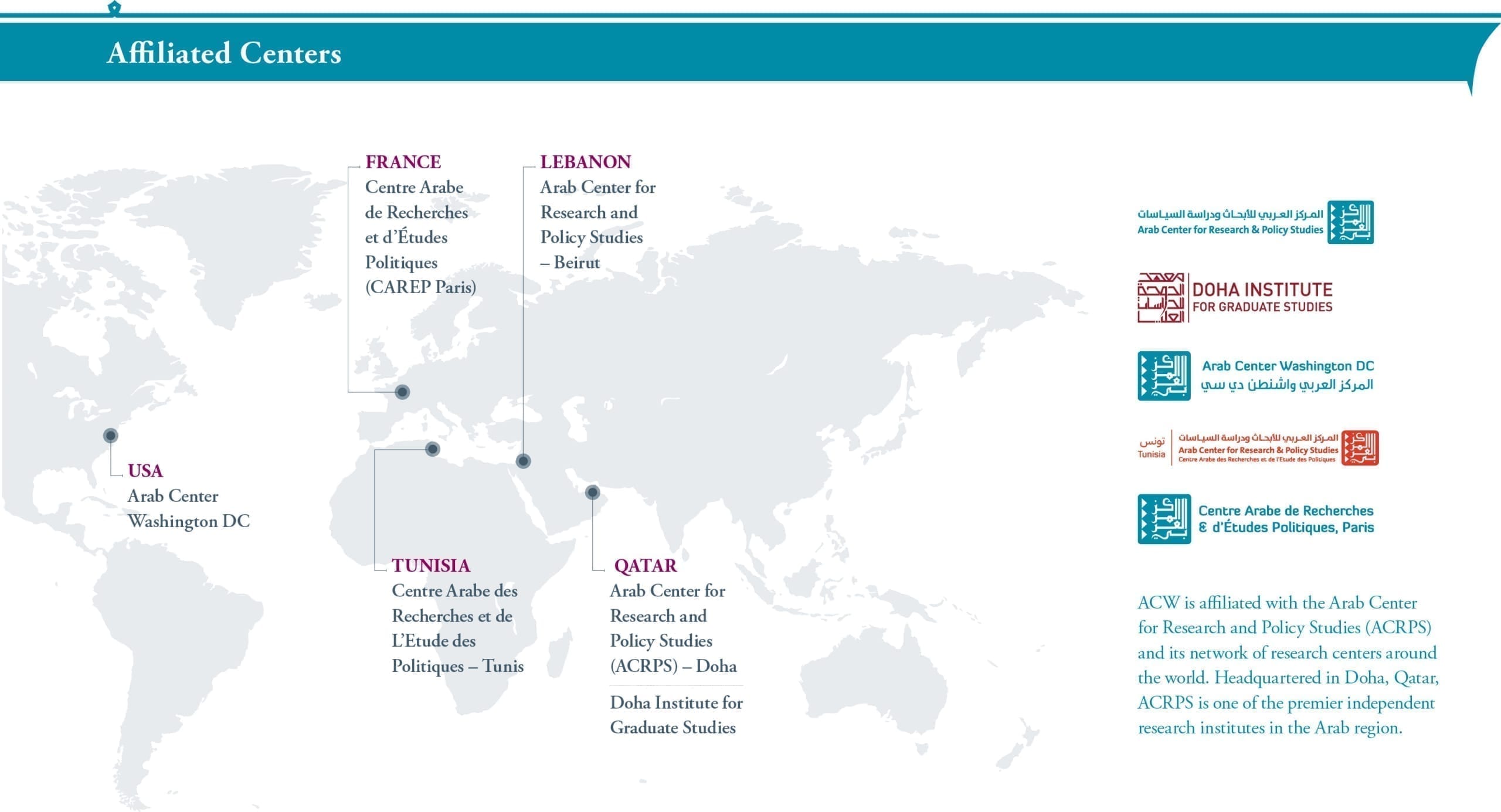
Affiliated Centers
Homepage – Levant Feed
- Research PaperPalestine/IsraelEducation and Development
Israel’s Academia Deepens Colonial Control After the Gaza War
Jun 23, 2026Saher GhazawiThis paper investigates Israeli academia in the post-Gaza war era (2023–25) as a structural actor involved in the production of a security-military discourse t…
- Intern CornerPalestine/IsraelProtests and Activism
The New University Order: How Repressing the Pro-Palestine Student Movement Has Reshaped US Higher Education
Jun 15, 2026Emesa MelkiIt has been more than two years since Columbia University students established the first Palestine Solidarity Encampment on April 17, 2024. Within weeks, stude…
Homepage – North Africa Feed
- Policy AnalysisLevantEducation and Development
The State of Education in the Arab World
Aug 6, 2018Ilham NasserWhen closely examining reports on the status of education in the Arab region, the main conclusions have pointed to the Arab states’ deficits in educational att…
- Policy AnalysisEgyptDemocracy and Governance
Is Egypt’s Population Growth a Blessing or a Curse?
Nov 20, 2017Sahar KhamisAt 98 million, Egypt’s rapid population growth is a threat to the national economy and an obstacle to the country’s prospects for development and prosperity.
Homepage – The Arabian Peninsula and The Gulf Feed
- Policy AnalysisIraqUS Foreign Policy
Shock and Awe: Life in Iraq Twenty Years after the US-led Invasion
Jun 16, 2023Yara M. AsiThis year marks a significant milestone in the American-led “Global War on Terror,” especially in relation to Iraq. It has been 20 years since former Secretary…
Homepage – The Horn of Africa Feed
- Policy AnalysisSomaliaConflicts and Conflict Resolution
Somalia Continues to Face Crises on Several Fronts in 2023
Jan 10, 2023Imad K. HarbFollowing the conclusion in spring 2022 of its parliamentary and presidential constitutional requirements, Somalia began the process of attempting to re-establ…