Speakers

Giorgio Cafiero
CEO, Gulf State Analytics; Adjunct Assistant Professor, Georgetown University; Adjunct Fellow, American Security Project
Negar Mortazavi
Iranian-American Journalist and Political Analyst; Editor and Host, The Iran Podcast

Barbara Slavin
Distinguished Fellow, Stimson Center; Lecturer in International Affairs, George Washington University
About the Webinar
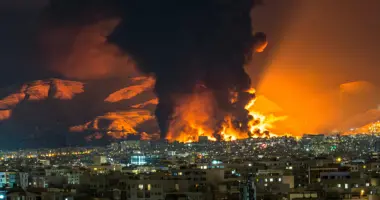
On February 28, 2026, the United States and Israel launched large-scale airstrikes on Iran, killing Supreme Leader Ayatollah Ali Khamenei along with several senior political and military officials. Iran has since named Mojtaba Khamenei, the late Supreme Leader’s son, as his successor. While US and Israeli officials have offered varying explanations for the operation, ranging from ending Iran’s nuclear program to weakening its missile capabilities and pursuing regime change, the broader objectives of the campaign and its post-war vision remain unclear. Iran responded immediately with missile and drone attacks against Israel and US military bases across the region. Tehran also targeted key oil and gas facilities in the Gulf and disrupted shipping through the Strait of Hormuz, prompting a broader regional security crisis and significant disruptions to global energy supplies. The conflict has since expanded across multiple fronts. On March 2, in retaliation for Khamenei’s killing, Hezbollah launched attacks on Israel, and Israel responded with heavy airstrikes in southern Lebanon and Beirut’s southern suburbs, killing hundreds and triggering a fresh wave of displacement.
In light of these unfolding developments, Arab Center Washington DC (ACW) is organizing a webinar to examine the ongoing US-Israel war on Iran and its regional and global implications. The discussion will assess Israel’s strategic calculus and end goals, the Trump administration’s strategy toward Iran, and the role of the US Congress and public opinion. Speakers will also examine domestic dynamics within Iran at both the popular and regime levels, the reactions and involvement of regional actors and US allies, especially the Arab Gulf states, the global economic and military implications of the conflict, and the prospects for a ceasefire. The panel will address several key questions, including: What further role might Iran’s regional proxies play as the war expands? Could the conflict increase the risk of nuclear escalation in the region? How could the conflict affect global energy markets and the international economy in the long term? What are the implications of the conflict for US domestic politics and the upcoming midterm elections? And could the current war lead to regime change in Iran?
Featured image credit: SASAN / MIDDLE EAST IMAGES / MIDDLE EAST IMAGES VIA AFP

