Speakers



Gregory B. Upton
Executive Director & Associate Research Professor, Louisiana State University Energy Institute
Moderator
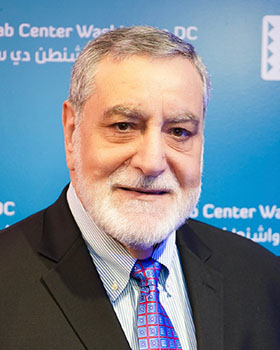
Khalil E. Jahshan
Chairman of the Board of Directors and Founding Consultant
Arab Center Washington DC
About the Webinar
The recent war which began on February 28, 2026 when the United States and Israel launched coordinated combat operations against Iran has triggered a major energy crisis with global consequences, disrupting oil and gas supplies, driving up prices, and placing energy security at the forefront of international economic and strategic concerns. In response, Iran targeted key oil and gas facilities across the Gulf and closed the Strait of Hormuz, a critical maritime chokepoint that carries roughly one-fifth of the world’s oil and liquefied natural gas supplies. This has severely affected energy flows worldwide and contributed to what the International Energy Agency has described as the “largest supply disruption in the history of the global oil market.” These disruptions and the energy shocks have also had cascading effects on shipping and the transfer of goods and food supplies and on international trade and investments.
 The long-term consequences of the crisis remain uncertain and will depend largely on the the outcomes of the ceasefire deal and the pace of post-conflict recovery. In light of these developments, Arab Center Washington DC and the Center for Energy Studies at Rice University’s Baker Institute for Public Policy are organizing a webinar to explore how the conflict is affecting global energy supplies and prices, which regions are most vulnerable to the disruption, and what the crisis could mean for the global economy and energy markets in both the short and long term.
Featured image credit: Matthew Smith via Flickr
