Speakers

Banafsheh Keynoush
International Geopolitical Consultant and Author; Affiliate Faculty, University of Notre Dame
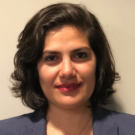
Negar Mortazavi
Iranian-American Journalist and Political Analyst; Editor and Host, The Iran Podcast

Barbara Slavin
Distinguished Fellow, Stimson Center; Lecturer in International Affairs, George Washington University

Moderator

In recent weeks, US President Donald Trump has repeatedly threatened to attack Iran following nationwide protests that were met with deadly crackdowns by Iranian authorities, resulting in thousands of deaths. As tensions between the United States and Iran have escalated, President Trump deployed two aircraft carrier strike groups to the Middle East, increasing US military presence in the region and raising the risk of military confrontation. At the same time, Israel’s Prime Minister Benjamin Netanyahu has continued to push for a more aggressive posture while seeking to derail ongoing negotiations. Meanwhile, several regional actors have reportedly engaged in diplomatic efforts to facilitate dialogue between Washington and Tehran in an attempt to reduce tensions. The United States and Iran held a first round of talks in Oman on February 6, followed by a second round in Geneva on February 17. While President Trump has stated that negotiations over Iran’s nuclear program will continue, it remains unclear whether diplomacy will prevail or whether escalation is more likely.
In light of these developments, Arab Center Washington DC is organizing a webinar to examine the evolving dynamics between Iran and the United States. The discussion will assess the impact of domestic developments in Iran, the role of regional geopolitics and Israel, and expectations for the Trump administration’s approach toward Tehran. Key questions include: What occurred during the protests in Iran, and was there external interference? What motivates the actions of regional players? Are the current negotiations likely to produce meaningful results, or is further escalation more probable? To what extent can Israel influence the Trump administration’s strategy, and is the administration seeking regime change in Iran? Is there a realistic path toward de-escalation? Amid economic crises, nationwide protests, increased repression, and the possibility of a US or Israeli attack, what are the prospects for the Iranian people? And how might the Trump administration reshape US-Iran relations and regional security?
Featured image credit: Shutterstock/Poliorketes
